
Morgan Stanley launched direct crypto trading on its ETrade platform with a 50 basis point fee per transaction, undercutting Coinbase, Robinhood, and Charles Schwab in a move that reshapes retail digital-asset pricing. The pilot, now live for a small group of users, covers Bitcoin, Ether, and Solana, with full rollout to all 8.6 million ETrade clients expected later in 2026. Jed Finn, head of wealth management, described the strategy as "disintermediating the disintermediators," signaling the bank's intent to capture market share from pure-play crypto exchanges. The fee of 50 basis points is roughly half of Robinhood's 95 bps, below Coinbase's 60 bps, and under Schwab's 75 bps. The launch follows Morgan Stanley's April 2026 debut of the MSBT Bitcoin ETF with a 0.14% expense ratio, the cheapest in its category, and the bank has filed for Ether and Solana ETFs. This aggressive pricing, combined with custody and settlement infrastructure through Zerohash (which Mastercard is acquiring for approximately $2 billion), positions Morgan Stanley as a dominant force in retail crypto. The timing matters because it compresses margins for incumbents at a moment when Bitcoin is trading near $82,000 and Ethereum above $2,400, drawing renewed retail interest.
The Structural Attack on Coinbase and Robinhood Revenue
Morgan Stanley's 50-basis-point fee is not just a discount. It is a structural attack on the revenue models of Coinbase and Robinhood. Coinbase generated $3.32 billion in consumer transaction revenue in 2025, while Robinhood's crypto revenue reached roughly $1 billion. Both rely heavily on retail trading spreads that range from 60 to 95 basis points. Morgan Stanley's fee sits at the floor of that range, compressing the pricing umbrella that has sustained these platforms. The bank can afford this because it monetizes clients across a broader relationship, including advisory fees, ETF expense ratios, margin lending, and banking products, rather than depending solely on transaction revenue. For Coinbase, which derives the majority of its revenue from retail trading, a sustained fee war threatens to erode its core profit engine. Robinhood faces similar pressure, though its diversified revenue from options, equities, and cash management provides some buffer. Schwab, which charges 75 bps, must now decide whether to match Morgan Stanley or risk losing crypto-active clients. The pilot covers only Bitcoin, Ether, and Solana, but these three assets represent the vast majority of retail crypto trading volume. If Morgan Stanley extends the fee structure to additional tokens or expands to its 16,000 in-house advisors and $9.3 trillion in client assets, the competitive pressure intensifies.
Capturing Revenue Across the Client Lifecycle
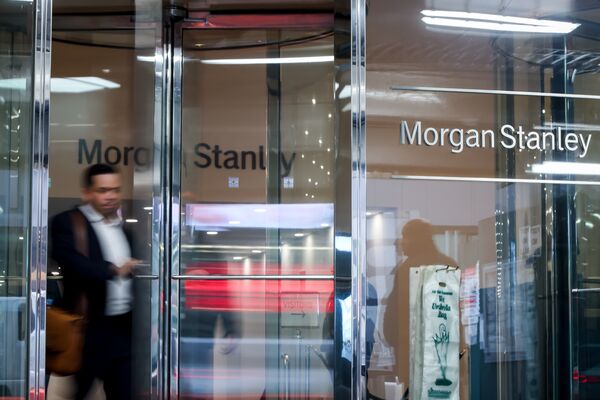
Morgan Stanley's crypto strategy is designed to capture revenue at multiple points along the client lifecycle, not just the trade. The 50-basis-point fee on ETrade generates immediate transaction income, but the real economics lie in the downstream services. The bank launched the MSBT Bitcoin ETF in April with a 0.14% expense ratio, the cheapest in the category, and has filed for Ether and Solana ETFs. Clients who trade on ETrade can convert holdings into these ETFs, generating recurring management fees for Morgan Stanley. The bank is also exploring custody services and tokenized equity trading, which would create additional fee streams. The custody and settlement infrastructure runs through Zerohash, which Mastercard is acquiring for approximately $2 billion. That deal gives Morgan Stanley access to institutional-grade crypto settlement without building it in-house. The bank's $9.3 trillion in client assets and 16,000 advisors provide a massive distribution funnel. If even a fraction of E*Trade's 8.6 million clients allocate 1% of portfolios to crypto, the resulting AUM in ETFs and custody generates millions in annual fees. The 50-basis-point trade fee acts as a loss leader. It drives volume onto the platform, where Morgan Stanley monetizes through asset accumulation, advisory relationships, and cross-sales. This model mirrors how traditional brokerages profit from low-cost equity trades: the transaction is the entry point, not the profit center.
Coinbase, Robinhood, and Schwab Face a Pricing Squeeze
The competitive landscape for retail crypto trading has shifted decisively. Coinbase, which charges 60 bps, now faces a rival with a 17% lower fee and a trusted brand. Robinhood, at 95 bps, is nearly double Morgan Stanley's price. Schwab, at 75 bps, sits in the middle. All three must respond. Coinbase has historically resisted cutting fees, arguing that its security, compliance, and product suite justify the premium. But Morgan Stanley's entry, backed by a bank with $9.3 trillion in assets and a regulatory footprint that includes SEC and FINRA oversight, undermines that argument. Robinhood could cut fees to match, but its crypto revenue of roughly $1 billion is a critical profit center; a 50% fee reduction would slash that figure unless volumes double. Schwab, which has been slower to embrace crypto, may accelerate its own direct offering or partner with a custodian. Fidelity, which already offers crypto trading through its retail platform, could also face pressure to lower fees. The Zerohash infrastructure deal with Mastercard adds another dimension: Mastercard's payment network could enable instant settlement and lower transaction costs, potentially allowing Morgan Stanley to cut fees further. For Coinbase and Robinhood, the strategic question is whether to compete on price and accept margin compression, or differentiate on features like staking, lending, and educational content. The market is watching for their next moves.
Ripple Effects on Validators, Miners, and Crypto Infrastructure
Morgan Stanley's fee cut and broader crypto push will ripple through the infrastructure layer. Higher retail trading volumes driven by lower fees increase demand for blockchain settlement capacity, which in turn drives demand for validators, staking services, and Layer-2 scaling solutions. For Ethereum, which processes the bulk of DeFi and tokenized asset transactions, increased retail activity could push gas fees higher and accelerate adoption of Layer-2 networks like Arbitrum and Optimism. For Solana, which is included in the pilot, the volume boost validates its high-throughput architecture and could attract more developers. On the hardware side, increased crypto trading and ETF inflows support demand for ASIC miners and GPU-based compute. Bitcoin miners benefit from higher prices and sustained network activity; the largest public miners, including Marathon Digital, Riot Platforms, and CleanSpark, could see improved margins. For enterprise buyers, Morgan Stanley's entry signals that crypto is becoming a standard asset class, not a speculative fringe. This could encourage corporate treasuries and asset managers to allocate more capital to digital assets, driving demand for custody, prime brokerage, and compliance tools. The Mastercard-Zerohash acquisition, valued at approximately $2 billion, underscores that payment networks see crypto settlement as a growth market. For cloud providers like AWS, Azure, and Google Cloud, increased blockchain node operation and data indexing create incremental compute demand. The downstream effect is a virtuous cycle: lower fees drive volume, volume drives infrastructure investment, and infrastructure investment lowers costs further.
A Bet on Institutional-Grade Distribution
Morgan Stanley's crypto strategy is a bet that digital assets are entering a mature phase where institutional-grade distribution and pricing discipline win over speculative frenzy. The bank's approach, which includes low fees, ETF integration, custody services, and tokenized equities, mirrors how it built its wealth management business over decades: capture clients with low-cost entry points, then monetize through relationship depth. The timing aligns with a broader regulatory shift. Bitcoin is trading at $82,305, its highest since January 31, and Ethereum at $2,412, its highest since April 27. Prices are up 5.4% and 5.61% over five days, respectively, driven by peace talks, AI optimism, and crypto legislation hopes. Morgan Stanley is positioning itself to capture the next wave of retail adoption, which it believes will be driven by regulatory clarity and institutional trust, not anonymous exchanges. The bank's filing for Ether and Solana ETFs, combined with the MSBT Bitcoin ETF's 0.14% expense ratio, signals that it expects these assets to become core portfolio holdings for mainstream investors. Jed Finn's phrase "disintermediating the disintermediators" captures the thesis: Morgan Stanley believes traditional financial institutions can offer better, cheaper, and safer crypto access than the native crypto platforms that emerged over the past decade. If the pilot succeeds, the model will expand to all 8.6 million E*Trade clients and likely to the bank's broader advisory network. The message to Coinbase, Robinhood, and Schwab is clear: the era of high-fee retail crypto trading is ending.
The next twelve months will determine whether Morgan Stanley's pricing strategy forces a permanent compression of retail crypto fees or whether incumbents can differentiate on features and trust. The bank's advantage is structural: it can afford to run crypto at thin margins because the trade is a gateway to a multi-product relationship. Coinbase and Robinhood must now decide whether to match the fee cut and accept lower revenue per user, or cede market share to a bank with 16,000 advisors and $9.3 trillion in assets. The Zerohash-Mastercard deal adds another variable: if Mastercard integrates crypto settlement into its payment network, transaction costs could fall further, enabling even lower fees. For investors, the key metric to watch is not just fee levels but asset migration. The question is how much of the $3.32 billion in Coinbase's consumer revenue and Robinhood's $1 billion in crypto revenue shifts to bank-owned platforms. The pilot covers only Bitcoin, Ether, and Solana, but the infrastructure being built, including custody, ETFs, and tokenized equities, is asset-agnostic. Morgan Stanley is laying the foundation for a full-service digital asset platform that competes on price, trust, and distribution. The incumbents have time to respond, but the window is narrowing.
The pilot's initial scope includes only Bitcoin, Ether, and Solana, but these three assets represent the vast majority of retail crypto trading volume. Morgan Stanley's existing relationship with 8.6 million E*Trade clients and 16,000 advisors gives it a distribution network that no pure-play crypto exchange can match. The bank's $9.3 trillion in client assets provides a deep pool of potential capital for crypto allocation. If even 2% of those assets move into digital assets through Morgan Stanley's platform, the resulting fee revenue from trades, ETFs, and custody would dwarf the current revenue of most crypto exchanges. This structural advantage is the core reason why the 50-basis-point fee is sustainable for Morgan Stanley but devastating for its competitors. The incumbents must now find a way to compete on price, features, or both, while Morgan Stanley continues to build out its full-service digital asset platform.
The BossBlog Daily
One email with the AI markets brief — the 13F moves, the Congressional trades, and what changed. No fixed schedule and no filler: it goes out when there is something worth sending.
Unsubscribe any time. We never sell or share the list.