
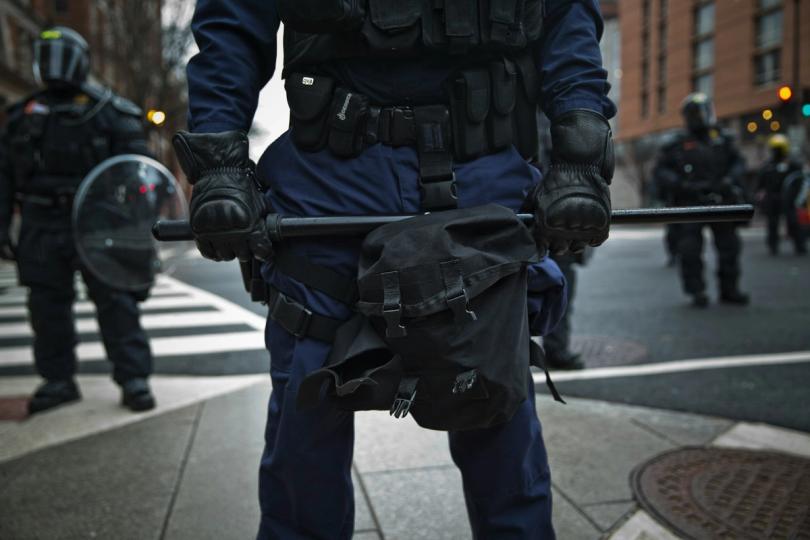
The image of a crypto holder being forced to unlock their phone at knife-point — or wrench-point, hence the name — has moved from Reddit horror story to measurable data point. On May 4, 2026, Binance responded to a 75 percent year-on-year rise in verified physical coercion incidents by launching Withdraw Protection, a user-controlled mechanism that freezes all on-chain withdrawals from an account for a period between one and seven days. The announcement is notable not only for what the feature does, but for what it cannot do and why that distinction matters for the broader evolution of exchange-level security.
Physical coercion attacks on cryptocurrency holders — known colloquially as wrench attacks — follow a straightforward logic: cryptographic security is irrelevant if a bad actor can force the account holder to authorize a transaction in person. As digital asset valuations have grown and wallet addresses have become easier to associate with real identities through on-chain analytics, the incentive to target high-value holders directly has grown accordingly. A $5 wrench can defeat the most sophisticated two-factor authentication setup if applied correctly. The result is a security problem that no private key design or hardware wallet can solve on its own.
Binance's Withdraw Protection is an attempt to address that gap at the platform level, creating a temporal buffer between a coerced authorization attempt and the actual movement of funds. Jameson Lopp, the Bitcoin security researcher who has maintained a running database of physical cryptocurrency attacks, and blockchain security firm CertiK both contributed to the underlying data: verified incidents rose 75 percent in 2025, reaching 72 confirmed cases. Assault-related incidents jumped 250 percent over the same period. Binance Chief Security Officer Jimmy Su described the feature as a direct response to patterns the exchange had observed in user withdrawal behavior under high-risk or coerced conditions.
How Withdraw Protection Works
Withdraw Protection is accessible through the Security section of the Binance app or website. Users set a lockdown period — any duration from one to seven days, with a default of 48 hours — during which all on-chain cryptocurrency withdrawals are automatically blocked. The block applies regardless of whether the account password is provided, two-factor authentication is passed, or the request comes from the account holder's registered device. No withdrawal can be processed during the lock window, full stop.
That design is deliberate. The scenario Binance is guarding against is one where a coerced account holder hands over their credentials under duress. If the lockdown is active, even a fully authenticated session cannot execute a transfer until the window expires. For someone who activates Withdraw Protection before traveling to a high-risk location, or who has reason to believe they are being targeted, the feature creates a cooling-off period that an attacker cannot circumvent through credential theft alone.
Users do have the option to enable early unlock, toggled separately from the lockdown itself. Early unlock requires at least two strong verification methods to proceed, creating a secondary authentication layer for anyone who needs to move funds before the window closes. Trading, conversions, and other account functions remain fully operational throughout the lockdown period — only on-chain withdrawals are suspended. The feature is available to all Binance users globally, with no eligibility requirements or tier restrictions.
Binance's CSO Jimmy Su also used the announcement to highlight a related but distinct risk: trading bots operating through API keys. If a user's API keys are compromised, an attacker can execute trades and drain account value without triggering a withdrawal in the traditional sense. Su recommended that users audit their active API connections, apply tight IP restrictions to API keys, and manage their online footprint carefully — avoiding public disclosure of approximate crypto holdings, wallet sizes, or exchange relationships.
The Surge in Physical Coercion: 72 Cases in 2025
The 72 verified cases documented by CertiK and Jameson Lopp in 2025 represent only confirmed incidents — those that reached public reporting channels, law enforcement records, or direct researcher documentation. The actual number of coercion events is almost certainly higher. Physical attacks on crypto holders are chronically underreported: victims are often reluctant to involve law enforcement given the pseudonymous nature of digital assets, and exchanges have limited visibility into whether a withdrawal executed by an authenticated user was done willingly.
The 250 percent jump in assault-related incidents is particularly striking because it suggests attacks have become more violent rather than merely more frequent. Early-era wrench attacks were often characterized by relatively low-level intimidation: threats, minor physical contact, or confrontation in semi-public settings. The 2025 data points to a shift toward more serious violence, including home invasions, kidnappings, and multi-day detention of victims and family members.
Geographic clustering has been observed across these incidents, with notable concentrations in jurisdictions where crypto wealth has become publicly visible — high-net-worth neighborhoods in Western Europe, Southeast Asia, and parts of Latin America — alongside targeted attacks on individuals who had disclosed holdings publicly through social media, conference appearances, or on-chain analytics tools that link wallet addresses to identities. The combination of rising asset values and increasingly sophisticated open-source intelligence tools has made it meaningfully easier for bad actors to identify and locate high-value targets.

The Policy vs. Cryptographic Lock Distinction
Binance has been explicit about one important limitation: Withdraw Protection is an internal policy mechanism, not a cryptographic one. The distinction matters for users trying to understand precisely what kind of protection they are getting.
A cryptographic lock would mean that the private keys or authorization mechanisms needed to move funds are mathematically inaccessible during the lockdown window — there would be no administrative pathway to override it, even for Binance itself. The Withdraw Protection feature does not work that way. It is enforced at the application layer, meaning Binance's systems honor the lock as a matter of policy. Court orders and law enforcement directives can override the lockdown if Binance receives a legally binding instruction to freeze or release funds. Ordinary support staff cannot override the lock, but the feature does not make Binance itself a barrier to legal processes.
For most users in most scenarios, this distinction is irrelevant. The practical threat they face is a coerced on-chain withdrawal, and Withdraw Protection addresses that directly. But for users concerned about regulatory overreach, government asset seizure, or exchange insolvency scenarios, the policy versus cryptographic distinction is meaningful. The feature provides robust protection against human attackers while preserving the ability of legal processes to function.
This is not a design flaw — it is a deliberate choice that reflects Binance's obligations as a regulated entity operating across multiple jurisdictions. A genuinely cryptographic lockout, one that Binance itself could not override under any circumstances, would put the exchange in conflict with financial regulators in nearly every market where it operates. The feature as designed threads that needle: strong enough to defeat a coerced withdrawal attempt, compliant enough to satisfy regulatory frameworks.
Coinbase Vaults and Kraken's Competing Approach
Binance is not the first major exchange to address time-delayed withdrawal security. Coinbase has offered Vault accounts for years — a product that requires multiple approvals and imposes a 48-hour waiting period on withdrawals, with an email-based cancellation window that allows users to halt a transfer they did not initiate. Kraken operates a Global Settings Lock, which prevents changes to security settings for a configurable cooldown period.
The difference is one of scope and intent. Coinbase Vaults are a product category with separate account management and are positioned primarily as a storage solution for long-term holdings. Kraken's Global Settings Lock protects account configuration rather than individual withdrawal events. Binance's Withdraw Protection applies universally to all on-chain withdrawals from a standard account, without requiring users to segment funds into a separate vault structure or accept reduced account flexibility.
That breadth makes Withdraw Protection more accessible for the median Binance user — someone who trades actively and holds a mix of assets — but also more blunt as an instrument. A user who wants granular control over which assets or wallets are protected, or who needs to maintain frequent withdrawal capability for portions of their portfolio, may find the binary lockdown less useful than Coinbase's Vault structure. For users whose primary concern is physical coercion during travel or in high-risk personal circumstances, the simpler universal approach may be more practical.
The broader trend is clear: major centralized exchanges are treating physical security as a product feature, not merely a user-education problem. Each platform's approach reflects its own architecture and regulatory positioning, but the underlying logic is the same — the attack surface for crypto theft has expanded beyond the digital domain, and platform-level defenses need to follow.
Managing Exposure: API Keys, Online Footprints, and Operational Security
Binance CSO Jimmy Su's public commentary around the Withdraw Protection launch went beyond the feature itself. Su specifically flagged trading bots operating with API keys as a parallel attack vector that the new lockdown does not address. An API key with broad permissions — including the ability to trade and transfer between internal accounts — can be exploited without the account holder initiating any withdrawal in the traditional sense. Value can be liquidated or repositioned within an exchange environment in ways that leave users exposed even when on-chain withdrawals are locked.
The operational security recommendations Su outlined are standard in the security community but frequently ignored in practice: restrict API keys to specific IP addresses, set permission scopes to the minimum necessary, rotate keys regularly, and review active API connections for any that are no longer in use. Beyond the technical hygiene, Su's broader point about online footprint management is worth emphasizing. Public declarations of crypto wealth — in social media bios, conference panels, or even implied through frequent mentions of trading activity — make individuals easier to identify as targets.
The pseudonymity of blockchain transactions is often misread as anonymity. Wallet addresses that can be linked to a real identity through exchange KYC records, court documents, data breaches, or simply consistent public association become a starting point for targeting. On-chain analytics tools are now sophisticated enough that a determined bad actor can reconstruct approximate wallet balances for publicly disclosed addresses with reasonable accuracy. The combination of that capability and the knowledge that a specific individual controls a high-value wallet is often sufficient to motivate a physical approach.
What Withdraw Protection Means for Exchange Security Standards
Binance's launch of Withdraw Protection is the most prominent exchange-level response to the wrench attack trend to date, and it will likely prompt other major platforms to evaluate or accelerate their own equivalent features. The 72-case data point, sourced from respected independent research, provides the kind of quantified justification that product teams can use internally to prioritize security features over revenue-generating functionality.
The feature also reflects a broader maturation in how exchanges think about their security responsibilities. First-generation crypto exchange security was almost entirely focused on the technical: protecting private keys, hardening against remote exploits, and preventing unauthorized digital access. As the industry has grown and user wealth has concentrated, exchanges have had to grapple with the fact that their most dangerous adversaries may not be sophisticated hackers operating from remote infrastructure — they may be individuals with physical access to account holders and the patience to wait for a forced authorization.
Withdraw Protection does not solve that problem definitively. It adds friction and a time buffer, which is often enough to make an attack impractical but is not a guarantee. A sufficiently determined attacker can wait out a seven-day lockdown, or target the family members of an account holder as leverage for early unlock. What the feature does is shift the calculus for opportunistic attacks, making Binance accounts meaningfully harder to drain under physical duress than exchange accounts without equivalent protections.
For the 72 documented victims of coercion in 2025, and the larger number whose cases went unreported, a feature like this arriving earlier would have made a material difference. Whether the broader exchange industry moves quickly enough to close the gap between the growing threat and available defenses will determine how far the data continues to worsen.
Sources
Reporting this article draws on. Bossblog summarises and analyses; the underlying reporting is theirs.
The BossBlog Daily
One email with the AI markets brief — the 13F moves, the Congressional trades, and what changed. No fixed schedule and no filler: it goes out when there is something worth sending.
Unsubscribe any time. We never sell or share the list.