
After months of negotiations that pulled in the White House, the banking lobby, and the largest US crypto exchange, Senators Thom Tillis and Angela Alsobrooks released compromise text on the stablecoin yield provision of the Digital Asset Market Clarity Act on May 1. The deal clears what has been the single biggest obstacle to Senate Banking Committee action — a fight over whether crypto firms should be allowed to pay customers interest on stablecoin holdings — and sets the stage for a committee markup targeting the week of May 11. Whether that markup actually arrives is a different question. Prediction market Polymarket, which traders have been using as a real-time confidence gauge on the bill's 2026 passage odds, shows the probability sitting at 46 percent, down from 65 percent in January. That 19-point slide captures what most Beltway observers already sense: the Clarity Act has a genuine path to Trump's desk before the midterm election crunch closes the calendar, but nothing about it is locked in.
The bill itself passed the House 294 to 134 in July 2025, an unusually lopsided bipartisan margin that reflected both the industry's lobbying success and broad political consensus that the United States needs a clear regulatory framework for digital assets before competing jurisdictions — the EU, Hong Kong, Singapore — lock in global standards first. The House version establishes a three-category classification system for digital assets and hands the CFTC exclusive jurisdiction over spot markets for digital commodities. What it does not do is settle the stablecoin yield fight, which migrated to the Senate and ate up most of the first quarter of 2026.
What the Yield Compromise Actually Says
The Tillis-Alsobrooks text, codified as Section 404 of the bill, prohibits covered parties from paying "any form of interest or yield... solely in connection with holding" stablecoins or "in any manner economically or functionally equivalent to the payment of interest or yield on an interest-bearing bank deposit." The sentence is precise about what it bans: passive yield for simply holding stablecoins, the kind of arrangement that mirrors a savings account. What it does not ban — and this is the carve-out the industry was negotiating for — are rewards "based on bona fide activities or bona fide transactions." Coinbase's CLO Paul Grewal translated this into plain English: the company's activity-based reward programs tied to platform usage, trading, and payment participation are preserved. CEO Brian Armstrong's immediate response on social media — "Mark it up" — was read by everyone in Washington as an industry seal of approval.

The compromise is economically consequential for Coinbase, which reported $1.35 billion in stablecoin revenue in 2025, much of it linked to rewards-driven distribution payments from its USDC partnership with Circle. Under the new framework, Coinbase cannot simply pay users for keeping USDC balances. It can pay them for using USDC in transactions, for trading, for staking, for platform participation. The distinction forces a "buy and use" model over a "buy and hold" model — a structural shift that the banking lobby specifically demanded as its price for not opposing the broader Clarity Act. Circle CSO Dante Disparte endorsed the deal without qualification, pointing to USDC's sustained growth as evidence that regulatory clarity drives institutional adoption rather than constraining it.
Not everyone in the crypto industry is satisfied with the breadth of the new language. Crypto Council for Innovation CEO Ji Hun Kim flagged concerns that Section 404's prohibition language goes "VERY FAR beyond" the earlier GENIUS Act payment stablecoin framework and applies to all digital asset market participants, not just stablecoin issuers. CCI, while still urging the Senate Banking Committee to proceed with a markup, is signaling that the bill as written may create unintended compliance burdens for exchanges and DeFi platforms that offer yield-adjacent products bearing no functional resemblance to bank deposits. That tension between the large industry players eager to ship a framework and the broader ecosystem worried about scope creep is one of the remaining friction points the Banking Committee will need to navigate during markup.
Senate Calendar Pressure and the May 11 Window
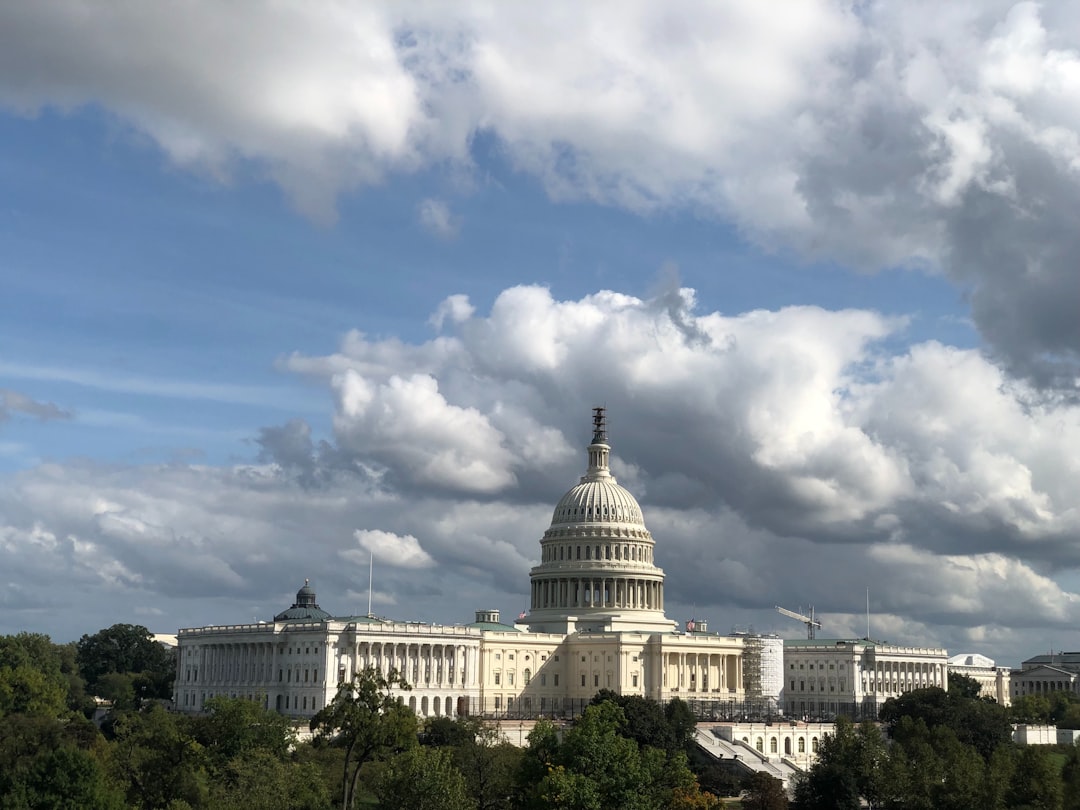
Senate Banking Committee Chairman Tim Scott has publicly committed to a markup this month, and the committee's scheduling dynamics make the week of May 11 the earliest realistic target. The Senate is in recess through May 9, and a markup requires preparation time for member amendments after the final text circulates — logistics that compress the available window considerably. Scott told reporters last week that he has secured votes from Senators Tillis and additional Republicans, but Senator John Kennedy has not committed. Kennedy's support is not required for committee passage but matters for floor dynamics in a chamber where any individual senator can delay legislation through procedural tools.
Galaxy Digital head of firmwide research Alex Thorn told clients that the release of the final yield compromise text signals the Banking Committee is ready to schedule. Treasury Secretary Scott Bessent, SEC Chair Paul Atkins, and White House crypto adviser Patrick Witt have all been publicly backing passage, adding executive branch weight to the timeline. Bessent made the Clarity Act a priority in his February testimony to the Banking Committee, and Atkins has framed regulatory clarity for digital assets as essential to US financial market competitiveness — a bipartisan argument that matters in a Senate where some Democratic members remain skeptical.
The SEC is also responding to the legislative momentum. Crypto.news reported this week that the agency has scheduled a CLARITY Act roundtable for May, bringing together SEC and CFTC officials with crypto industry representatives to debate digital asset market structure jurisdiction. That roundtable serves a dual purpose: it gives the agencies a structured venue to signal their comfort with the bill's CFTC-centric framework, and it gives the Banking Committee cover to argue that regulatory coordination is already underway.
Why Polymarket Odds Have Fallen Despite Industry Unity
The prediction market signal deserves serious attention. Polymarket traders are not sentiment indicators; they are people putting real money behind probabilistic assessments of legislative outcomes. The drop from 65 percent to 46 percent since January reflects something the industry's enthusiasm cannot fully obscure: the 2026 Senate calendar is brutally constrained, and the Clarity Act is one of several competing priorities fighting for floor time that does not exist in unlimited supply.

Senator Bernie Moreno issued the starkest warning: missing the May markup could freeze the bill's progress for years. The reasoning is straightforward. After the May markup window, the Senate's remaining open calendar before midterm election demands fully absorb member attention runs to roughly eleven weeks. Floor time for a complex market structure bill requires unanimous consent agreements or significant majority leadership support. Any senator with a grudge, a lobbyist with a competing ask, or a procedural objection can burn that time. The banking lobby, despite nominally accepting the yield compromise, still has members who prefer no bill to this bill — and their tools for slow-walking floor action are well-understood in Washington.
The 46 percent market odds do not price a failure of the compromise itself. They price the structural difficulty of moving any significant legislation through the US Senate in an election-proximate year, against a calendar that would challenge a bill with zero opposition. Over 100 industry groups have now publicly demanded action, and nearly 30,000 individual crypto advocates have written to the Banking Committee. That organized pressure matters at the margins, but it cannot conjure Senate floor time that majority leadership has not allocated.
What Passage or Failure Would Mean for Crypto Markets
The Clarity Act matters beyond its specific regulatory provisions because it would remove the single largest source of structural uncertainty hanging over US crypto markets: whether the CFTC or the SEC regulates most digital assets. That question has driven a decade of enforcement-by-litigation that has constrained institutional participation, limited product development, and generated billions in compliance costs for companies trying to operate across both agencies' jurisdictions simultaneously.
Passage would trigger a rapid institutional response. Firms that have held off launching crypto derivatives desks, custody products, and on-chain securities infrastructure while awaiting regulatory clarity have made that waiting period explicit in public filings. The CFTC's institutional market for digital commodities would expand substantially under CFTC supervision — an environment most crypto-native firms prefer to SEC oversight given the CFTC's more principles-based approach to market structure regulation.
Failure would reset the clock to 2027 at the earliest, by which point the midterm landscape and Senate composition would be materially different. The industry would continue operating under the current patchwork of enforcement precedents, state money transmitter licenses, and agency guidance that has defined the period since 2020. That patchwork is workable — the industry has grown substantially within it — but it forecloses the kind of institutional product development that requires long-term regulatory certainty.
The Banking Sector's Endgame
One stakeholder whose position is sometimes misread in coverage of the Clarity Act is the banking industry itself. Banks are not uniformly opposed to crypto market structure legislation; they are opposed to any framework that allows crypto firms to offer financial products that compete directly with federally insured deposits without equivalent regulatory burden. The yield compromise addresses that concern directly. By prohibiting passive yield on stablecoin holdings — the most bank-deposit-adjacent product structure — the bill creates a clear demarcation between crypto platforms and deposit-taking institutions that the banking lobby needed before it could tolerate the bill's passage.
That demarcation also creates a new competitive dynamic. Stablecoin issuers under the Clarity Act framework must hold 1:1 backing in high-quality liquid assets — effectively Treasury bills — and cannot pay deposit-style interest. Banks, which can lever their deposits and do pay interest, are structurally different products under the new framework, not substitutes. The banking lobby's acceptance of this compromise, fragile as it is, provides the last major industry coalition the bill needed to navigate the Senate without a coordinated opposition campaign.
Senator Tim Scott's stated goal is a presidential signature by summer 2026. That would require the May 11 markup, a floor vote in June, and conference committee reconciliation with the House version inside roughly eight weeks — an aggressive but not impossible schedule if majority leadership makes it a priority. The Polymarket odds say it is more likely to miss than hit. The industry's organized pressure campaign says the political cost of missing is high enough to compel action. Both can be true simultaneously.
What to Watch in the Next Two Weeks
The immediate signal will come from the Banking Committee's schedule. If Chairman Scott announces the markup date for the week of May 11, the odds will likely move back toward 55 to 60 percent. If the week passes without a scheduled markup, Polymarket traders will interpret the delay as structurally significant rather than procedural.
The SEC roundtable in May serves as a secondary indicator. Active participation from SEC and CFTC chairs alongside substantive engagement from industry representatives would signal that regulatory coordination is proceeding in parallel with legislative action — the kind of executive branch alignment that moves Senate schedules. Senator Kennedy's public position before the week of May 11 is the third data point; his opposition is not fatal at committee but it matters downstream for floor scheduling dynamics.
For crypto market participants, the bill's passage or failure will have limited short-term price impact on Bitcoin and Ethereum — both are large enough that their markets are more sensitive to macroeconomic conditions and ETF flows than to US legislative calendars. The impact will be felt most sharply in the mid-tier infrastructure layer: exchanges with pending product approvals, custody providers awaiting CFTC registration pathways, and on-chain securities platforms that have paused US market development. Those companies are watching the Banking Committee's schedule with exactly the kind of attention that explains why over 100 industry groups filed public letters this week demanding the markup happen now.
Sources
Reporting this article draws on. Bossblog summarises and analyses; the underlying reporting is theirs.
The BossBlog Daily
One email with the AI markets brief — the 13F moves, the Congressional trades, and what changed. No fixed schedule and no filler: it goes out when there is something worth sending.
Unsubscribe any time. We never sell or share the list.