
On the afternoon of April 29, the Federal Open Market Committee voted to hold its benchmark federal funds rate in the 3.5% to 3.75% range it has occupied since December—but the unanimity that typically characterizes Fed decisions was nowhere to be found. The vote was 8 to 4, four dissenting members publicly breaking from the committee majority in the same meeting, the highest level of internal division the Fed has seen since October 1992. That number alone would have made the meeting historically notable. What made it genuinely remarkable was the context: it was Jerome Powell's final meeting as chair, Kevin Warsh's Senate confirmation was advancing simultaneously on Capitol Hill, and oil priced at $107 per barrel was silently constraining every option the committee considered.
The 8-4 Vote: What Each Dissent Actually Meant
The four dissents at the April 29 meeting were not a unified bloc pushing in the same direction. They reflected two distinct and partially contradictory objections to the majority's position, which makes the apparent cohesion of the dissent count somewhat misleading.
Stephen Miran, a Federal Reserve governor appointed earlier in 2026, dissented because he wanted to cut rates. Specifically, Miran preferred to lower the target range by 25 basis points at this meeting, bringing the funds rate to 3.25%–3.50%. His argument, as summarized in the official record, rested on slowing labor market momentum—unemployment sat at 4.3% in the most recent data—and his judgment that inflation, though still running above target, was sufficiently on a downward trajectory to justify beginning the easing cycle in earnest rather than waiting.
The other three dissenters—Beth Hammack of the Cleveland Fed, Neel Kashkari of the Minneapolis Fed, and Lorie Logan of the Dallas Fed—took the opposite posture. They supported holding rates where they are but objected to the language the majority embedded in the policy statement. The committee's statement retained what analysts and traders read as an "easing bias," phrasing that implies the next policy move is more likely to be a cut than a hike. Hammack, Kashkari, and Logan wanted that language removed. Their collective view: with WTI crude at $107.16 per barrel and Brent at $118.80, inflation risks are tilted to the upside, and the committee should not be signaling openness to cuts it cannot credibly deliver.
The practical result of this configuration is that the FOMC's statement managed to satisfy almost nobody. Advocates of easing got a hold, not a cut. Advocates of tightening or neutral policy got an easing bias they voted against. The 8-4 split is not a committee pulled toward a single alternative position; it is a committee split among at least three different policy preferences simultaneously. That kind of internal fracture has not appeared in the FOMC's public record in more than three decades.
Powell's Unprecedented Decision to Stay as Governor
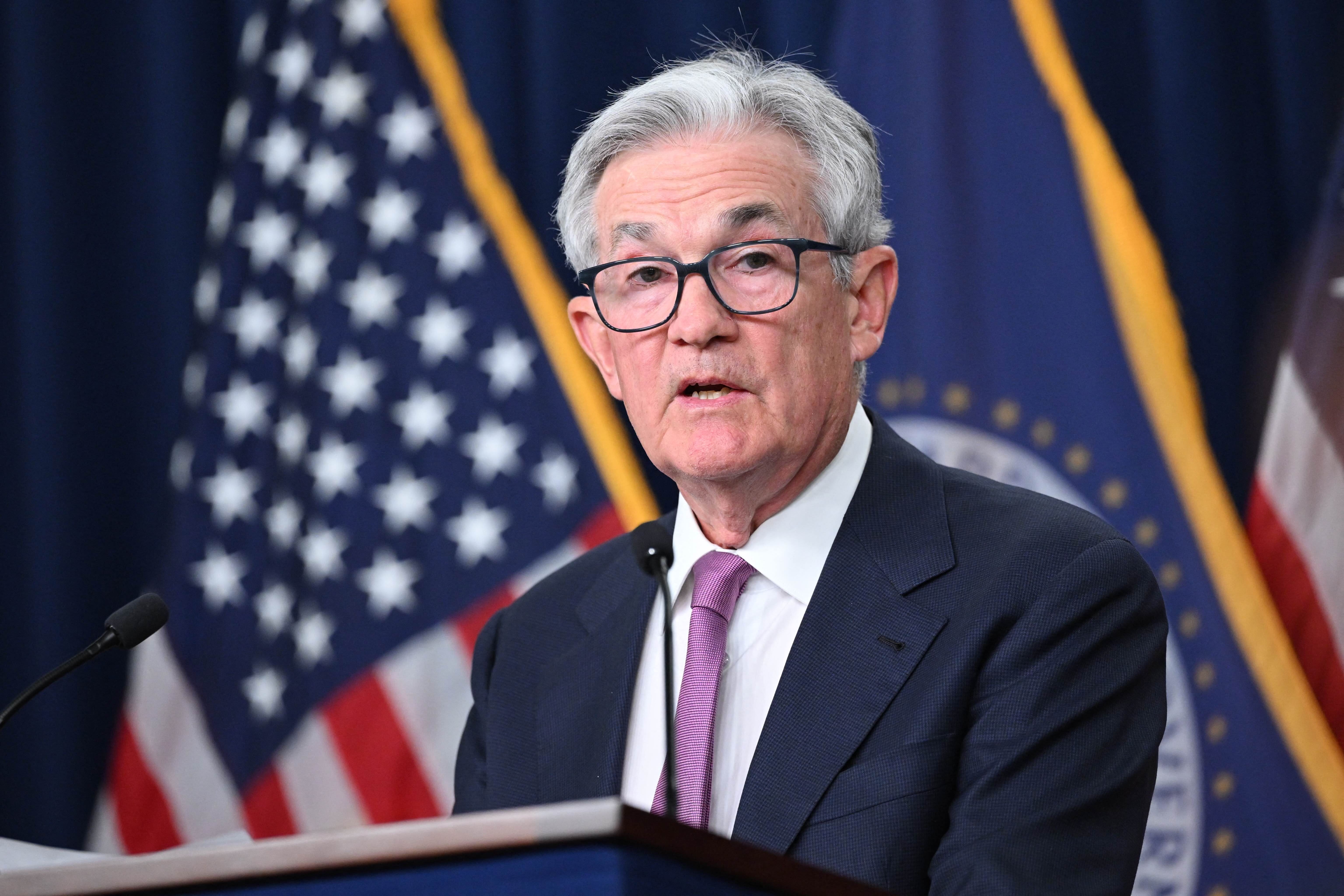
The most personal dimension of the April 29 meeting was Powell's announcement, made during the post-decision press conference, that he intends to remain on the Federal Reserve's Board of Governors after his term as chair expires in mid-May. That decision is genuinely without precedent in the Fed's modern history. Former chairs who have left the position have consistently departed the institution entirely, often moving to academic positions, think tanks, or private sector roles. Powell's choice to stay—in a reduced role, without the chair's authority, but still seated at the FOMC table—reflects the specific political pressure he has been operating under.
Powell cited what he described as "a series of legal attacks on the Fed which threaten our ability to conduct monetary policy without considering political factors" as the reason he was staying. He framed the decision as a defensive measure for the institution rather than a personal one, indicating he would remain until an ongoing internal investigation into Federal Reserve renovation expenditures is "well and truly over with transparency and finality." The phrasing was carefully chosen to avoid directly naming the Trump administration's efforts to remove him before his natural term expiration—efforts that courts have so far declined to enable—while making clear that those efforts were exactly what he was responding to.
President Trump, when asked about Powell's decision to remain as governor, said he "doesn't care" that Powell is staying and called the arrangement "very unusual." The exchange captured the particular dynamic that has defined the Powell-Trump relationship since Trump returned to office: public antagonism, limited direct confrontation, and institutional continuity grinding forward through political friction.
Kevin Warsh's Ascent and What It Means for Rate Policy
While Powell was conducting his final press conference as chair, the Senate Banking Committee was advancing Kevin Warsh's nomination to succeed him, on a party-line vote. Warsh is expected to face a full Senate confirmation vote the week of May 11, which would allow him to be confirmed before Powell's chair term expires on May 15. The timeline is tight but achievable, and the Republican Senate majority gives Trump's pick a clear path to confirmation.
Markets are already attempting to price the transition. Warsh built his reputation at the Fed during the 2008 financial crisis as a hawk who prioritized price stability and Fed credibility over short-term economic support, though he has since expressed views consistent with a more flexible framework under the right conditions. The central tension in the market's current assessment of Warsh is between his stated commitment to bringing inflation durably to 2% before easing—a commitment that aligns with the Hammack-Kashkari-Logan bloc's position—and the political reality that his nomination was driven partly by a White House eager for rate cuts.
Analysts at Simplify Asset Management and Osaic have noted that Warsh's credibility as an independent monetary policymaker may actually require him to resist early pressure to cut, even if that means disappointing Trump in the short run. Brent Schutte of Northwestern Mutual pointed out that bond markets are already doing the arithmetic: with traders no longer fully pricing even a single rate cut in 2026, and the 2-year Treasury yielding 3.937%, the fixed-income market's message is that it does not expect the Warsh Fed to ease aggressively regardless of political preference.
Treasury Yields Jump: The Market's Verdict on the Fed's Dilemma
The immediate market reaction to the April 29 decision was in the bond market, not equities. The 10-year Treasury yield rose to 4.416% on the day of the announcement, and the 2-year yield climbed to 3.937%. Both moves reflected the same inference: the Fed is on hold for longer than previously hoped, the easing bias in the statement notwithstanding, because the inflation math does not support cuts in a world with $107 crude.
Bond traders read the four-dissent configuration accurately. The three hawks who objected to the easing bias were signaling, without being able to enforce it, that the statement's forward-looking language overstates the committee's actual willingness to cut. If Hammack, Kashkari, and Logan are representative of where the median FOMC member will sit once Warsh takes the chair, the "easing bias" could disappear from future statements entirely, and with it the market's residual pricing of rate cuts in late 2026.
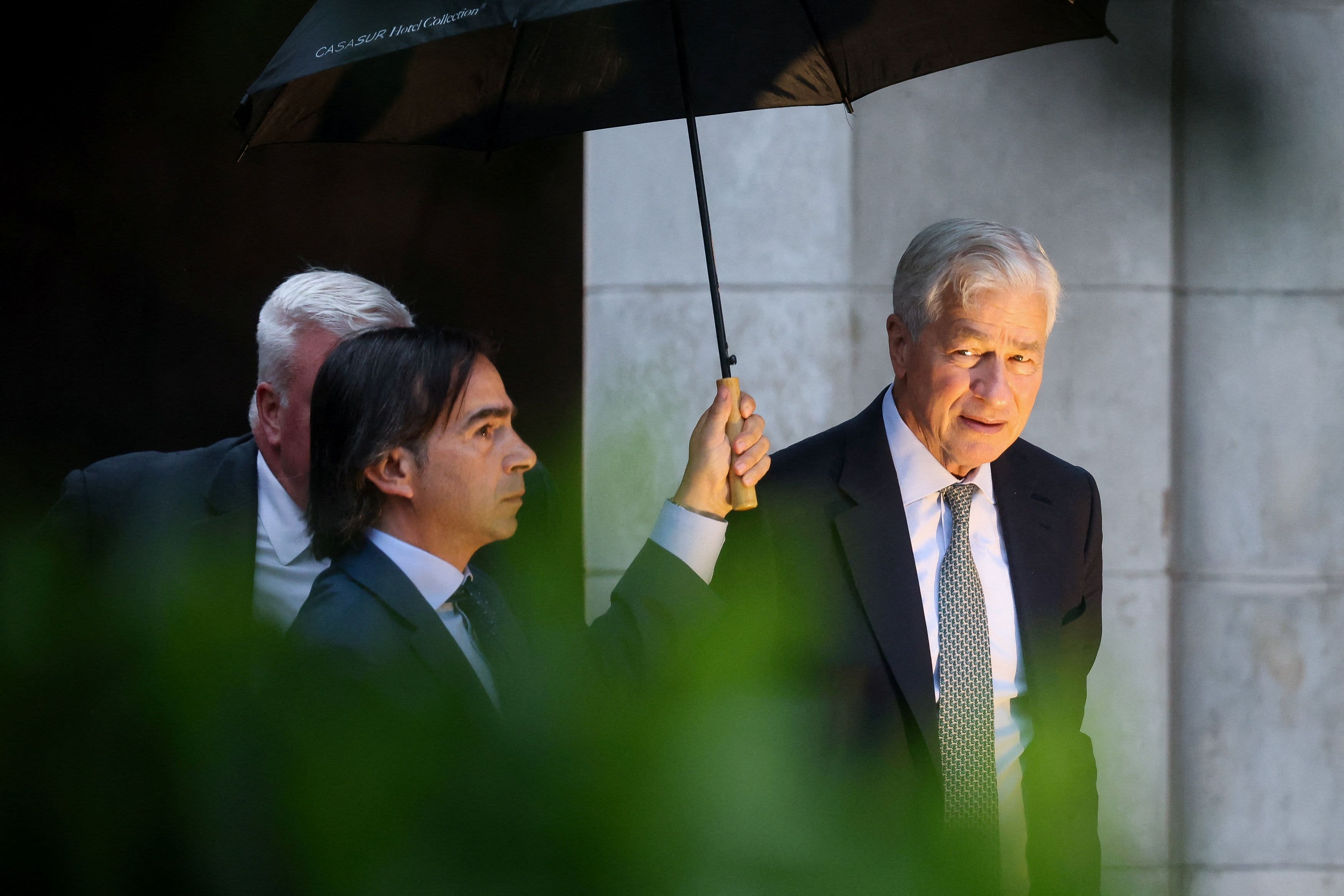
JPMorgan Chase's fixed-income strategy team flagged an additional complication: rising oil prices are functioning as a tax on consumer spending that could slow economic growth, but because they also feed directly into headline inflation readings, they prevent the Fed from responding to that slowdown with easier policy. The result is a stagflationary squeeze that monetary policy is largely unable to address. Jamie Dimon, JPMorgan's chief executive, has separately warned of a potential credit crisis developing in segments of the leveraged loan and commercial real estate markets, arguing that the combination of elevated rates and energy-driven cost pressure creates stress that has not yet fully appeared in public financial data.
Kay Haigh of Goldman Sachs noted that the bond market's repricing since the April 29 meeting has been orderly—yields have risen but not spiked—suggesting investors believe the Fed's hold is sustainable rather than a prelude to emergency tightening. Philip Blancato of Osaic characterized the current rate environment as one in which investors in fixed income are being reasonably compensated for duration risk at 4.4%, but face meaningful reinvestment uncertainty depending on how quickly inflation trends down once oil prices normalize.
Oil, Iran, and the Inflation Trap Closing Around the Fed
The Iran war and its effect on global oil prices is not peripheral to the Fed's decision; it is central. WTI crude at $107 and Brent at $119 represent a sustained supply shock with no clear resolution timeline. The Strait of Hormuz closure has reduced global crude supply by an estimated 6 to 8 million barrels per day since February, pushing energy prices to levels not seen in nearly two decades and feeding through to transportation costs, manufacturing inputs, and consumer goods prices across virtually every sector of the economy.
For the Fed, this creates a problem that has no clean monetary policy solution. Cutting rates to support a slowing economy would risk validating inflation expectations that have been, so far, mostly anchored. Raising rates to fight energy-driven inflation would deepen the growth slowdown without addressing its cause—the geopolitical disruption that is restricting oil supply cannot be resolved by monetary tightening in Washington. Holding rates where they are, as the committee chose to do on April 29, is the least-bad option but not an obviously good one.
Paisley Nardini of Simplify Asset Management summarized the constraint clearly: there is no rate policy the Fed can set that resolves the inflation caused by a closed strait. The committee can only wait for the geopolitical situation to evolve—a commodity-driven supply shock has to be addressed on the supply side, not the demand side. Until oil prices fall, either because the Hormuz closure ends or because demand destruction deepens sufficiently, the Fed has very limited room to cut without appearing to abandon its inflation mandate.
What Comes Next: Three Scenarios for the Warsh Fed
The transition from Powell to Warsh, expected to be complete by May 15, sets up three plausible trajectories for Federal Reserve policy through the remainder of 2026.
In the first scenario, oil prices decline significantly as the Iran conflict moves toward a ceasefire and Hormuz shipping gradually normalizes. Under that path, the inflationary pressure feeding into CPI readings falls quickly, unemployment ticks toward 4.5%, and Warsh finds the data environment permitting one or two rate cuts in the second half of the year. That would allow Trump to claim the rate reductions he has been demanding, Warsh to demonstrate flexibility, and the bond market to reprice modestly lower yields. This is the most market-constructive scenario.
In the second scenario, oil prices remain elevated through summer as negotiations stall and the Hormuz closure proves more durable than expected. The Fed holds throughout 2026, bond traders who have already priced out cuts are proven correct, and the question becomes whether economic growth holds up well enough to avoid a recession despite elevated energy costs. Credit stress that Dimon has flagged in commercial real estate and leveraged lending could surface more visibly in this environment.
In the third scenario, a new escalation—military, diplomatic, or economic—drives oil prices above $130 per barrel. At that level, the stagflationary dynamic becomes acute, the Fed faces pressure to tighten to defend inflation expectations, and the credit stress JPMorgan has been warning about crystallizes into a more significant financial stability event. This is the tail risk, not the base case, but the 8-4 dissent at the April 29 meeting suggests that at least three members of the current FOMC already see upside inflation risk as the dominant threat. Whether Warsh, once confirmed, aligns with that hawkish bloc or manages to chart a middle path will be the defining monetary policy question of the second half of 2026.
Sources
Reporting this article draws on. Bossblog summarises and analyses; the underlying reporting is theirs.
The BossBlog Daily
One email with the AI markets brief — the 13F moves, the Congressional trades, and what changed. No fixed schedule and no filler: it goes out when there is something worth sending.
Unsubscribe any time. We never sell or share the list.