
Brent crude briefly spiked to $125 a barrel on Wednesday as traders digested a cascade of signals from Washington: a presidential rejection of Tehran's latest peace overture, Axios reporting that U.S. Central Command was preparing options for further military strikes, and a Truth Social post from President Trump reiterating his threat to extend the naval blockade of Iranian ports. By mid-morning in New York, June Brent had pulled back to $116.05, a 1.7% decline from the intraday high, but the day's trajectory told its own story. Analysts at Premier Miton Investors and Plurimi Group publicly warned that equity markets were still underpricing the long-run implications of a war now entering its third month, and the Dow Jones Industrial Average logged its fifth consecutive session of losses.
The simultaneous release of the government's preferred inflation gauge??he core personal-consumption-expenditures price index??nd first-quarter GDP data added a second, more structural dimension to the day's unease. Core PCE rose 0.3% in March and 3.2% year-over-year, its fastest pace since November 2023. Headline PCE, dragged higher by energy, jumped 0.7% in the month alone, lifting the annual rate to 3.5%. GDP expanded at a 2% annualized rate in the first quarter, below the 2.2% consensus but recovering from a sclerotic 0.5% in the fourth quarter of 2025. The numbers sketched an economy running hot on inflation and soft on growth?? configuration that historically constrains central-bank optionality in precisely the way the Federal Reserve least wants to face it.
How the Strait of Hormuz Chokepoint Became a Global Price Setter
The oil market's sensitivity to Iranian-supply news has been acute since late February, when U.S. strikes destroyed key segments of Iran's naval infrastructure and prompted the imposition of a naval cordon across the eastern approaches to the Strait of Hormuz. Before the war began, Brent crude was trading around $70 per barrel; it has since risen roughly 70%, with Wednesday's intraday print at $125 marking a four-year high. West Texas Intermediate tracked the move, rising as high as $108 before settling around $106.59.
The mechanism is relatively direct. The Strait of Hormuz handles roughly 20% of global petroleum trade. Iranian crude exports, at approximately 1.7 million barrels per day before the conflict, have effectively gone to zero under the blockade, and traders are pricing in the possibility that spillover effects??nsurance surcharges, tanker diversions, sporadically halted transit??ill continue to crimp throughput even from non-Iranian producers transiting the strait. Analysts at CNBC noted that oil futures markets are currently in backwardation, meaning near-dated contracts trade above long-dated ones, which technically signals a market expectation that the supply disruption is transient. Yet the spot moves on geopolitical headlines suggest that backwardation reflects hope rather than conviction. Trump's unambiguous rejection of Tehran's latest proposal??hich reportedly included a partial reopening of the strait in exchange for a ceasefire??ignals the conflict will not resolve on a timeline that oil markets have priced.
March PCE and Q1 GDP Confirm an Uncomfortable Macro Regime
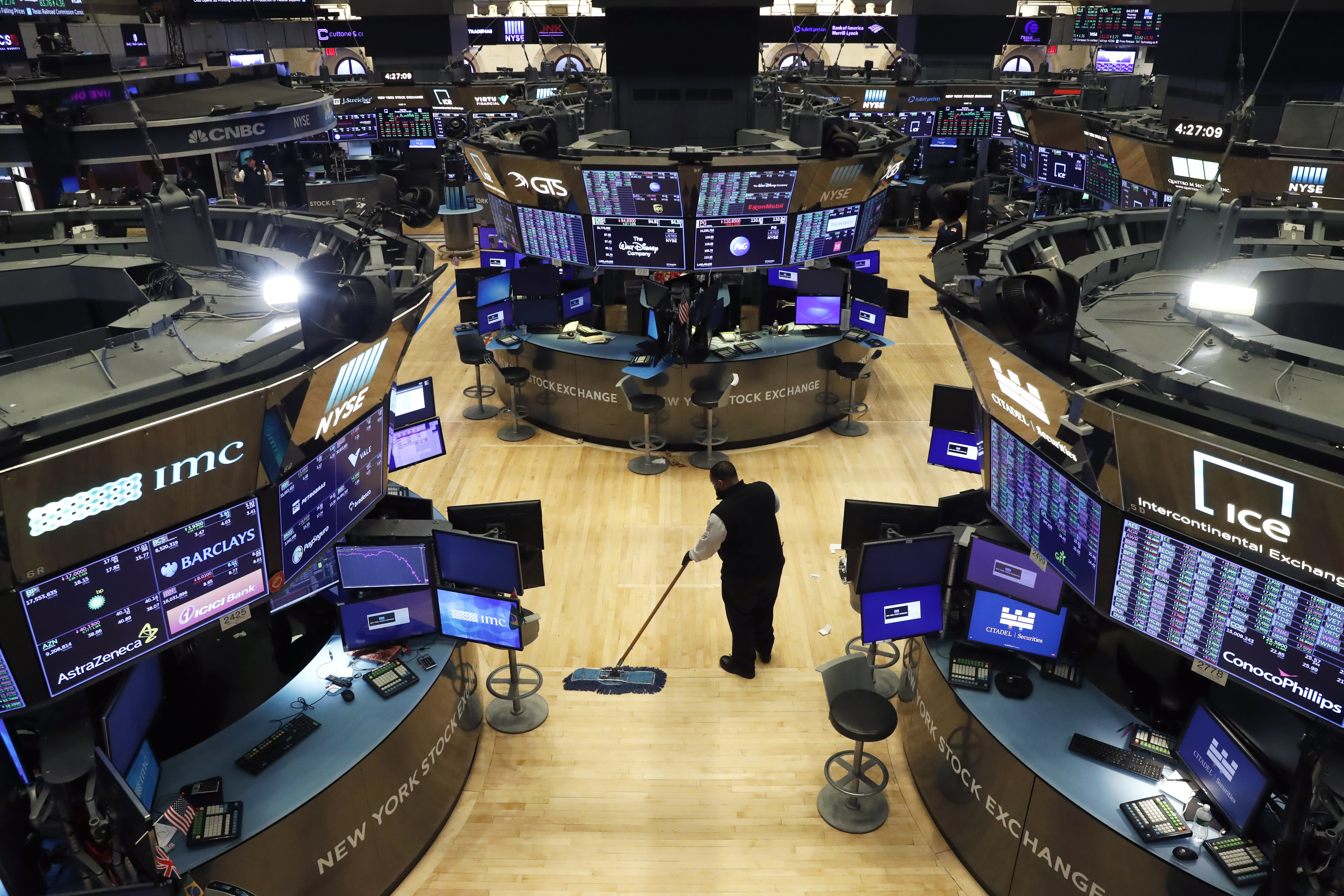
The Commerce Department's March PCE print landed within its consensus range but still managed to unsettle. The headline 0.7% monthly surge was driven overwhelmingly by goods prices, which rose 1.4% in the month, with energy goods and services up 11.6%??he direct fingerprint of the oil shock propagating into the consumer price basket. Services inflation remained stubborn at 0.4% monthly, meaning that even if oil stabilizes, underlying price stickiness shows no sign of abating. Core PCE at 3.2% annually sits more than a full percentage point above the Fed's 2% target and has now accelerated for two consecutive months.
Against that backdrop, the first-quarter GDP figure of 2% annualized was, at best, lukewarm comfort. Final domestic demand held up better than the headline??onsumer spending contributed positively??ut net exports subtracted from growth as the war-induced energy import bill widened the trade deficit. The labor market continued to flash contradictory signals. Initial jobless claims for the week ending April 25 came in at 189,000, the lowest level since 1969, suggesting that layoffs remain historically rare. Yet Goldman Sachs economists noted that February's payroll revisions showed job creation had fallen by 92,000, with underlying trend growth barely above zero. That divergence??ew layoffs but almost no new hiring??s a classical late-cycle indicator, compounded by genuine war-driven uncertainty that makes employer decisions to add headcount particularly cautious.
Goldman's Recession Calculus: 25% Odds and a Stagflation Warning
Goldman Sachs raised its 12-month U.S. recession probability to 25%, up from 20%, following the labor-market revisions and escalating energy cost pressures. The bank's economists laid out a baseline scenario in which Brent crude averages $98 per barrel over the near term before retreating to $71 by year-end?? forecast that, in light of Wednesday's $125 spike, now looks optimistic. In a worst-case scenario where Brent sustains around $110, Goldman projected headline PCE inflation approaching 4.5% and unemployment climbing to 4.6% by the third quarter of 2026, from 4.44% currently.
The bank pushed its two expected Federal Reserve rate cuts back to September and December, a significant delay from earlier forecasts that anticipated a June start. The reasoning: a higher inflation trajectory makes it structurally harder for the Fed to ease even if growth wobbles?? bind that Goldman described as the Iran premium crowding out the growth premium. The bank simultaneously shifted its sector recommendations, moving to overweight healthcare and materials and paring exposure to stocks sensitive to middle-income consumers or non-residential construction. The implication is that whatever growth exists in the economy is unlikely to flow evenly. Companies serving households facing $4.30-per-gallon gasoline and elevated food costs will face a tighter demand environment than those serving infrastructure or institutional clients. Goldman also flagged that tariffs added more than 70 basis points to core inflation even before the oil shock, meaning the price-level problem the Fed faces is at least partly self-inflicted through trade policy rather than purely imported from the Middle East.
Consumer Spending Under Pressure as Gas Prices Surge 30 Cents in a Week
The pump price data underscores the household transmission of the oil shock. The national average for gasoline has risen 30 cents in a single week, according to AAA, reaching $4.30 per gallon and erasing much of the consumer purchasing-power recovery that followed the post-pandemic disinflation of 2023 through 2024. Energy is the most visible and psychologically immediate form of inflation; its acceleration at this pace tends to generate sentiment deterioration that leads actual spending data by four to six weeks, meaning consumer confidence surveys in May are likely to weaken materially even if hard spending data in March looked relatively solid.
Equity markets reflected the strain. The Dow Jones Industrial Average closed lower for the fifth consecutive session, and the S&P 500 shed more than 1% intraday before recovering partially. The bond market's signal was more ambiguous: 10-year Treasury yields dipped modestly as some investors sought haven, while inflation breakevens ticked higher, compressing real yields. That configuration??ising nominal inflation expectations alongside declining real yields??s consistent with stagflationary regimes and creates a particularly uncomfortable environment for growth and technology stocks, which are valued on long-duration earnings streams.
Earnings from major technology companies provided some counterweight. Alphabet reported 20% revenue growth and raised its full-year capital expenditure outlook to $190 billion, and Microsoft topped revenue forecasts, though it flagged rising memory costs as a risk to future margins. The resilience of megacap technology earnings partly explains why the broader index did not fall more sharply; the Magnificent Seven's aggregate free cash flow generates a gravitational floor that ordinary market selloffs struggle to overcome. Nevertheless, even Big Tech earnings calls registered the uncertainty: multiple executives employed language about "a heightened level of uncertainty" in their capital-allocation commentary??anguage that tracked the Federal Reserve's own framing almost verbatim.
The Fed's Most Divided Vote Since 1992 and What It Reveals About the Rate Path
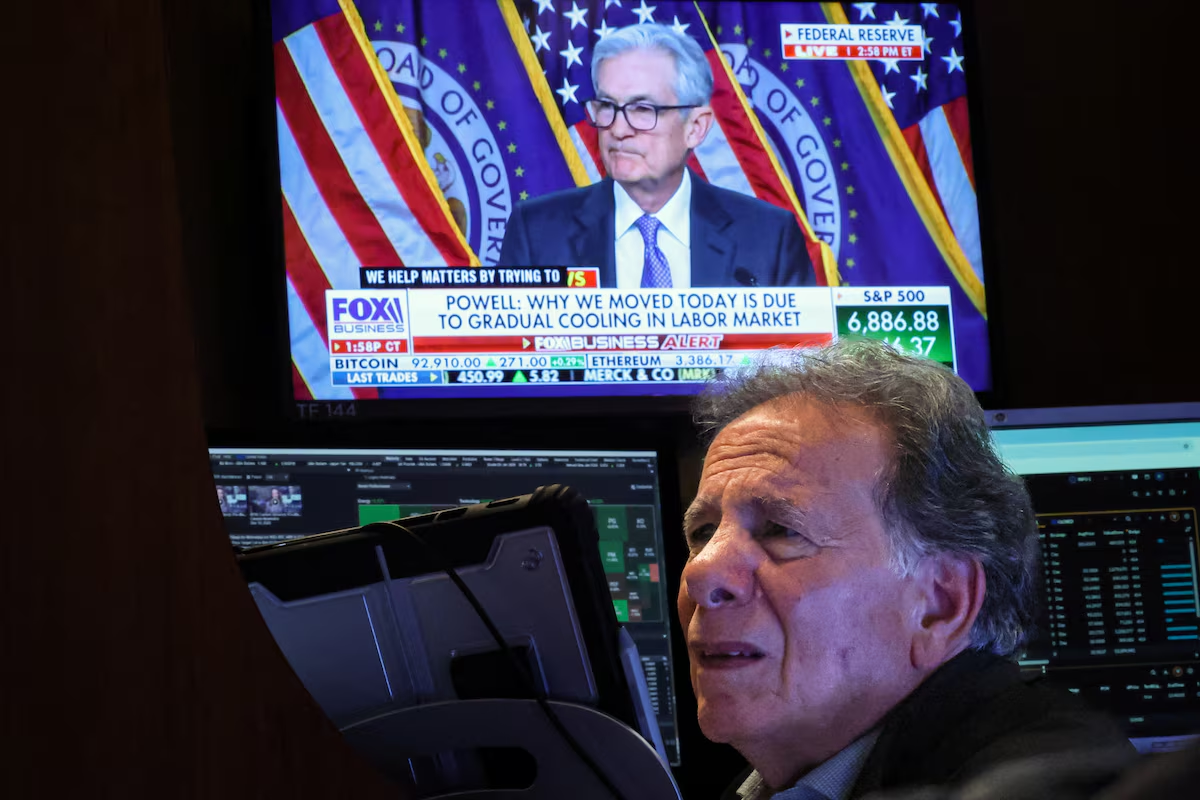
The Federal Open Market Committee voted 8-4 on Wednesday to hold rates steady at 3.5% to 3.75%, the most divided decision since September 1992. The four dissenting members preferred a 25-basis-point cut, citing concern that the war-driven energy shock was creating an asymmetric demand risk??pecifically, that the oil price surge would ultimately suppress consumer spending more than it would sustain wages, tipping the economy into demand-side contraction rather than a wage-price spiral. The eight members who voted to hold argued that cutting into an elevated inflation print carried significant credibility risk, and would signal prematurely that the Fed was willing to accommodate supply-side price increases.
Fed Chair Jerome Powell, who has signaled he will remain in his position through the end of his term despite ongoing legal challenges related to the Trump administration's attempted removal, struck a carefully neutral tone at the post-decision press conference. Developments in the Middle East, Powell said, are contributing to a high level of uncertainty about the economic outlook, and the committee was prepared to respond appropriately as the picture clarifies. Powell explicitly declined to characterize the current regime as stagflation, instead framing it as a complex supply shock overlaid on an underlying solid labor market. That framing carries policy significance: stagflation formally describes a combination of high inflation and high unemployment, and with claims at 189,000, the unemployment half of that equation has not yet materialized. The FOMC's 8-4 split suggests that at least four members believe the lag between energy-shock onset and labor-market deterioration is short enough to justify pre-emptive easing now, rather than waiting for unemployment data to confirm what the labor-market internals already imply.
The coming weeks will clarify whether the $125 oil print was a transient spike or the beginning of a new price floor. If U.S.-Iran negotiations remain at an impasse and tanker diversions continue to compound supply disruptions, Goldman's worst-case $110 sustained-average scenario could prove conservative. Financial markets entered May with a regime that is genuinely novel: energy-driven inflation running well above target, growth softening but not collapsing, a labor market simultaneously tight on layoffs and nearly stagnant on new hiring, and a Federal Reserve publicly divided about how to respond. That combination is not stagflation by the textbook definition??ot yet??ut it is the precise set of conditions under which stagflation tends to arrive.
The BossBlog Daily
One email with the AI markets brief — the 13F moves, the Congressional trades, and what changed. No fixed schedule and no filler: it goes out when there is something worth sending.
Unsubscribe any time. We never sell or share the list.