
The three largest cloud providers reported strong first-quarter results on April 29, but the earnings beats failed to prevent a punishing after-hours selloff in two of them. Amazon, Microsoft, and Alphabet all surpassed analyst estimates on revenue and earnings. And all three dramatically increased their already-enormous capital expenditure commitments for the rest of 2026. The combined capex spend from just four hyperscalers: Amazon, Microsoft, Alphabet, and Meta, is now on track to exceed $650 billion this year alone. Investors are starting to ask a question that has no clean answer: at what point does the AI buildout have to start paying for itself?
Cloud Acceleration Breaks in Three Directions at Once
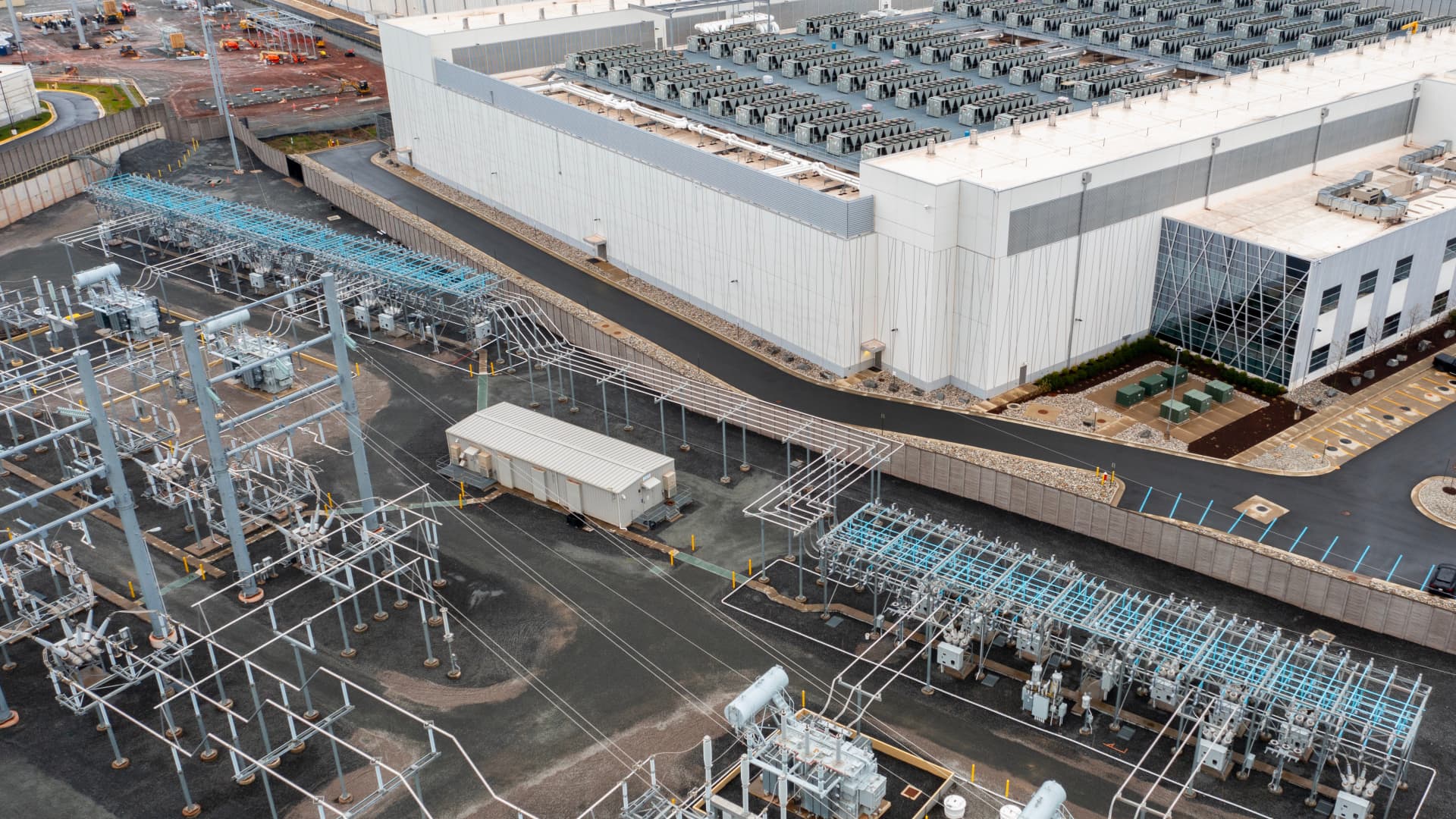
The headline numbers were better than Wall Street expected across the board, but the growth profiles tell meaningfully different stories about which cloud platform is actually winning the AI infrastructure race.
Alphabet reported Q1 revenue of $109.9 billion, up 22% year over year against a $107.2 billion consensus estimate. The most striking number was Google Cloud, which grew 63% to $20.02 billion ??well above the $18.05 billion Wall Street expected. Cloud backlog nearly doubled quarter on quarter to over $460 billion, and GenAI model revenue grew nearly 800% year over year. CEO Sundar Pichai told analysts that enterprise AI solutions had become the primary driver of cloud growth for the first time. Net income surged 81% to $62.57 billion. Alphabet shares climbed roughly 6% in after-hours trading, the lone gainer of the four major tech companies that reported that day.
Microsoft delivered fiscal third-quarter revenue of $82.89 billion, up 18%, against an $81.39 billion estimate. Azure and other cloud services grew 40% year over year, a meaningful reacceleration from the 26??7% growth rate investors had grown accustomed to earlier in 2025. The company's AI business now runs at a $37 billion annualized revenue rate, up 123% year over year. Microsoft 365 Copilot passed 20 million paid seats. Despite the beat, the stock fell roughly 2.5% after hours. Management's fiscal fourth-quarter guidance came in at $86.7 billion to $87.8 billion, light versus consensus, and the company signaled that 2026 total capex would be approximately $190 billion, well above prior estimates.
Amazon reported Q1 net sales of $181.52 billion, up 17%, versus $177.30 billion expected. AWS revenue grew 28% year over year to $37.59 billion, the segment's fastest growth in more than three years, surpassing the $36.64 billion estimate. Advertising revenue reached $17.24 billion, up 18% year over year and reinforcing Amazon's position as the third-largest digital ad platform globally. Earnings per share came in at $2.78 against a $1.64 consensus, a 69% beat driven primarily by operating leverage in AWS and advertising. Andy Jassy, the chief executive, guided full-year 2026 capex at $200 billion, making Amazon the single largest infrastructure spender of the four.
The Cash Flow Equation That Worries Investors
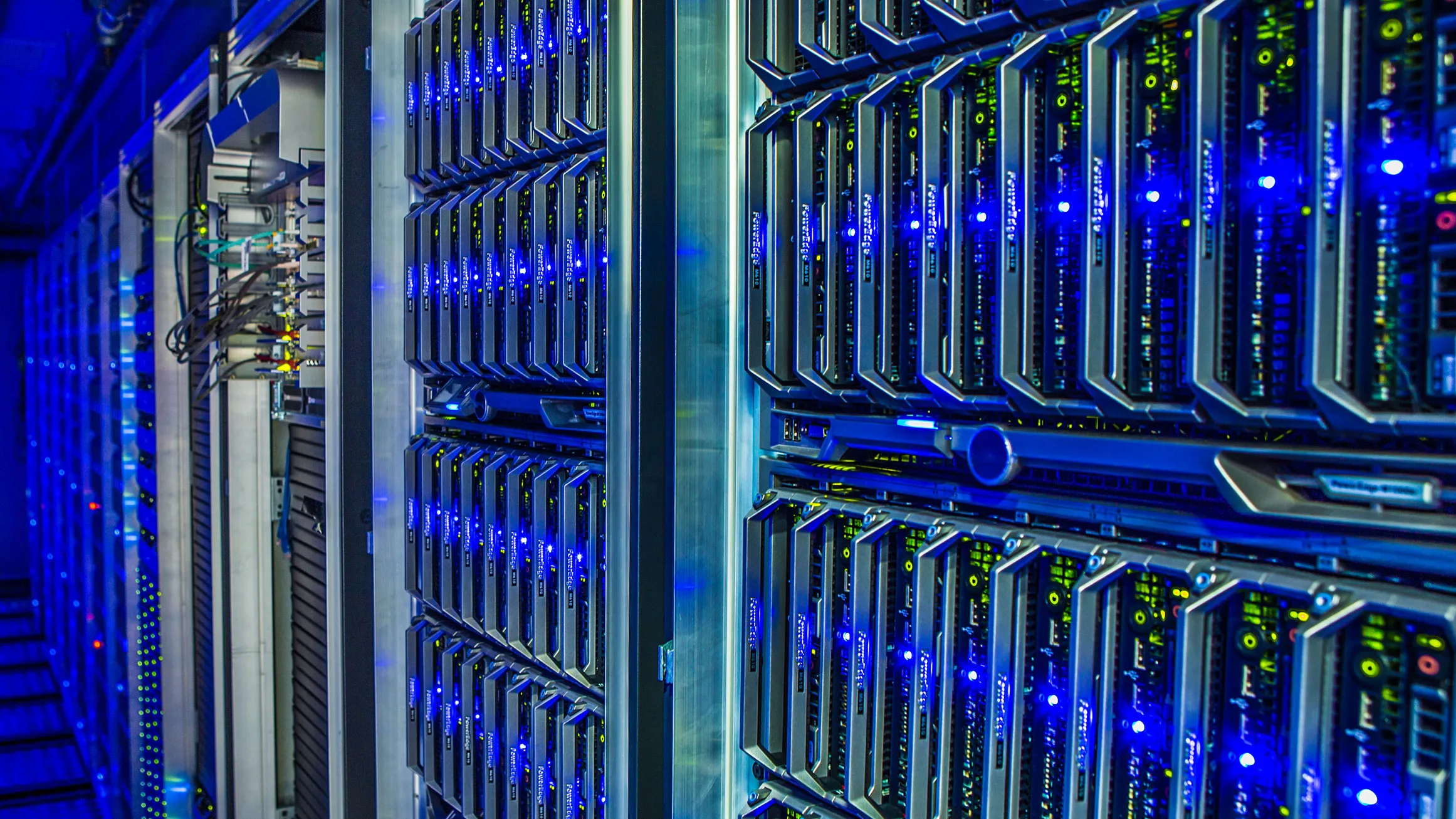
The earnings beats look more complicated once you move past revenue and into cash generation. Amazon's trailing twelve-month free cash flow collapsed 95% year over year to just $1.2 billion. Property and equipment expenses in Q1 alone reached $44.2 billion. Amazon is, in a narrow technical sense, barely cash flow positive after accounting for its AI investment surge. That is a company with $181 billion in quarterly revenue generating the free cash flow margin of a small industrial firm.
Microsoft's situation is structurally similar even if the absolute numbers differ. The company spent $31.9 billion on capex in the fiscal third quarter alone. Its full-year 2026 capex guidance of $190 billion represents an extraordinary commitment for a software business historically defined by its high-margin, low-capital model. Amy Hood, the chief financial officer, noted that approximately $25 billion of that figure reflects higher component pricing: a not-so-subtle acknowledgment that Nvidia's GPU pricing power is flowing directly into Microsoft's cost structure.
Alphabet's Q1 capex totaled $35.7 billion. The company raised its full-year 2026 guidance range to $180??90 billion and signaled that 2027 capex would increase significantly from that already elevated base. At $35.7 billion per quarter annualized, Alphabet is spending more on capital infrastructure than many S&P 500 companies generate in total revenue.
Meta, which reported on the same evening, guided 2026 capex to $125??45 billion, up from prior guidance of $114??19 billion. Meta shares fell 6% after hours, the sharpest reaction of any of the four. The pattern across all four results was consistent: report a beat, raise capex, watch the stock give back the gain.
Google Cloud's 63% Growth Creates a Three-Way Cloud Race
The competitive dynamics among cloud providers shifted materially in the first quarter. Google Cloud's 63% year-over-year growth rate was more than double AWS's 28% and meaningfully above Azure's 40%, suggesting that Alphabet's multi-year investment in custom silicon, Gemini Enterprise, and AI-native cloud infrastructure is translating into enterprise deal wins at a pace neither of its larger competitors matched.
Google's cloud backlog reaching $460 billion is not a trailing metric: it represents signed but unconsumed enterprise contracts, and nearly doubling that backlog in a single quarter implies a very substantial acceleration in new customer commitments rather than just revenue recognition on existing ones. Multiple billion-dollar-plus deals closed in Q1. Pichai described enterprise AI solutions as the primary growth driver of Google Cloud for the first time, a formulation that implies search advertising is no longer the sole engine of the business.
AWS remains the market share leader by most estimates, and its 28% growth rate represents a reacceleration from mid-2025 levels. But AWS growing at half the rate of Google Cloud across consecutive quarters is a competitive signal that Amazon's investors and enterprise customers will track carefully. Microsoft's Azure reacceleration to 40% from the prior 26??7% range was the most reassuring headline for Microsoft bulls heading into the print, and that number held. Azure's 40% growth rate sits between the other two, with Copilot commercial revenue described by Satya Nadella as now a meaningful component of the segment's trajectory.
Data Center Buildout Compresses Margins Across the Supply Chain
The aggregate capex commitment from these four companies, totaling roughly $650 billion in 2026, ripples through the supplier ecosystem in ways that are not entirely straightforward. The immediate beneficiary is Nvidia, whose Blackwell GPU architecture is the primary workload for generative AI training runs at all four hyperscalers. Amazon has committed to partnerships with OpenAI, Anthropic, and Meta for cloud AI workloads, creating a semi-circular dynamic in which AI lab spending partially flows back to AWS infrastructure. Microsoft's relationship with OpenAI similarly converts a portion of OpenAI's compute costs into Azure revenue.
For power infrastructure, the scale is staggering. Microsoft's $190 billion capex plan, spread across data centers globally, translates to gigawatts of new power demand. Construction and electrical grid firms in the American Southwest, Virginia, Singapore, and Ireland are already reporting multi-year backlogs. Cooling equipment providers and hyperscale real estate investment trusts have seen valuations expand on the expectation that new capacity commitments are structurally locked in for at least three to five years.
HBM memory pricing is another pressure point. Higher component costs are flowing directly into capex forecasts, as Hood's comment about $25 billion in elevated pricing at Microsoft confirms. SK Hynix, Samsung, and Micron are the principal beneficiaries on the memory side, having disclosed their own capacity expansions in anticipation of sustained AI training demand. Liquid cooling providers such as Vertiv and Eaton have separately indicated that lead times for high-density thermal management systems have extended to 14 to 18 months, another downstream consequence of simultaneous buildout by all four hyperscalers at once.
Capex as Strategic Signal, Not Just Investment
The capex escalation reads less like a precise return-on-investment calculation and more like a strategic commitment to hold position in what each of the four companies has concluded is a generational platform shift. The competitive logic is that any hyperscaler that underspends relative to peers risks ceding the AI-native cloud position to the one that does. In that framing, the capex numbers are less a financial decision and more a signal about which companies intend to remain in the first tier of AI infrastructure.
Microsoft and Alphabet both guided capex higher even as their guidance for near-term revenue growth disappointed some investors, which is an unusual combination. Typically companies cut investment guidance when near-term revenue visibility softens. The fact that both did the opposite suggests conviction at the board level that the AI cycle is real, durable, and competitively unforgiving. Amazon's $200 billion capital commitment, delivered alongside a 95% free cash flow collapse, makes a similar statement: Jeff Bezos's successor Andy Jassy is prepared to accept a temporary collapse in cash generation to secure long-term infrastructure dominance.
The risk that investors are pricing into the after-hours selloffs is not that the companies are wrong about AI. It is that the capital cycle will extend further than currently modeled, that the revenue ramp from AI products will be slower than expected, and that the current moment of maximum spending will turn out to correspond with the moment of minimum pricing power for AI services, before model commoditization has fully played out.
The quarter's results made clear that the cloud wars have entered a new phase. Three companies with a combined market capitalization above $7 trillion have committed to a level of capital spending that, if sustained, will consume a large share of global semiconductor output, reshape data center geography across four continents, and test investor patience on return timelines measured in years rather than quarters. All three are betting that the companies which build the most capable AI infrastructure today will extract disproportionate returns over the rest of the decade. The earnings season delivered the beats. The market's reaction delivered the caveat.
The BossBlog Daily
One email with the AI markets brief — the 13F moves, the Congressional trades, and what changed. No fixed schedule and no filler: it goes out when there is something worth sending.
Unsubscribe any time. We never sell or share the list.