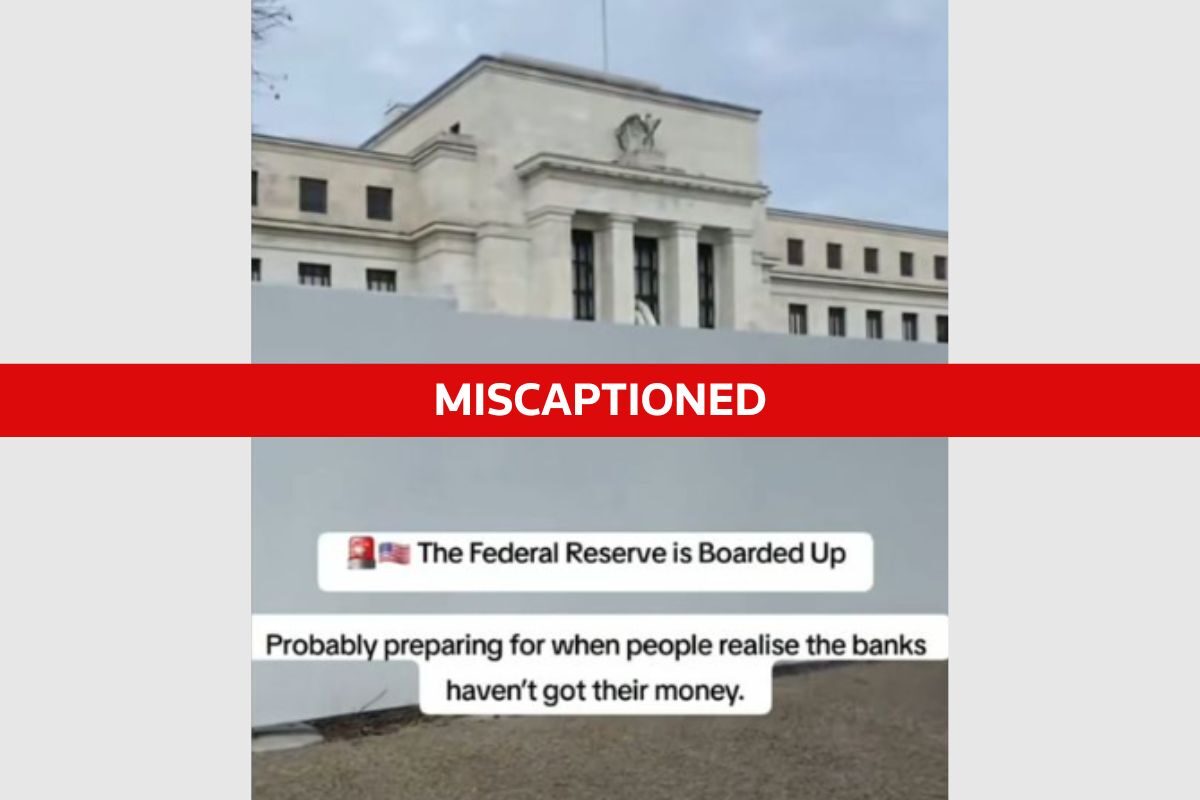
Kevin Warsh is on the cusp of becoming the next chair of the Federal Reserve after a Senate political standoff collapsed on Sunday when Senator Thom Tillis announced he would no longer block the nomination. The Senate Banking Committee is set to vote Wednesday — April 29 — with a full Senate confirmation likely shortly after. When Jerome Powell's term expires on May 15, Warsh will inherit a central bank sitting on a 3.6-3.75% overnight rate target, inflation running at 3.3% in March, and a market that has effectively concluded: no meaningful rate relief this year.
The sequence of events that broke the logjam was itself a study in the subordination of monetary independence to political calculation. Tillis had made his support conditional on the Department of Justice closing a criminal investigation into Powell over cost overruns in Federal Reserve building renovations. After receiving assurances from DOJ that the probe would only reopen if the Fed's own inspector general recommended criminal charges, Tillis declared the obstacle removed. On the 13-Republicans, 11-Democrats Banking Committee, a single GOP defection would have deadlocked the panel. That defection threat is now gone.
Senate Banking Committee's 24-to-Zero Math on Rate Cuts
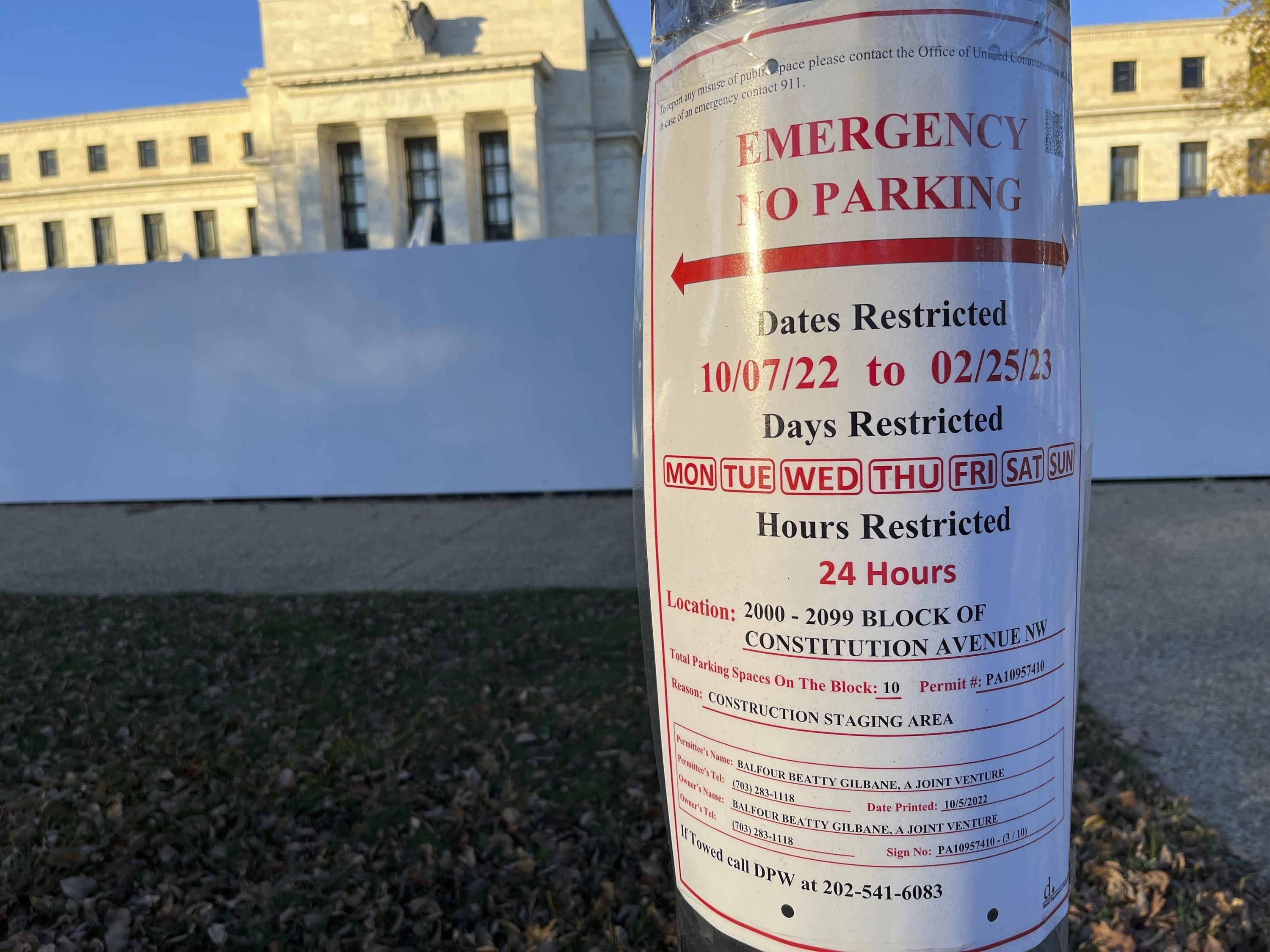
The confirmation calculus has immediate market implications that go well beyond the procedural vote. At his April 21 Senate hearing, Warsh flatly denied that President Trump had ever asked him to commit to interest rate cuts — and then outlined a policy posture that makes cuts difficult regardless of White House pressure.
Warsh's stated vision is what he calls "regime change" — not a personnel purge but a shift in how the Fed communicates. He said he would abandon forward guidance, the practice of pre-announcing the direction of rates, and he declined to commit to regular post-meeting press conferences. Both tools, introduced after the 2008 financial crisis, have become pillars of how markets price credit across the economy. Their removal would inject structural uncertainty into Treasury yields, corporate bond spreads, and the mortgage market at the same time.
The CME FedWatch tool now shows the market pricing in no more than one rate cut for all of 2026. A Reuters poll of 103 economists found 56 expecting rates to remain steady through at least September. Core PCE, the Fed's preferred inflation gauge, is running at 0.4% monthly — an annualized rate of nearly 5%, more than double the 2% target. The 10-year Treasury is yielding 4.3%, and unemployment sits at 4.3%, giving Warsh no obvious crisis justification to move quickly.
How the DOJ Probe Became a Monetary Policy Instrument
The mechanism by which a renovation cost dispute became leverage over a central bank chair nomination is worth examining in detail. Powell oversaw a significant Federal Reserve building project in Washington that drew scrutiny from the IG. The DOJ opened a criminal inquiry, which Tillis framed as a threat to Fed independence — arguing that a president's ability to weaponize federal prosecutors against a sitting chair compromised the institution.
Tillis's logic ran as follows: if the DOJ would investigate Powell at apparent White House behest, confirming Warsh before the DOJ closed the probe would leave Warsh's confirmation looking like a political deal, and Warsh himself would enter the role under a cloud of dependency. DOJ's decision to conditionally close the probe gave Tillis political cover to support Warsh while maintaining the rhetorical position that he was defending institutional independence.
BofA Securities economist Aditya Bhave was direct in his assessment: Warsh's stated policy outlook — inflation still above target, geopolitical oil shock from the Iran war that began February 28, rising gas prices — is entirely consistent with an "extended hold." Even if Trump expects rates to fall once Warsh takes the chair, Warsh will be one vote among 12 on the Federal Open Market Committee, the rate-setting body that convenes eight times a year. The other 11 members have each signaled reluctance to ease.
Mortgage Rates, Credit Cards, and the Consumer Price of Caution
The macro abstraction becomes concrete for households through borrowing costs. The Fed funds upper bound of 3.75% feeds directly into the prime rate, which lenders use to set credit card APRs, home equity line rates, and small business loans. With the rate frozen — and a new Fed chair explicitly signaling skepticism of forward guidance — lenders have no anchor to price against, which typically widens spreads to capture uncertainty.
The 30-year fixed mortgage rate has tracked the 10-year Treasury at roughly 4.3% plus a spread of 150-200 basis points, putting conforming mortgages above 6%. A 25 basis point cut, which had been priced in for June before Warsh's hearing, would have moved mortgages by perhaps 15-20 basis points — barely perceptible for most buyers. The more consequential signal is Warsh's willingness to let markets live without the Fed's promise of a rate trajectory. Borrowing becomes more expensive not because rates moved, but because certainty left the room.
Auto loan and student refinancing markets feel the same drag. Banks have re-extended their credit card fixed APRs in the 22-24% range on the expectation that the prime rate stays anchored; variable rate cards tied to the prime have already adjusted upward from the 19% floors set during the 2025 hiking pause. Consumers carrying revolving balances are absorbing roughly $35 billion in additional annualized interest charges compared to the 2023 baseline, according to Federal Reserve consumer finance data. Warsh's extended-hold posture locks that burden in place for at least another two quarters.
Christopher Waller, a current Fed governor who has signaled concerns about inflation, stands as a marker of the institutional inertia Warsh will face. Even a chair with personal inclinations toward easing cannot override a board where the dominant view is that a March CPI of 3.3% makes cuts premature.
Treasury Market Repricing and What Yields Signal About Warsh's Arrival
The bond market has been rehearsing for a Warsh era since his January nomination. The 10-year Treasury yield, at 4.3%, already reflects a higher-for-longer rate expectation than the December 2025 FOMC dot plot had implied. When the Fed abandons forward guidance, the information content of each data release increases — traders must price each CPI and PCE print as if it is the only signal, rather than relying on the Fed's roadmap.
This dynamic benefits active duration traders and hurts passive bond holders with long-dated exposure. The iShares Core U.S. Aggregate Bond ETF (AGG) returned 6.3% over the past year, buoyed by the modest 2025 rate cuts. That tailwind disappears if Warsh holds the rate flat through 2026 and removes the forward guidance cushion. The Treasury market is a $30 trillion market; a 50 basis point rise in the 10-year yield from here would represent roughly $1.5 trillion in mark-to-market losses across the outstanding stock of long-duration bonds.
Private credit markets, which expanded aggressively on the assumption of a soft-landing rate cycle, face a different calculus. Floating-rate leveraged loans reprice upward if the Fed holds — borrowers benefit from no additional hikes, but refinancing into fixed long-term bonds becomes expensive if rates are not cut.
What Warsh's "Regime Change" Costs the Fed's Credibility Budget
Jerome Powell spent six years building market trust in the Fed's communications architecture. Forward guidance, summary of economic projections, and consistent post-meeting press conferences all functioned as coordination devices — they reduced uncertainty premium in asset prices by giving investors a shared model of where the Fed was going. Warsh has indicated he wants to dismantle or significantly trim that apparatus.
The cost of doing so is not zero. When the Fed abandoned its 2021 "transitory" inflation guidance, the credibility damage required an aggressive 525 basis point hiking cycle to restore market confidence in the 2% target. Warsh is betting that removing guidance in a period of above-target inflation signals hawkish determination rather than chaos. Markets are provisionally accepting that interpretation: real yields on 10-year TIPS sit at 2.1%, consistent with a market that believes the Fed will keep real rates positive until inflation is genuinely contained.
The question Warsh will face immediately upon taking the chair in mid-May is whether the FOMC's May 6-7 meeting — his first — is too soon to signal a style change. Powell's last meeting was April 29 itself, where rates were held steady. Warsh will inherit a press conference tradition at his first meeting. Whether he uses it, curtails it, or abolishes the practice will tell markets more about the incoming policy regime than any rate decision.
The Senate Banking Committee vote on April 29 is the procedural gate. The full Senate confirmation will follow within days; Warsh is expected to be sworn in before the May 6-7 FOMC meeting. At that first meeting, markets will watch whether Warsh holds the traditional post-meeting press conference and whether he signals any deviation from the statement language Powell left behind. Every word will carry outsized weight — the Fed under Warsh will have stripped away the scaffolding that previously let markets anticipate direction. What remains is rate decisions alone, without the interpretive commentary that smooths volatility. The transition from the most communicative Fed in history to one that prizes deliberate opacity will be the defining financial story of the second half of 2026. The real test begins May 15, when Warsh sits in Powell's chair and the market starts reading every word.
The BossBlog Daily
Essential insights on AI, Finance, and Tech. Delivered every morning. No noise.
Unsubscribe anytime. No spam.
Tools mentioned
AffiliateSelected partner tools related to this topic.
AI Copilot Suite
Content drafting, summarization, and workflow automation.
Try AI Copilot →
AI Model Monitoring
Track model quality, latency, and drift with alerts.
View Monitoring Tool →
Low-fee Global Broker
Multi-market access with transparent pricing.
Open Broker Account →
Some links above are affiliate links. We earn a commission if you sign up through them, at no extra cost to you. Affiliate revenue does not influence editorial coverage. See methodology.