
Meta's first step back into cryptocurrency since abandoning its Diem stablecoin project in 2022 arrived quietly on Tuesday ??just an update in Meta's creator payout settings, spotted by CoinDesk and confirmed by Fortune. Select creators in Colombia and the Philippines can now link a crypto wallet and receive earnings in USDC, Circle's dollar-pegged stablecoin, on either the Solana or Polygon blockchain. Stripe handles the payments infrastructure and generates the tax documents. No fanfare, no press release from Mark Zuckerberg.
The contrast with Libra is deliberate. In 2019, Meta announced a synthetic global currency backed by a basket of fiat assets and triggered a regulatory firestorm that ended with congressional hearings, the departure of key partners including Visa and Mastercard, and ultimately a forced asset sale in 2022. This time, Meta is issuing no new currency, running no new blockchain, and asking for no special regulatory treatment. It is a distribution client plugging into an existing regulated stablecoin: a posture that passes the scrutiny test the GENIUS Act codified in 2025, and that Congress, the Fed, and the OCC have all signaled they can live with.
The stakes are higher than a creator payout pilot. Meta has over 3 billion monthly active users across Instagram, Facebook, and Threads. If the Solana and Polygon rails prove operationally sound at even a fraction of that base, USDC becomes embedded in the largest social-media distribution network in the world, and the pilot becomes one of the most consequential stablecoin adoption events of the decade.
The Payment Architecture Behind the Pilot
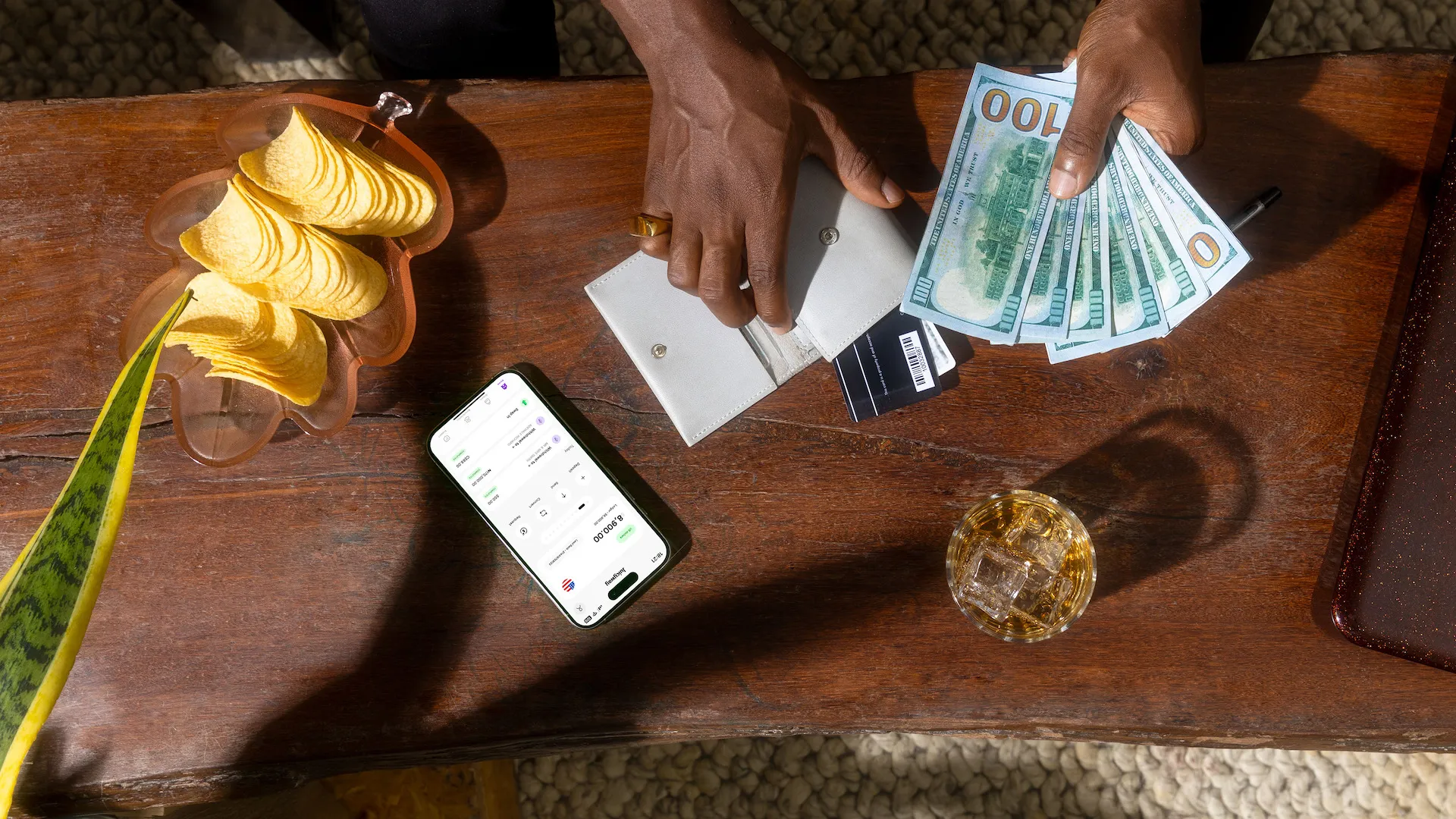
The mechanics are narrow by design. A creator in Bogot? or Manila who clears Meta's eligibility threshold visits creator settings, selects a supported wallet (MetaMask, Phantom, or Binance's MPC wallet), and designates a Solana or Polygon address as their payout destination. Meta calculates the dollar-equivalent payout as usual; Stripe converts the dollar amount into USDC and executes the on-chain transfer. Both Meta and Stripe generate tax documents tied to the creator's earnings and digital-asset transactions, satisfying the reporting requirements for both U.S. and local tax authorities.
Circle's USDC is the sole stablecoin on offer. Meta is not issuing its own token and has not built bespoke smart contracts. It is consuming Circle's regulated stablecoin infrastructure the same way a fintech startup would. Stripe, which built out its stablecoin payment stack following its acquisition of Bridge in late 2024, does the bridging work: on the fiat side, it integrates with Meta's existing ad-revenue accounting system; on the chain side, it handles wallet validation, USDC minting requests, and on-chain fee management. Creators never interact with gas fees or token bridges. From the creator's perspective, the UX is identical to receiving a bank transfer, with the destination being a crypto address rather than an IBAN.
What changed architecturally is Stripe's ability to generate a single tax document that spans both the fiat-to-USDC conversion event and any subsequent on-chain movement the creator makes. That capability emerged directly from the Bridge acquisition and from the IRS guidance on digital-asset cost-basis reporting that took effect in 2025. Without those two prerequisites (Bridge's infrastructure and the IRS cost-basis rules), the compliance layer would have been prohibitively complex for a platform of Meta's legal exposure. That single filing solved a problem that stablecoin payroll startups have been chasing since 2022.
The Revenue Math for Under-Banked Creator Markets
Meta selected Colombia and the Philippines as pilot countries for a specific reason: creators in both markets earn in U.S. dollars but hold local-currency accounts. Converting a USD payout through a local correspondent bank typically costs 2 to 5% in foreign-exchange spread plus a fixed wire fee that can consume 10 to 15% of a $50 payout. Stablecoin transfers settle in seconds with per-transaction fees under $0.01 on Solana and under $0.02 on Polygon, an order of magnitude cheaper at any payout size below $500.
For Meta, the economics flip. Cross-border payouts through legacy rails carry interchange fees and correspondent banking charges that the company currently absorbs. Routing those same payouts over Solana or Polygon reduces Meta's cost to near zero while improving creator take-home on every dollar earned. Polygon Labs CEO Marc Boiron told Fortune the infrastructure is ready to handle expansion to more than 160 countries by the end of 2026, implying Meta has already stress-tested the settlement architecture at scale and has a ready geographic roadmap.
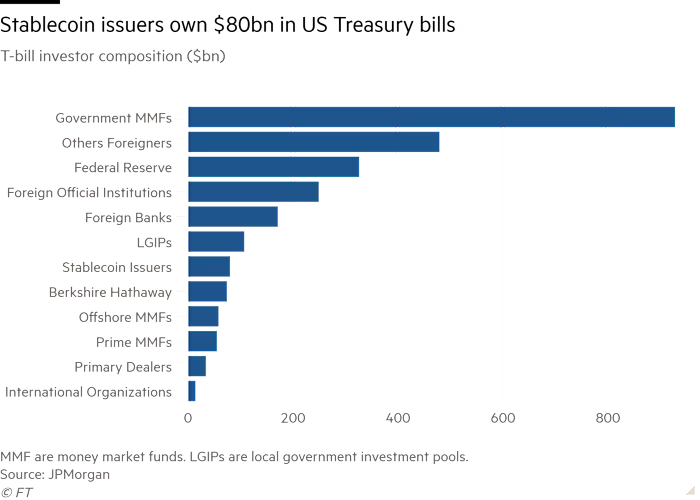
If even 5% of Meta's global creator base migrates to USDC payouts, the aggregate transaction volume would quickly challenge Visa's stablecoin settlement network, which the card network disclosed had reached $7 billion in annualized volume. For Circle, the opportunity is a distribution channel it has never been able to build organically. USDC's market cap sits above $77 billion, concentrated mostly in DeFi and institutional trading. Getting embedded in Meta's creator payment flow extends USDC into consumer and gig-economy use cases: the sticky, recurring, high-frequency transactions where stablecoin settlement is genuinely superior to the legacy banking alternative.
Big Tech's Stablecoin Infrastructure Race
Meta is not operating in isolation. The first half of 2026 has seen a quiet but accelerating push by consumer-internet platforms to embed USDC into their payment flows. Airbnb began accepting USDC for select bookings in Q1 2026 via a Stripe-powered checkout option, targeting hosts in Argentina and Turkey where currency volatility makes dollar-denominated earnings particularly attractive. Shopify extended its stablecoin checkout option to all U.S. merchants in March, using a Circle-issued USDC on-ramp. DoorDash is piloting USDC tips for delivery contractors in three U.S. cities, processing through Tempo, a crypto-payroll startup that raised a $40 million Series B in February.
X moved earliest: the platform introduced USDC balance top-ups for X Money wallets in January 2026, giving U.S. users a dollar-stable store of value inside the super-app. Apple and Google have not yet integrated stablecoins into Apple Pay or Google Pay respectively, but both have published developer documentation for USDC acceptance in in-app purchases, a preparatory move that signals official support is a matter of when, not whether.
What Stripe's role across all these integrations reveals is that the payments infrastructure layer is already decided. Stripe has quietly become the enterprise stablecoin middleware layer, occupying the same position it holds in fiat payments, by combining Bridge's stablecoin infrastructure with its existing compliance, tax, and treasury management stack. Any platform that wants USDC payouts without building its own blockchain operations team has one obvious vendor. That concentration of USDC distribution through a single middleware provider is an emerging systemic dependency that regulators have not yet addressed, and one that Circle, Coinbase, and competing on-ramp providers will spend the next 18 months trying to disrupt.
Western Union, Tempo, and the Corridor Economics
The Colombia and Philippines pilot markets are not incidental: both corridors are among the world's highest-volume remittance routes. The Philippines received $38 billion in remittances in 2025, according to the Bangko Sentral ng Pilipinas; Colombia received $11 billion. Western Union and MoneyGram collectively hold the majority of the retail cash-out infrastructure in both countries and charge an average of 5.4% per transaction at the standard retail window. A USDC transfer that costs $0.01 to execute on Solana competes structurally with that cost base, even if the last-mile cash-out still runs through a local agent network.
The creator payout use case differs from pure remittances: it is a dollar-denominated B2C payment to a gig worker, not a person-to-person cash transfer. But the same cost logic applies, and it normalizes USDC wallet ownership in exactly the demographic that remittance services depend on: young, mobile-native earners who receive income from U.S.-based platforms and need to store or convert those earnings locally. Once a creator in Cebu has a Phantom wallet to receive Meta payments, the incremental cost of using that same wallet to receive a remittance from a family member in California is zero. The network effect from creator payout wallets into the remittance corridor is one of the strategic prizes hiding inside this announcement, and Western Union's share price fell 3.2% on Tuesday as investors ran the math.
Chainalysis projects global stablecoin trading volume could reach $1.5 quadrillion by 2035. Much of that projection assumes consumer stablecoin adoption that did not exist two years ago. Meta's pilot is exactly the kind of normalization event that anchors that forecast, not because the volume is large today, but because it places USDC infrastructure inside a platform that 3 billion people already use to earn money.
The GENIUS Act Dividend and What Zuckerberg Avoided
The reason Meta can execute this move without triggering a congressional hearing is the GENIUS Act that passed in 2025. The Act defined payment stablecoins, established a federal licensing regime for issuers, and drew a critical bright line: a payment stablecoin issuer is not a bank, and a distribution platform routing payment stablecoins is not issuing money. Meta's legal posture fits cleanly inside that framework: it is a distribution client of a regulated stablecoin issuer. In 2019, Libra failed precisely because no such definition existed and regulators treated it as a systemic risk the moment it was announced.
The contrast reveals a strategic lesson every Big Tech platform has absorbed: wait for regulatory clarity, then move fast. Google, Apple, and Amazon have all signaled they are watching Meta's pilot. If the GENIUS Act framework holds and the OCC does not move to restrict stablecoin distribution by non-banks, a question that will likely surface as volumes grow, the next 18 months will see every major platform add a USDC payout option for creators, gig workers, and small businesses in high-remittance corridors.
Zuckerberg's bet on the Metaverse cost Meta over $40 billion across Reality Labs. The stablecoin pivot costs almost nothing. The infrastructure is already built by Circle and Stripe; the regulatory framework is already enacted by Congress; the pilot countries were identified in an existing fintech strategy review. What Meta did on Tuesday was flip a switch that had been wired for the past three years.
The macro signal is equally clear: the GENIUS Act's passage in 2025 has compressed what would have been a multi-year regulatory negotiation into a single compliance checkbox. Meta moved within 12 months of the Act's passage. PayPal, which launched its own PYUSD stablecoin in 2023 before the Act existed, now has a regulatory moat to defend and a distribution network on every Meta platform it is not reaching. The GENIUS Act dividend, faster time-to-market for compliant stablecoin distribution, is already being harvested by the companies that positioned early.
The pilot's narrow scope, two countries and an opt-in workflow, also functions as a hedge. If Solana or Polygon experience outages at scale, or if local regulators in Colombia or the Philippines respond with restrictive guidance, Meta can pause or redirect without having committed to a global rollout. Stripe absorbs the operational complexity; Meta manages the reputational exposure. It is as close to a risk-free stablecoin entry as any platform this size has ever engineered.
Stablecoins spent their first decade as instruments of crypto speculation and DeFi leverage. The second decade begins with them embedded in the creator economy, the gig economy, and the remittance corridors of emerging markets. Meta did not start this shift. It validated it.
The BossBlog Daily
One email with the AI markets brief — the 13F moves, the Congressional trades, and what changed. No fixed schedule and no filler: it goes out when there is something worth sending.
Unsubscribe any time. We never sell or share the list.