
A coalition of more than 100 cryptocurrency firms, including Coinbase, Ripple, Andreessen Horowitz, Paradigm, Consensys, and Anchorage Digital, delivered a blunt message to the Senate Banking Committee this week: schedule a markup hearing on the Clarity Act before Memorial Day, or the industry's best shot at a federal framework may be dead for years. The deadline is not symbolic. May 25 is the consensus "drop-dead date" among lobbyists and senior staffers; after that, Congress migrates to full election-cycle mode, and the legislative calendar essentially closes until 2027.
The Clarity Act, co-authored by Senate Banking Committee Chairman Tim Scott and Senate Agriculture Committee Chairman John Boozman, would establish a coherent division of authority between the Securities and Exchange Commission and the Commodity Futures Trading Commission over digital assets, define which tokens qualify as securities versus commodities, create streamlined disclosure requirements, protect non-custodial developers from broker-dealer rules, and preempt the growing patchwork of state-level crypto regulations. In the estimation of most industry participants, it is the most consequential piece of financial technology legislation proposed in the United States since the Dodd-Frank Act.
Senate Banking Committee Has Not Scheduled a Markup: the Clock Is Running
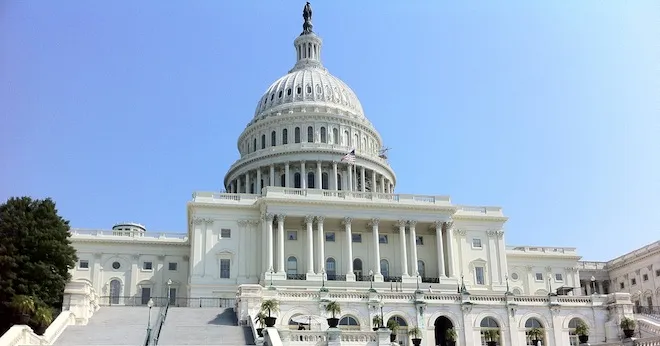
The bill has not had a public committee action in more than a month. Behind closed doors, stalled negotiations over stablecoin yield and rewards products, an issue that has haunted crypto legislation through multiple Congress sessions, continue to block scheduling a markup. The American Bankers Association and other depository institution groups have pressed hard to prevent stablecoin issuers and their affiliates from paying yield on balances, arguing it would give unregulated entities a structural advantage over bank deposits. Crypto industry advocates counter that a blanket yield ban penalizes DeFi protocols and on-chain savings products that operate fundamentally differently from bank accounts.
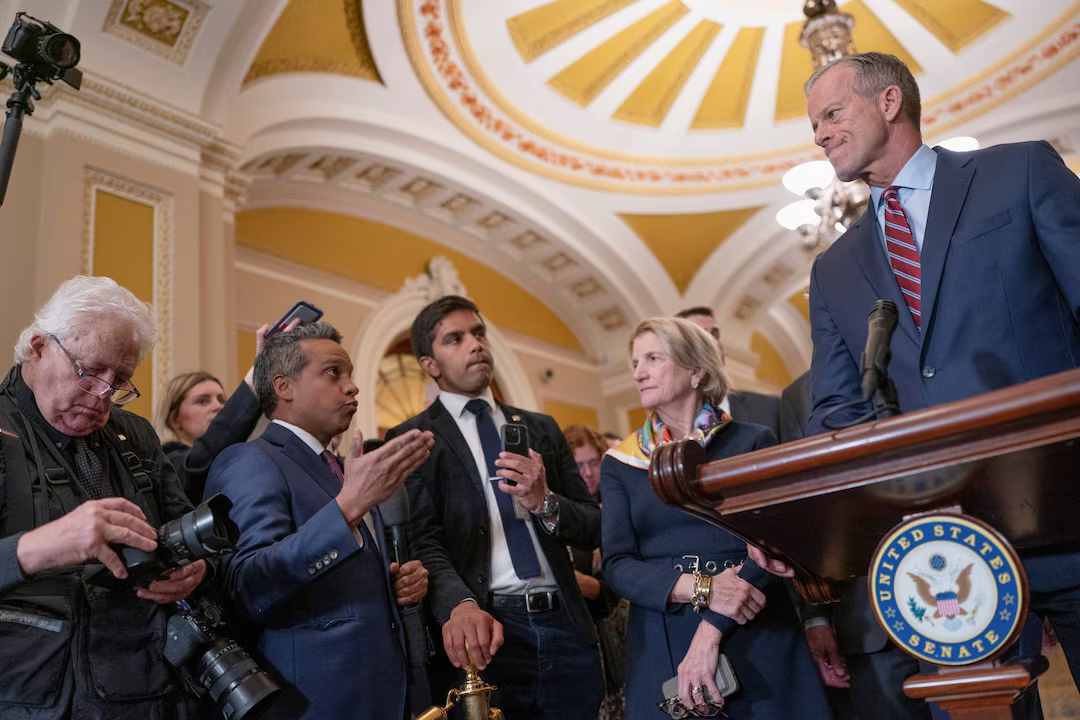
Senator Cynthia Lummis, the bill's most vocal champion in the Senate, said earlier this month that she expected a markup hearing "later in April." That did not materialise. Senator Thom Tillis, whose committee vote is critical to advancing the legislation, told reporters this week that he believes the banks have had sufficient time to make their case on stablecoin rewards, and that the Clarity Act is ready to be scheduled. The operative phrase is "ready to be scheduled." Not scheduled.
Galaxy Digital, which has closely tracked legislative prospects, puts the odds of the Clarity Act becoming law in 2026 at roughly 50-50, possibly lower depending on whether a markup hearing occurs before Memorial Day. The Crypto Council for Innovation and Blockchain Association have both underlined that if the bill does not advance out of committee by late May, it is unlikely to reach a Senate floor vote before Congress disperses for its August recess and then returns for the final electoral sprint in September and October. That sequence leaves no meaningful legislative window before the November elections.
Why This Bill Defines Billions in Capital Flows
The financial stakes attached to the Clarity Act extend well beyond any single firm's regulatory preferences. At issue is the legal status of the roughly $3.4 trillion global digital-asset market and where its infrastructure, including custody, trading, settlement, and lending, is domiciled. Under the current regime, digital-asset businesses operate under overlapping and often contradictory SEC and CFTC guidance, with enforcement actions functioning as de-facto rulemaking. That legal uncertainty depresses institutional participation and forces capital into offshore structures.
The open letter from the 100-plus-firm coalition makes this arithmetic explicit: without a federal framework, investments and jobs migrate to jurisdictions with rules. The European Union's Markets in Crypto-Assets Regulation, known as MiCA, took full effect in December 2024, giving the bloc a comprehensive licensing regime for crypto-asset service providers. Singapore, the UAE, and Japan all have functioning frameworks. The United States, the world's largest capital market, does not.
For companies like Coinbase, which reported $2.3 billion in net revenue in 2025 and has publicly flagged regulatory uncertainty as its largest business risk, the Clarity Act would mean the difference between building domestically or expanding primarily through offshore subsidiaries. Ripple, which spent roughly $200 million in legal fees defending against an SEC enforcement action that a federal court largely resolved in its favour in 2024, has an even more direct stake. Both are among the loudest voices in the coalition letter, and their participation signals that the industry is treating this push as a final-form effort rather than another lobbying round.
Who Gains and Who Bears the Cost If the Bill Stalls
A failure to advance the Clarity Act in 2026 does not simply preserve the status quo. It accelerates two divergent outcomes.
First, SEC Chair Paul Atkins, who replaced Gary Gensler and has signalled a significantly more accommodative posture toward digital assets, can provide meaningful relief through no-action letters, exemptive orders, and enforcement discretion. But he cannot create the statutory clarity that only legislation produces. His term expires in 2027, and any administrative leniency he establishes can be unwound by a successor. Industry participants operating on the assumption that the Atkins-era SEC will hold are running a personnel risk, not a legal one.
Second, the Kraken IPO illustrates the direct linkage between regulatory clarity and public-market access. The exchange confidentially filed its S-1 in early 2026 after raising $800 million at a $20 billion valuation, then placed the offering on hold in March when market conditions deteriorated and valuations compressed. The company is now valued by private investors at closer to $13.3 billion. The path to a successful public offering for any crypto exchange runs through a regulatory environment that institutional investors can underwrite. Coinbase's 2021 Nasdaq direct listing occurred in a brief window of perceived regulatory clarity; the stock spent three years repricing the uncertainty that followed. A statutory framework transforms that calculation permanently.
Circle, which listed on the NYSE in June 2025 at a valuation reflecting its USDC stablecoin business, and Gemini, which also went public last year, now face the additional complication that the GENIUS Act, the stablecoin-focused legislation signed into law in late 2025, left several questions about yield and interoperability unresolved. The Clarity Act was supposed to answer those questions. Its delay leaves the stablecoin sector operating under partial rules and exposes both issuers and holders to regulatory improvisation.
Downstream Pressure on DeFi Developers, Institutional Custody, and Bank Capital Rules
The Clarity Act's non-custodial developer provisions carry significance well beyond Silicon Valley venture portfolios. A substantial share of DeFi protocol development, spanning smart-contract tooling, automated market maker infrastructure, and cross-chain bridges, currently occurs in a legal grey zone where developers cannot confirm whether deploying code constitutes operating as an unregistered broker-dealer under Section 15(b) of the Securities Exchange Act. The Clarity Act would explicitly exempt non-custodial software from that definition, removing a liability overhang that has pushed protocol development teams to incorporate in the Cayman Islands or Switzerland.
On the institutional custody side, the Federal Reserve's position has been an indirect but real constraint. Several major banks have been deterred from entering crypto custody by supervisory guidance that treated digital-asset holdings as high-risk for capital purposes. The Clarity Act's provisions on asset classification and custodian standards would give bank regulators a statutory basis for establishing consistent capital treatment, potentially opening the door for JPMorgan, State Street, and BNY Mellon to build out their digital-asset custody operations without negotiating bespoke arrangements with primary supervisors.
The Fed itself, fresh off a fractious rate decision that produced the most divided FOMC vote in over three decades, has not explicitly opposed the Clarity Act but has consistently deferred to Congress on questions of digital-asset supervision. Privately, several Fed economists have argued that a functioning stablecoin market with proper AML and reserve requirements would improve dollar transmission in emerging markets, an argument that aligns with Treasury's push to expand USDC and USDT availability as instruments of dollar hegemony in regions where local currencies are under stress.
The Legislative Endgame: Three Weeks That Decide the Next Two Years
The concrete sequence that must occur between now and May 25 is narrow. The Senate Banking Committee must schedule a markup hearing. The committee must vote the bill out. The bill must then be merged with the Senate Agriculture Committee's portion and sent to the Senate floor. At that point, leadership negotiates unanimous consent agreements for floor time, a process that takes anywhere from days to weeks depending on the legislative calendar and competing priorities.
The calendar between now and Memorial Day contains a government funding deadline, a budget reconciliation vote, and competing demands on Senate floor time from the defense appropriations process. Cody Carbone, CEO of the Digital Chamber, said this week that "there is more momentum than ever" for a May markup, language that industry participants note is deliberately hedged. More momentum than ever still allows for the momentum to be insufficient.
Senator Ruben Gallego, the committee's senior Democrat on digital assets, has been constructive but has tied his public support to resolving the stablecoin yield debate in a way that does not disadvantage community banks. If that threshold is not met, Democrats could withhold enough votes to block markup under Senate committee procedures, even if Republicans are broadly aligned. That dynamic means the stablecoin yield compromise is not peripheral to the Clarity Act timeline; it is the timeline.
The industry is betting on May. If May passes without committee action, the next plausible window opens after the November elections, and by then the composition of the Senate may have shifted enough to require restarting negotiations from scratch.
Every major crypto firm has already made that calculation. The open letter is not a lobbying document ??it is a countdown notice.
The BossBlog Daily
One email with the AI markets brief — the 13F moves, the Congressional trades, and what changed. No fixed schedule and no filler: it goes out when there is something worth sending.
Unsubscribe any time. We never sell or share the list.