
Anthropic agreed to commit more than $100 billion to AWS over the next decade in exchange for up to 5 gigawatts of dedicated compute capacity, while Amazon said it would invest up to another $25 billion in the AI company on top of roughly $8 billion already deployed. The expanded partnership, disclosed this week by both companies and reported by CNBC, TechCrunch, GeekWire and others, converts a cloud vendor relationship into something much closer to an industrial alliance. It also lands at a moment when the question of who owns AI capacity has become more important than who owns the best model, and the economics of the deal only hold together if enterprise demand for Claude keeps tracking the steep curve Anthropic is now publicly referencing: a run-rate revenue of more than $30 billion this year, up from around $9 billion at the end of 2025. What began as a model-developer-and-cloud arrangement in 2023 has turned into a multi-decade bet that large portions of global inference and training spend will move through one stack of custom silicon designed by Amazon.
A Trainium-Anchored Supply Contract, Not a Hosting Deal
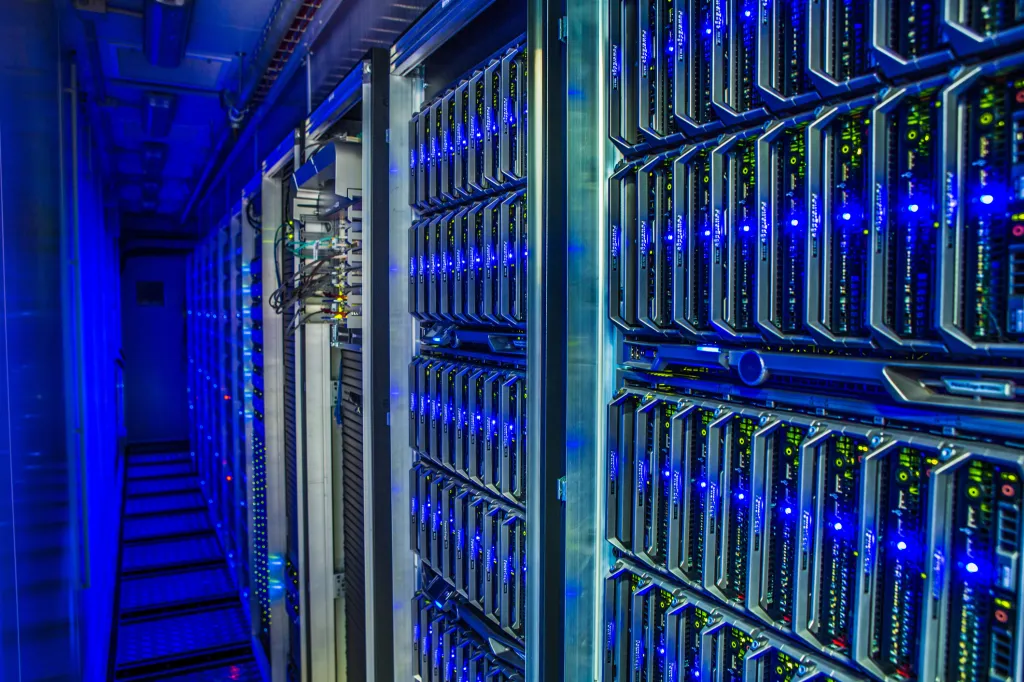
The headline number most people will remember is 5 gigawatts, but the operational core of the agreement is the hardware commitment underneath it. Anthropic's pledge covers Amazon's Graviton CPUs and the full Trainium line, from the current Trainium2 through Trainium3 and Trainium4, with an option to buy every future generation of Amazon's custom silicon as it ships. Trainium2 capacity is expected to come online in the first half of 2026, with nearly 1 gigawatt of Trainium2 and Trainium3 capacity ramping by the end of the year. That puts real product into the contract on a timeline tight enough for analysts to check, rather than leaving Anthropic with a ten-year paper promise. AWS also said Claude will be available through a new Claude Platform on AWS, meaning enterprise customers can use Anthropic-native Claude consoles inside their existing AWS accounts without extra contracts or billing relationships, which turns the capacity deal into a distribution deal as well. The move distinguishes this arrangement from pure hyperscaler hosting agreements: Amazon is not just selling GPU hours, it is committing to an entire silicon roadmap being pre-purchased by a single frontier customer, while simultaneously offering that customer's models as a first-class AWS product.
The Economics Only Close If Claude Keeps Growing

The $100 billion over ten years and the additional $25 billion equity commitment from Amazon look enormous, but they only make sense against Anthropic's stated revenue trajectory. Anthropic says run-rate revenue has passed $30 billion, roughly 3.3 times the $9 billion figure it ended 2025 with. At that run rate, a 10-year, $100 billion cloud commitment averages $10 billion of compute spend per year, which is aggressive but not out of line with what hyperscaler customers pay at Anthropic's scale. Amazon gets a multi-year lock-in on one of the most visible AI buyers on the market, a use case that absorbs its custom silicon faster than general AWS demand could, and a strategic hedge against the share Microsoft has accumulated through its OpenAI partnership. Anthropic gets priority access to multi-gigawatt capacity at a moment when every other frontier lab is scrambling for power and packaging, plus additional equity capital that lets it avoid diluting existing investors to fund a capex wave. Reuters-style coverage from CNBC and TechCrunch both flagged that the previously reported $8 billion Amazon had already put into Anthropic now grows toward $33 billion in total, a number that makes Amazon look less like a passive investor and more like a strategic financier whose balance sheet is structurally tied to Anthropic's survival.
Competitive Reshuffle: Microsoft, Google, Nvidia and AMD
The partnership tilts the competitive map of frontier AI in concrete ways. Microsoft has built its AI posture around OpenAI and its own Stargate program, with much of the economic upside tied to Azure hosting. Google keeps Gemini running on its own TPU fleet and a curated slice of Nvidia silicon. That left Amazon exposed until it could match both with a frontier lab tied to its own accelerator program, and the expanded Anthropic deal is exactly that match. For Microsoft, the risk is not that Anthropic takes share from OpenAI, which is probably unchanged, but that AWS now has a named frontier partner to anchor enterprise AI cross-sells and to seed Trainium demand outside Amazon's retail and Prime workloads. For Google, the risk is narrower but still meaningful: Claude on AWS becomes a direct alternative to Gemini on Google Cloud for large enterprise buyers who would otherwise default to either Azure-OpenAI or Google-Gemini as their primary AI stack. Nvidia's position is more nuanced. Anthropic is not replacing Nvidia chips, it is adding Trainium alongside them, which means Nvidia keeps a large slice of frontier inference demand for now, but loses the growth optionality that would come from Anthropic's next training run going entirely to Hopper- or Blackwell-class GPUs. AMD, meanwhile, sees its MI-series harder to position against a vertically integrated Trainium stack, because Anthropic has essentially committed to optimise a flagship frontier model for AWS silicon, reducing the slots where AMD could slot in as the second-source accelerator in the same workload.
Supply Chain: 5 GW Is a Power and Packaging Problem
5 gigawatts of dedicated AI capacity is not a software number, it is a physical-infrastructure commitment on the scale of a large nuclear plant. It forces Amazon to move aggressively on three fronts: silicon fabrication at TSMC for Trainium-class parts, advanced packaging to assemble them with high-bandwidth memory, and data-center power contracts in regions where grids can still add gigawatt-scale loads without multi-year wait lists. TSMC allocation is the first bottleneck, because Trainium2 and Trainium3 dies sit on the same 4-nanometer and 3-nanometer nodes that Nvidia Blackwell and AMD MI400 parts depend on, and the fab's CoWoS advanced packaging line has been capacity-constrained for most of the past two years. Amazon can partly route around that by leaning on its own in-house silicon photonics and custom interconnect efforts, but the HBM allocations coming from Samsung, SK Hynix and Micron remain a rate limit that no amount of in-house design can waive. Then comes power. Even at typical AI-data-center density, 5 GW of sustained load implies something on the order of 40 terawatt-hours per year, which is why Amazon, along with every other hyperscaler, is signing multi-year power-purchase agreements with nuclear, gas-peaker and utility-scale renewable providers and is increasingly willing to pay up for grid priority. Tie those constraints together and the deal is less a cloud contract and more a vertically structured bet on Amazon's ability to deliver an industrial utility as well as a chip.
A Policy Signal About Who Owns Frontier AI Capacity
The most underappreciated layer of the deal is the policy and strategy signal it sends to Washington, Brussels and Beijing. Once a single frontier lab and a single hyperscaler co-commit on the order of $100 billion of capacity across a decade, the question of AI national capability stops being abstract. It becomes a question about specific data-center sites, specific fab allocations and specific power contracts. US export controls, already tightening on the advanced accelerators and advanced packaging end of the market, now have another large private-sector data point to reference when calibrating which technologies can be shipped where. The fact that Anthropic is tying its fortune to Amazon-designed silicon rather than to Nvidia GPUs also blunts one of the simpler narratives about AI dependency: a hyperscaler with its own accelerator roadmap is much less exposed to any single chip export rule than a frontier lab standing on Nvidia alone. Read together with Amazon's Claude Platform on AWS launch, the deal positions Amazon as a vertically integrated AI provider that can claim to own the model, the chip, the data center and the customer relationship. That is a much more durable competitive posture than owning any one layer, and regulators on multiple continents will be treating it as such in their next round of AI policy.
Frontier AI is shifting from a race about model quality to a race about industrial throughput, and the Anthropic-AWS partnership is one of the clearest signals yet of that transition. The deal rewards the combination of a credible frontier lab with a hyperscaler willing to underwrite multi-gigawatt capacity and to commit tens of billions in equity to keep the lab inside its orbit. It pressures Microsoft and Google to make even louder commitments of their own, and it forces every other model builder to confront a simple strategic question: whose silicon and whose power grid are you going to rent for the next ten years, and on what terms. For enterprise buyers, the near-term consequence is more Claude availability inside AWS, tighter integration with existing data and identity stacks, and a clearer cost curve for large-scale inference. The integration also reduces the procurement friction that has slowed enterprise AI rollouts, because a customer that already has an AWS contract no longer has to negotiate a separate Anthropic relationship to put Claude into production.
For investors, the consequence is a new benchmark for what a credible frontier AI supply agreement looks like, measured in gigawatts rather than parameters. The next cycle of frontier AI deal-making will be judged against this bar, and the labs and cloud providers that cannot meet it on their own will have to pair up quickly or accept that they are competing in a tier below the Amazon-Anthropic stack. The Anthropic-AWS structure is also likely to become a template that other model builders study, because it shows that an equity injection, a multi-year compute commitment and a co-marketed product surface can be packaged into one announcement that does the work of three separate deals. That packaging matters because frontier AI economics now reward speed of capital deployment as much as capital itself, and a single coordinated structure closes faster than three sequential negotiations. The next twelve months will reveal whether competing labs can credibly match the bar, and which hyperscalers are willing to take the same level of balance-sheet risk to keep their own AI futures from being defined by what Amazon and Anthropic just announced together.
The BossBlog Daily
One email with the AI markets brief — the 13F moves, the Congressional trades, and what changed. No fixed schedule and no filler: it goes out when there is something worth sending.
Unsubscribe any time. We never sell or share the list.