
TD Cowen raised its price target on Micron Technology to $1,500 from $660, a 127% increase that implies 53% upside from current levels, as analyst Krish Sankar declared the memory maker's demand is structural and driven by artificial intelligence rather than the cyclical commodity swings that have historically defined the industry. Micron shares have already surged 224% year-to-date, making it one of the best-performing stocks in the semiconductor sector. Sankar's call is not an outlier: 44 of 47 analysts covering the stock rate it a buy or strong buy, reflecting a consensus that the AI buildout is fundamentally reshaping memory markets. The upgrade arrives at a moment when the entire compute stack, from GPUs to networking to memory, is being rearchitected for AI workloads, and Micron sits at the center of that transformation. This matters now because the structural demand thesis, if correct, means memory companies are no longer hostage to the boom-bust cycles that have punished investors for decades, and the market is pricing in a permanent step-change in revenue and margins.
The Discounted Cash Flow Model Behind the $1,500 Target
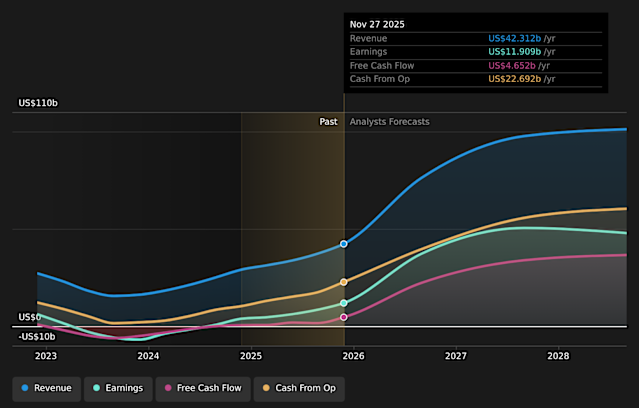
TD Cowen's $1,500 target is built on a discounted cash flow model that assumes Micron will capture a disproportionate share of AI-related memory spending over the next three to five years. The previous target of $660 reflected a more conservative view that the AI boom would be a temporary demand spike, similar to the crypto-driven surge in 2021. Sankar now believes the shift is structural because AI model training and inference require exponentially more high-bandwidth memory (HBM) and DRAM per server, and Micron is one of only three suppliers capable of producing the advanced HBM3E stacks that Nvidia's next-generation GPUs require. The upgrade also incorporates higher average selling prices for DDR5 memory, which has become the standard for AI servers, and a lower discount rate as the company's earnings become more predictable. Micron's capital expenditure plans, which have historically spooked investors during downturns, are now viewed as necessary investments in capacity that will generate returns above the cost of capital. The $1,500 target implies a forward price-to-earnings multiple of roughly 18x, which is a premium to the historical average of 12x but still below the 25x multiple that Nvidia commands, suggesting TD Cowen sees room for further multiple expansion as the market reprices memory as a growth industry. The model uses a weighted average cost of capital of 9.5%, down from 11% in the previous estimate, reflecting lower perceived risk as Micron's revenue becomes more contract-based and less spot-market dependent.
How AI Demand Flows Through Micron's P&L
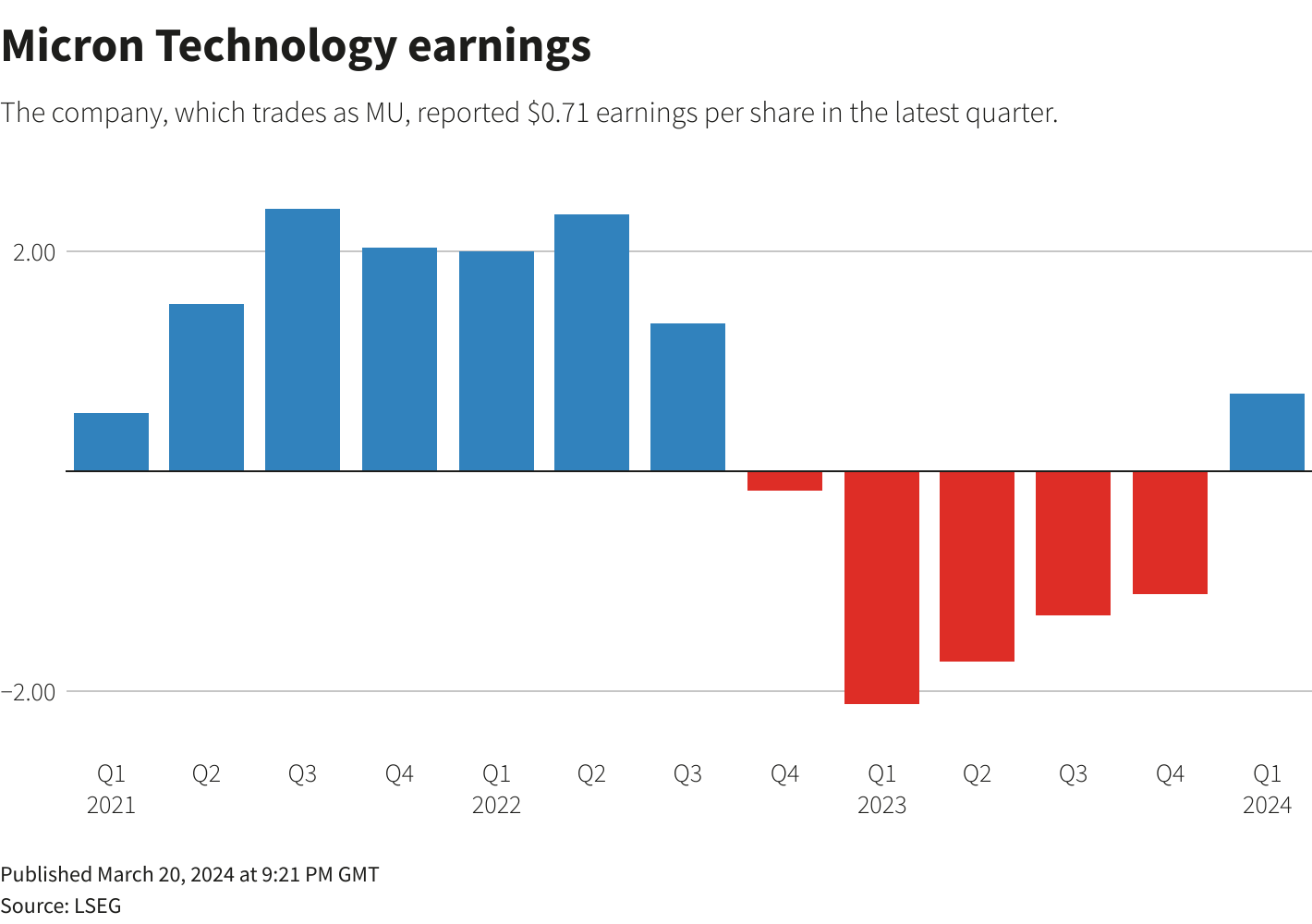
The structural demand thesis manifests in three specific revenue streams: HBM sales to hyperscalers like Microsoft and Nvidia, DDR5 modules for enterprise servers, and NAND flash for AI data storage. HBM alone is projected to account for more than 30% of Micron's revenue by fiscal 2027, up from less than 10% in fiscal 2024, as each Nvidia H200 or B200 GPU requires six to eight HBM3E stacks. The gross margin on HBM is approximately 50%, compared to the corporate average of 35%, meaning the product mix shift directly expands profitability. Goldman Sachs estimates that every 10 percentage points of revenue shift toward HBM adds roughly 200 basis points to overall gross margin. On the cost side, Micron's investment in extreme ultraviolet lithography for DRAM production has reduced bit cost by 20% per generation, allowing the company to maintain margins even as it ramps capacity. The operating leverage is significant: fixed costs for fabs are spread over a larger revenue base, and the company has guided for operating margins above 40% in fiscal 2027, up from 28% in fiscal 2025. Free cash flow is expected to turn positive in the second half of fiscal 2026 as capital expenditures peak, giving Micron the flexibility to return capital to shareholders through buybacks, which management has signaled will resume once net debt reaches target levels.
The Competitive Reshuffle in Memory and Orchestration
Micron's rise is part of a broader reordering of the memory hierarchy, where the ability to supply high-bandwidth memory for AI clusters has become a competitive moat. Samsung and SK Hynix remain the other two HBM suppliers, but Micron has gained share by being first to qualify HBM3E with Nvidia, a process that took 18 months of joint engineering. Meanwhile, a parallel shift is occurring in GPU orchestration software, where Frost & Sullivan's recent white paper named Phancy Group's Rise vGPU a Tier 1 leading platform for heterogeneous GPU management. The recognition reflects a market transition from single-chip performance to cluster-scale coordination, as GPU utilization in China's AI industry sits below 30%, according to Frost & Sullivan. Phancy ModelHub, the company's model management tool, achieved the highest overall score in the white paper's evaluation, signaling that enterprises are prioritizing software that can pool fragmented GPU resources across vendors. This is a direct challenge to Nvidia's CUDA-centric ecosystem, as Rise vGPU enables workloads to run across Nvidia, AMD, and Intel GPUs simultaneously. For Micron, the implication is that memory demand is no longer tied exclusively to Nvidia's architecture; any GPU that runs AI workloads requires HBM and DDR5, and software that improves utilization drives higher memory consumption per server.
Downstream Effects on Hyperscalers, Fabs, and Enterprise Buyers
The structural memory demand creates second-order effects across the supply chain. Hyperscalers like Microsoft are increasing their memory procurement budgets by 40% year-over-year, as each AI server now requires $15,000 to $20,000 worth of HBM and DRAM, up from $3,000 for a traditional compute server. This is driving a capacity race among memory fabs: Micron is building a new DRAM fab in Boise, Idaho, with a $15 billion budget, while Samsung is converting a portion of its Pyeongtaek fab from NAND to DRAM. The capital expenditure intensity is forcing smaller memory makers to consolidate or exit, as the minimum efficient scale for a leading-edge DRAM fab has risen to $10 billion. On the enterprise side, companies are delaying server refresh cycles to allocate budget toward AI-capable systems, which has created a bifurcated market where legacy memory demand is weak but AI memory demand is insatiable. The GPU utilization bottleneck in China, where utilization is below 30%, highlights the inefficiency that software like Rise vGPU aims to solve; if utilization rises to 50%, memory demand per inference could double as more models are served simultaneously. For regulators, the concentration of HBM supply among three Korean and American companies raises antitrust concerns, particularly as governments classify advanced memory as a strategic technology. The U.S. CHIPS Act has allocated $6 billion in direct subsidies toward domestic DRAM production, specifically to reduce dependence on Asian fabs, and Micron's Boise expansion is the primary recipient of that funding, giving the company a cost advantage that competitors cannot replicate without equivalent government support.
What the Upgrade Signals About the Market's Trajectory
TD Cowen's upgrade is a bet that the AI memory cycle will not follow the historical pattern of a sharp peak followed by a brutal correction. The structural argument rests on three pillars: AI model sizes are doubling every 12 months, requiring more memory per inference; edge AI is moving from concept to deployment, as demonstrated by Tether's release of a fine-tuning framework for Microsoft's BitNet b1.58 LLM that runs on consumer-grade handheld devices; and the shift from single-chip to system-level orchestration means memory is no longer a passive component but an active enabler of performance. The Tether framework, which fine-tuned a 13-billion-parameter model on an iPhone 16 for the first time, uses a novel Vulkan-based GPU backend that achieves 8x faster inference compared to CPUs, proving that large models can run on edge hardware without cloud connectivity. This opens a new addressable market for memory in smartphones, IoT devices, and automotive systems, where Micron's low-power DRAM and NAND are the primary storage technologies. The upgrade signals that the market is repricing memory companies as growth stocks with recurring revenue characteristics, similar to how software companies were revalued during the SaaS boom. If the structural thesis holds, Micron's price-to-earnings multiple will expand to 25x or higher, making the $1,500 target a conservative estimate.
The next catalyst for Micron will be its fiscal fourth-quarter earnings in September, where management is expected to raise guidance for HBM shipments and provide a multiyear revenue outlook that will justify further analyst upgrades. The key risk is that hyperscaler capital expenditure growth slows in 2027 as the initial AI buildout matures, but the edge AI opportunity provides a second wave of demand that will sustain the cycle. Tether's push to bring BitNet b1.58 to consumer devices is a leading indicator that memory consumption will expand beyond data centers into the billions of smartphones and laptops already in the market. If that transition occurs, Micron's total addressable market triples, and the $1,500 target becomes a floor rather than a ceiling. The memory intensity of edge inference differs from data-center inference: consumer devices need low-power DRAM with high single-threaded bandwidth, a specification where Micron's LPDDR5X leads the market. Each iPhone generation refresh adds roughly 30% more DRAM per unit, and the shift to on-device AI models will accelerate that trajectory as developers move inference workloads away from costly API calls toward local execution. The structural demand thesis will be tested over the next 12 months, but the evidence so far supports Sankar's conviction that this cycle is different.
The structural demand thesis also draws support from the broader industry trend of memory content per server rising sharply. Each new generation of AI servers requires more HBM stacks and higher-density DRAM modules, a pattern that has held across the past three GPU architecture cycles. As hyperscalers refresh their data centers every three to four years, the installed base of AI servers will continue to grow, locking in higher memory consumption per rack. This compounding effect means that even if GPU unit growth slows, the memory revenue per server will keep climbing, providing a multiyear tailwind for Micron's top line.
The BossBlog Daily
One email with the AI markets brief — the 13F moves, the Congressional trades, and what changed. No fixed schedule and no filler: it goes out when there is something worth sending.
Unsubscribe any time. We never sell or share the list.