
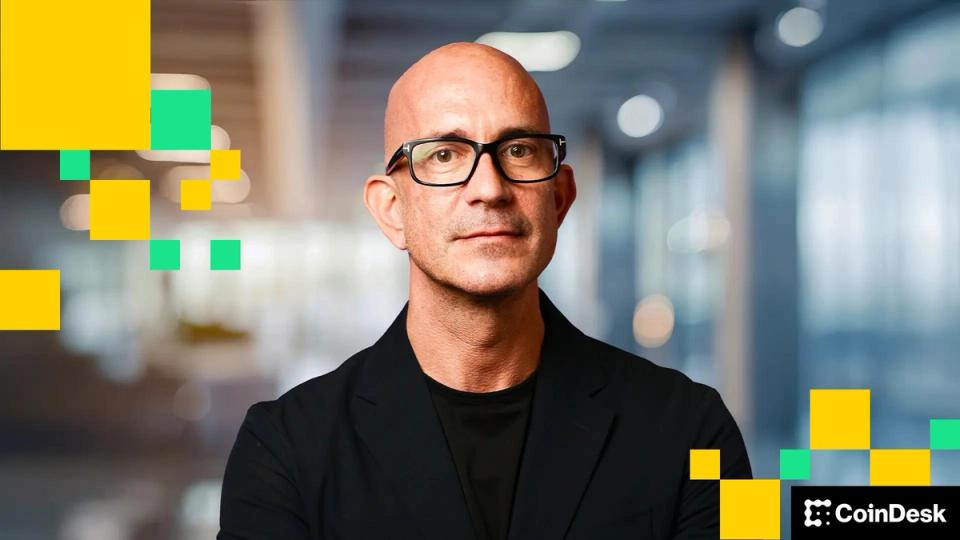
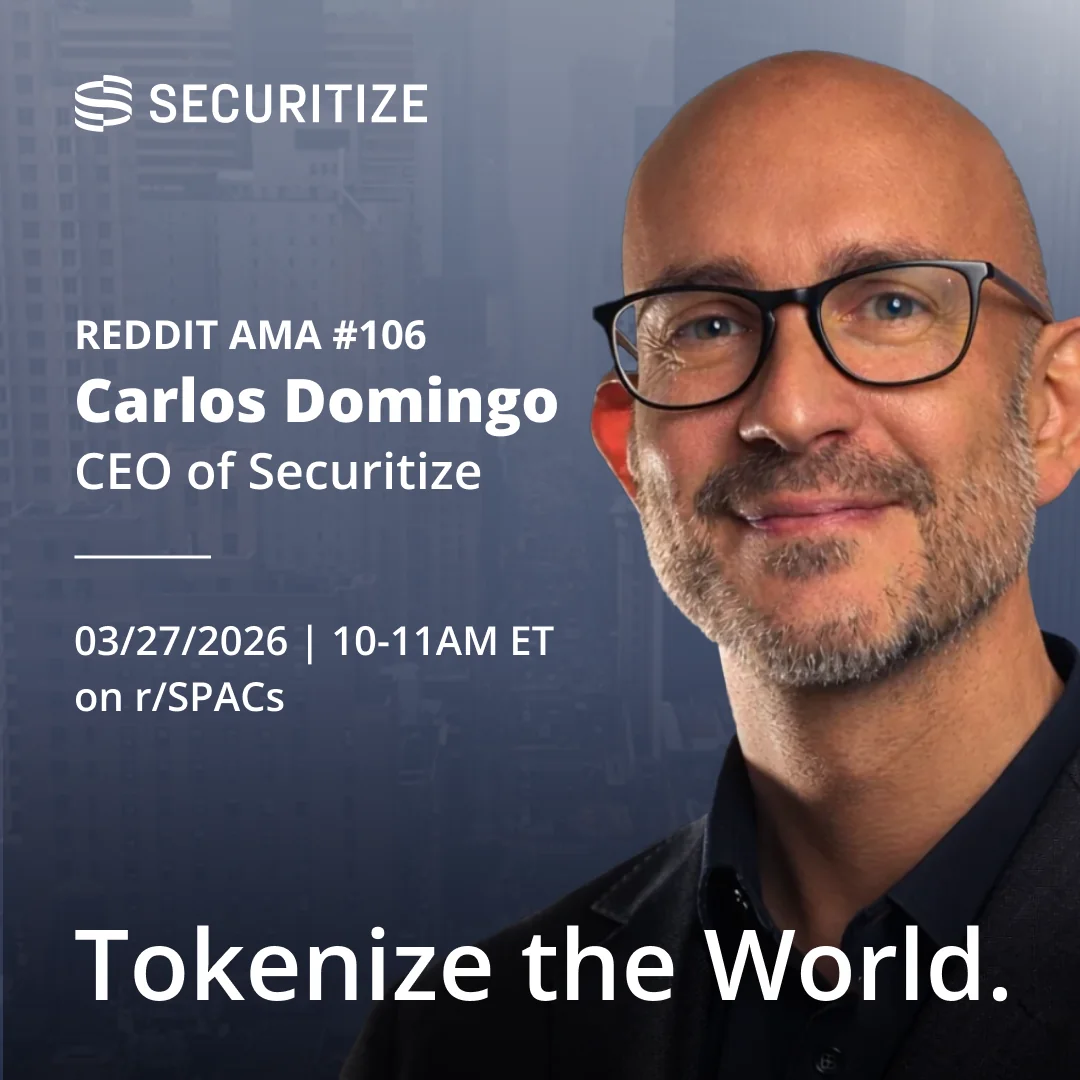
Securitize, the BlackRock-backed tokenization firm founded by Carlos Domingo, cleared a key SEC registration statement hurdle this week and set a path to list on the New York Stock Exchange under ticker SECZ. The development is the most concrete signal yet that real-world asset tokenization has moved from pilot project to public-markets infrastructure. Securitize manages BlackRock's BUIDL fund, which tokenizes U.S. Treasury bills on-chain and has grown to over $570 million in assets under management since its 2024 launch. The NYSE listing would make Securitize the first pure-play tokenization platform to trade on a major U.S. exchange, giving retail investors direct exposure to the on-chain securities layer rather than the underlying crypto assets. That distinction matters: most public crypto-adjacent equities give investors exposure to bitcoin treasury holdings or exchange volumes, not to the plumbing that converts traditional assets into on-chain instruments. The timing is deliberate. Treasury Secretary Scott Bessent backed a summer push for the GENIUS stablecoin bill and the broader Clarity Act on Friday, calling the bitcoin strategic reserve "moving at deliberate speed." A Securitize IPO priced in that legislative window locks in a valuation before regulatory clarity either collapses or compresses multiples across the sector. The market backdrop is complicated: bitcoin fell below $60,000 for the first time since October 2024 this week, and Bitmine, Tom Lee's firm that holds a concentrated Ethereum position, disclosed a near-$9 billion paper loss as ether slid below $1,800. Against that volatility, Securitize's IPO pitch is precisely that tokenization infrastructure is defensible regardless of which direction spot prices move.
Why the SEC registration clears the highest structural barrier
The SEC registration statement for SECZ is not a routine filing. Securitize operates under a broker-dealer license and a registered investment adviser structure, which means the SEC reviewed its client onboarding, AML controls, and custody arrangements across all tokenized products, including the BUIDL fund. Most crypto firms that have attempted public listings face SEC scrutiny concentrated on whether their token constitutes a security. Securitize resolved that question before its first product launched by building exclusively on the securities side of the line. The BUIDL fund holds tokenized Treasuries, not native crypto. The SEC registration therefore confirms that Securitize's model is structurally compliant with existing securities law, which is a harder bar to clear than, say, a crypto exchange operating under a state money-transmitter license. The practical implication for the IPO is that Securitize faces fewer disclosure caveats about regulatory risk than any prior crypto public offering. By contrast, Coinbase's 2021 direct listing contained over 40 pages of risk factors tied to uncertain regulatory status. Securitize's filing presumably treats its primary regulatory status as settled. That distinction will compress the discount applied by institutional investors pricing the IPO, because the largest source of equity risk in crypto-adjacent listings has been removed. The Crypto Council for Innovation launched a coalition this week to push for regulatory clarity on digital asset vaults, and Securitize's successful registration effectively demonstrates that clarity is achievable through product architecture rather than lobbying alone.
How Kraken's Payward and Hong Kong tokenized bonds expand the market Securitize is entering
Securitize is not listing into a vacuum. Kraken's parent company Payward announced plans this week to offer tokenized IPO access, allowing retail investors to buy shares at the offering price during a company's primary offering rather than in the secondary market after a first-day premium. Payward would use on-chain settlement to bypass traditional allocation gatekeeping, where underwriters historically prioritize institutional clients for hot deals. That model is directionally complementary to Securitize's infrastructure: if Payward digitizes the allocation layer, Securitize provides the transfer-agent and custody layer that holds the positions after allocation. Separately, Hong Kong's Securities and Futures Commission tapped JPMorgan and HSBC this week for an expert group to scale tokenized bond issuance. Hong Kong has issued over HK$800 million in tokenized green bonds since 2023, and the JPMorgan-HSBC group is tasked with standardizing settlement rails so that institutional investors can hold tokenized bonds alongside traditional fixed income in a single custody account. Securitize's NYSE listing advances into this context, where the on-chain securities stack is being assembled from multiple directions simultaneously: tokenized IPO access from Payward, tokenized sovereign debt from Hong Kong, and tokenized fund units from Securitize's BUIDL. The convergence is not accidental. BlackRock's $570 million BUIDL fund created proof-of-concept demand from institutional clients, which Securitize is now monetizing through a public offering that prices in the addressable market across all tokenized asset classes.
What the Clarity Act window means for SECZ's IPO timing and valuation
Treasury Secretary Bessent's endorsement of a summer push for the Clarity Act is the most important policy variable in Securitize's listing timeline. The Clarity Act would create a federal framework distinguishing digital commodities from digital securities, resolving the jurisdictional ambiguity between the SEC and CFTC that has constrained institutional adoption since 2021. JPMorgan warned this week that the bill has a "narrow window" for passage, and Bessent's backing signals the White House is treating the summer session as the viable runway. For Securitize, a successful Clarity Act passage before the IPO would expand the addressable market by making it legal for registered advisers to hold digital assets in client accounts without creating unusual regulatory exposure. That directly increases the potential asset base that BUIDL and similar Securitize products can custody. Conversely, if the bill fails, Securitize's model is still valid because it operates entirely on the securities side, but the multiple expansion from a broader digital asset framework would not materialize. The White House crypto adviser Witt defended the Clarity Act on Friday against critics who argue it creates too much flexibility for token issuers to claim commodity status. Bessent's comment that the bitcoin reserve is moving at "deliberate speed" is a signal that the administration wants the legislative wins first before committing additional strategic purchases, which means the policy momentum and the IPO window are aligned. Securitize's management team would be aware that missing this legislative window in 2026 likely means waiting for the 2028 session, a delay of roughly two years in a sector where first-mover multiples compress quickly.
How bitcoin's fall below $60,000 and Bitmine's losses affect the tokenization narrative
The crypto market backdrop for the SECZ listing is difficult. Bitcoin falling below $60,000 for the first time since October 2024 wiped out gains from the strategic reserve announcement and the spot ETF inflow surge that characterized early 2026. Ether's decline below $1,800 was more severe in percentage terms, and Bitmine disclosed a near-$9 billion paper loss on its concentrated Ethereum position. Tom Lee, Fundstrat's co-founder and Bitmine's prominent backer, had argued that institutional accumulation would compress Ethereum's volatility relative to bitcoin, a thesis that the ether sell-off directly falsified. The bitcoin and ether price declines matter for Securitize's listing in two competing ways. On the negative side, investor sentiment toward crypto-adjacent equities deteriorates when spot prices fall sharply, because retail capital that might otherwise pursue the IPO rotates back into spot bitcoin through ETFs. Coinbase and other crypto exchanges typically trade at a discount to their fair value during market downturns because fee revenue correlates with volume, which correlates with volatility and sentiment. On the positive side, Securitize's pitch is explicitly that tokenization infrastructure is a hedge against the spot crypto cycle. The BUIDL fund generates fees on tokenized Treasury bills, not on crypto trading. When bitcoin falls 15%, BUIDL's yield does not fall 15%. That decoupling is Securitize's core differentiation from exchanges like Coinbase or Kraken, and a market downturn is paradoxically the best moment to articulate it to institutional allocators who are reviewing their crypto exposure strategies. Chainalysis reported this week that gray market vendors are increasingly using bitcoin and stablecoins for settlement, which is a reminder that the demand base for on-chain settlement is broader than speculative trading alone.
The DOJ anti-scam operation and what compliance infrastructure means for SECZ
Coinbase, SpaceX, and Meta joined a Department of Justice anti-scam operation this week that froze $3.8 million in crypto connected to fraud networks. The operation, which required cooperation from multiple industry participants, demonstrated that crypto's compliance infrastructure has matured enough for coordinated law enforcement action at scale. For Securitize, the DOJ action is contextually important because it shifts the public narrative from crypto as a compliance liability to crypto as a compliance participant. Securitize's SEC registration required the same type of AML and KYC controls that allowed Coinbase to cooperate with DOJ, applied to on-chain securities settlement rather than spot trading. The institutional investors who will anchor the SECZ IPO are precisely the allocators whose own compliance officers require demonstrated enforcement cooperation as a condition of participation. The DOJ operation provides external validation that the industry is capable of meeting those requirements. Separately, the operation froze funds connected to networks that had routed proceeds through decentralized exchanges, highlighting the gap between compliant tokenization platforms and unregulated DeFi infrastructure. That gap is Securitize's permanent competitive advantage in the institutional market: it is not competing with decentralized protocols for non-compliant capital, it is building the infrastructure layer for capital that must comply. The NYSE listing, if priced successfully, establishes Securitize's market capitalization as a benchmark for the value of that compliance layer, giving future competitors and potential acquirers a reference point for the cost of replicating its regulatory position.
The Securitize NYSE listing will be the definitive test of whether public markets are ready to value tokenization infrastructure as a standalone asset class rather than as an appendage to crypto speculation. The SEC registration clears the highest structural barrier. The Clarity Act window provides legislative tailwind. The Payward and Hong Kong tokenized bond developments confirm that the addressable market is assembling in real time. Bitmine's losses and bitcoin's decline below $60,000 create short-term headwinds for sentiment, but they also crystallize Securitize's pitch as the non-speculative entry point into on-chain capital markets. If the IPO prices at a premium to book value, it will signal that institutional capital has formally separated tokenization infrastructure from the crypto volatility cycle and is prepared to pay a durable multiple for the regulatory moat that Securitize has built.
The BossBlog Daily
One email with the AI markets brief — the 13F moves, the Congressional trades, and what changed. No fixed schedule and no filler: it goes out when there is something worth sending.
Unsubscribe any time. We never sell or share the list.