
The Federal Reserve held its benchmark interest rate steady at the 3.5% to 3.75% policy range during the April 2026 Federal Open Market Committee meeting, the last presided over by former Chair Jerome Powell. The decision came as the Personal Consumption Expenditures price index, the Fed's preferred inflation gauge, rose 3.8% annually in April, more than double the central bank's 2% target. The FOMC had already lowered rates by 75 basis points across 2025 but has now paused, leaving policy calibrated for an economy that refuses to return inflation to target. New Chairman Kevin Warsh, who took over in June 2026, now faces a deeply divided market: bond traders are pricing in a rate hike by 2027, while high-yield savings accounts continue to offer yields up to 5.00%. The two-year Treasury note yield has climbed to approximately 4%, a 0.6 percentage point surge since late February, pricing in the expectation that the Warsh Fed will be forced to reverse the 2025 rate cuts and resume tightening. The divergence between fixed-income markets and consumer deposit rates creates a rare strategic window for institutional investors and corporate treasurers managing cash in a regime where the Fed's next move is anything but certain.
The 3.8% PCE Reading Forces Warsh's Hand
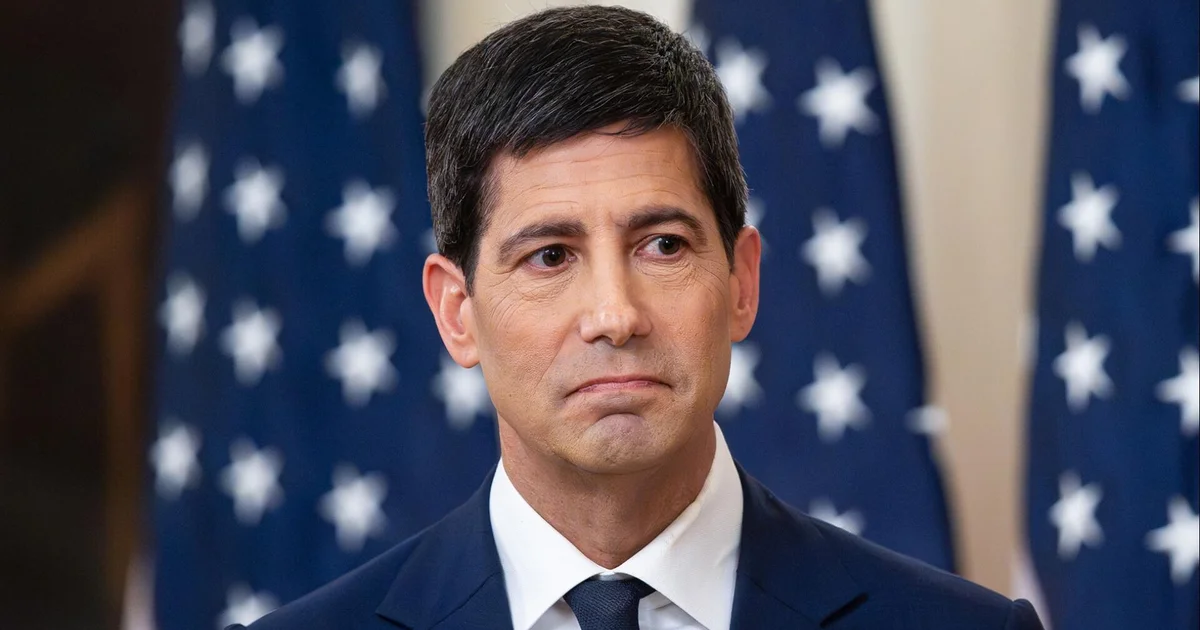
The April PCE print of 3.8% is the single most important number shaping the Warsh Fed's early posture. It represents a stubborn inflation floor that has not responded to the 75 basis points of rate cuts delivered in 2025. Core services inflation, excluding housing, remains elevated, driven by a tight labor market where wage growth continues to run above productivity gains. The two-year Treasury note yield, currently around 4%, has climbed 0.6 percentage points since late February, signaling that bond traders expect the Fed to reverse course and hike rates within the next 12 months. Gregory Faranello of AmeriVet Securities noted that the market is now pricing in a "material probability" of a rate increase by early 2027. For Warsh, a former Fed governor known for his hawkish leanings, the PCE data removes any room for dovish experimentation. The 3.8% reading is not a transitory blip. It is a structural constraint that will define every FOMC statement and press conference for the remainder of 2026. The Fed's own projections, last updated in March, showed a median expectation for inflation to fall to 2.5% by year-end, but the April data already blows that trajectory off course. Warsh must either revise those forecasts upward or signal a willingness to tighten policy sooner than the market currently expects.
The Rate Pause Reshapes Cash Management Yields
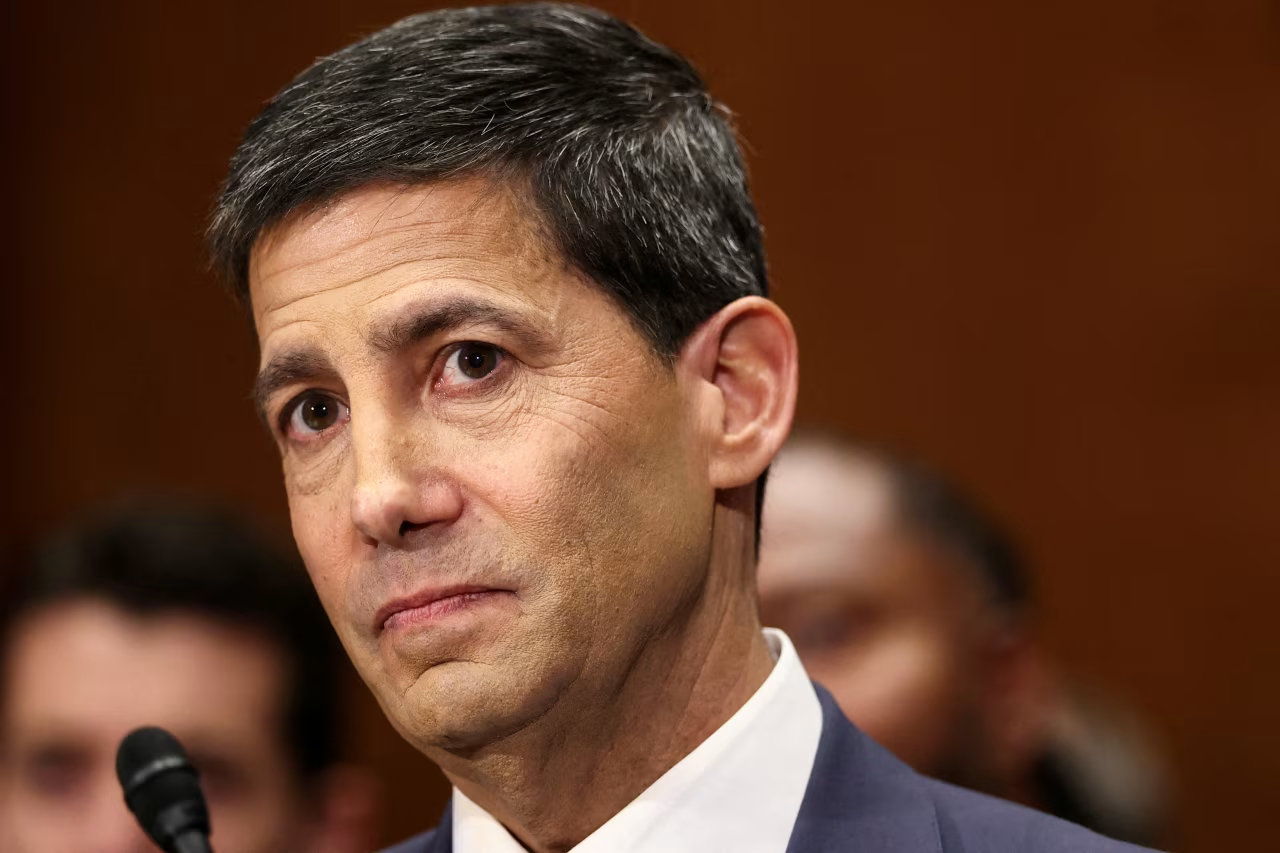
The gap between the Fed's 3.5% to 3.75% policy range and the average savings account yield of 0.38%, as reported by the FDIC, creates a massive arbitrage opportunity that sophisticated treasurers are already exploiting. High-yield savings accounts are offering up to 5.00%, nearly 13 times the national average, as online banks compete aggressively for deposits. Cindy Beaulieu of Conning highlighted that this yield divergence is a direct consequence of the Fed's pause: when the central bank stops cutting, the best deposit rates stabilize at levels that reflect the full pass-through of the previous tightening cycle. For corporate cash managers sitting on billions in short-term liquidity, the calculus is straightforward. Parking funds in a 0.38% average account is leaving roughly 460 basis points on the table annually. The two-year Treasury note, yielding 4%, offers a risk-free alternative that beats inflation-adjusted returns. The Bloomberg US Aggregate Bond Index sits at 2,355.96, while the Global Aggregate Index is at 501.85, reflecting the broader fixed-income landscape. The key insight for institutional investors is that the Fed's hold decision has created a yield plateau, not a peak. With bond markets pricing in a potential hike, locking in current deposit rates or short-duration Treasuries now protects against the risk that rates move higher in 2027, which would depress the value of longer-duration holdings. The 0.38% average savings yield, as reported by the FDIC, remains anchored well below the Fed's 3.5% to 3.75% policy range, making the gap between the policy rate and consumer deposit rates the widest in over a decade and a direct indicator that deposit pass-through remains incomplete.
AmeriVet and Conning See Divergent Bets in Bond Market
The bond market is sending a clear signal that the Fed's next move is a hike, not a cut, and that view is creating a split among major institutional players. AmeriVet Securities, through Gregory Faranello, has been advising clients to position for a tightening cycle, pointing to the 0.6 percentage point surge in the two-year yield since late February as a leading indicator. Faranello argues that with PCE at 3.8% and the labor market still adding jobs at a pace well above the breakeven rate, the Fed's 3.5% to 3.75% policy range is already below the neutral rate implied by current economic conditions. In practical terms, this means the real policy rate is negative: the Fed is still providing accommodation in an economy that no longer needs it, and the bond market is calling that out. Conning, led by Cindy Beaulieu, takes a more nuanced view, arguing that the economy's resilience with strong job creation and consumer spending allows the Fed to hold steady through 2026 without needing to hike, provided inflation stabilizes. Beaulieu's case rests on the observation that the average savings account yield of 0.38% remains far below the 5.00% high-yield benchmark, which means most consumers are not fully benefiting from the current rate environment and therefore not transmitting the monetary tightening into spending cuts that would reduce inflationary pressure. The Bloomberg data on global government bond yields reinforces the divergence: Germany's 10-year bund yields 2.97%, the UK's gilt yields 4.86%, France's OAT yields 3.59%, Italy's BTP yields 3.69%, and Spain's bono yields 3.39%. The UK's 4.86% yield stands out as the highest among major developed economies, reflecting both higher inflation expectations and the Bank of England's own tightening bias. For U.S. investors, the global yield landscape means that capital is flowing toward dollar-denominated assets, which strengthens the currency and puts additional downward pressure on import prices. This dynamic helps Warsh's inflation fight but also complicates export competitiveness for multinational corporations.
The Downstream Impact on Corporate Borrowing and Capex
The Fed's hold at 4.5% and the bond market's expectation of a 2027 hike are already reshaping corporate borrowing costs and capital expenditure plans. Investment-grade bond yields have risen in sympathy with the two-year Treasury, pushing the average cost of new debt issuance above 5.5% for blue-chip companies. High-yield borrowers face even steeper rates, with the spread over Treasuries widening by roughly 50 basis points since the April FOMC meeting. This tightening of financial conditions directly impacts corporate capex decisions. Companies that had been planning to finance expansion projects or share buybacks with cheap debt are now reconsidering. The auto industry, commercial real estate, and technology hardware manufacturers are particularly exposed, as these sectors rely heavily on floating-rate debt or near-term refinancing. For the hyperscalers, including Amazon, Microsoft, Google, and Meta, the higher rate environment increases the cost of funding their massive data center buildouts, which are critical for AI infrastructure. A rate hike in 2027 would further compress margins on these long-duration projects. On the positive side, the strong labor market and consumer spending provide a buffer: companies with pricing power can pass through higher financing costs to customers, while those in competitive, low-margin industries face a squeeze that will accelerate consolidation.
Warsh's First Test: Reading the Policy Signal in the Hold
Kevin Warsh's first FOMC meeting as Chairman in June 2026 is not just a procedural handover. It is a policy signal that will be parsed by every bond trader and corporate treasurer in the world. Warsh inherits a committee that is deeply divided between doves who believe the 2025 rate cuts were sufficient and hawks who want to resume tightening immediately. His decision to hold rates at the April meeting, which was technically Powell's last, was a compromise that buys time. But the market's reaction, pushing two-year yields higher and pricing in a 2027 hike, suggests that investors expect Warsh to lean hawkish. The new Chairman's previous public statements, including his 2018 critique of the Fed's balance sheet unwind, indicate a preference for rules-based policy and a skepticism of forward guidance. This means the June statement includes language that explicitly ties future rate moves to inflation data, rather than labor market conditions. For Alyce Andres and other analysts tracking the Fed, the key signal is whether Warsh revives the "dot plot" as a binding commitment or allows it to remain a loose projection. The policy signal from the hold is clear: the Fed is not done fighting inflation, and Warsh is willing to let the market know it.
The Warsh era begins with the Fed boxed in by 3.8% inflation, a strong labor market, and bond markets that are already pricing in a hike. Powell leaves behind a central bank that navigated the biggest inflation surge in decades, the highest tariffs in over 90 years, and sustained pressure on institutional independence, cutting rates by 75 basis points in 2025 only to hand the baton to a successor who may need to reverse those cuts within a year. The most likely path is a gradual tightening cycle that begins in early 2027, with the federal funds rate likely moving above the current 3.5% to 3.75% range as inflation remains above target. For institutional investors, the playbook is to shorten duration, lock in high-yield savings rates while they last, and prepare for a world where the risk-free rate stays elevated. Corporate treasurers should refinance floating-rate debt now and assume that the era of cheap capital is over for the foreseeable future. The global bond market's message, from the UK's 4.86% gilt to Germany's 2.97% bund, is that inflation is a global problem that requires higher real rates everywhere. Warsh's Fed will not be the outlier. It will be the leader of a synchronized tightening cycle that reshapes asset prices, corporate balance sheets, and capital allocation decisions through the end of the decade.
The BossBlog Daily
Essential insights on AI, Finance, and Tech. Delivered every morning at 06:00 Asia/Shanghai. No noise.
Unsubscribe anytime. No spam.