
Astera Labs is expanding its Taiwan operations with a new Cloud-Scale Interop Lab, deepening its engineering footprint to accelerate the deployment of AI infrastructure. The lab will coordinate directly with AI platform providers AMD, Arm, Intel, and NVIDIA, as well as major Taiwan original design manufacturers including GIGABYTE, Ingrasys (a Foxconn subsidiary), Inventec, Quanta Cloud Technology, and Wiwynn. The move positions Astera Labs at the center of the hardware-software co-development cycle for next-generation AI data centers, where interoperability across CXL, Ethernet, PCIe, UALink, and NVLink Fusion standards is becoming a critical bottleneck. Proximity to Taiwan's semiconductor supply chain and engineering talent gives the company a strategic advantage in reducing validation cycles and getting AI systems to market faster. This matters now because the hyperscaler capex race is escalating. Meta is betting $100 billion on AI infrastructure, Alphabet just raised $80 billion in equity offerings with Berkshire Hathaway investing $10 billion, and Microsoft is rethinking its pricing model for GitHub Copilot. Any edge in deployment speed is a direct competitive lever.
Validating AI interconnect standards across the ecosystem
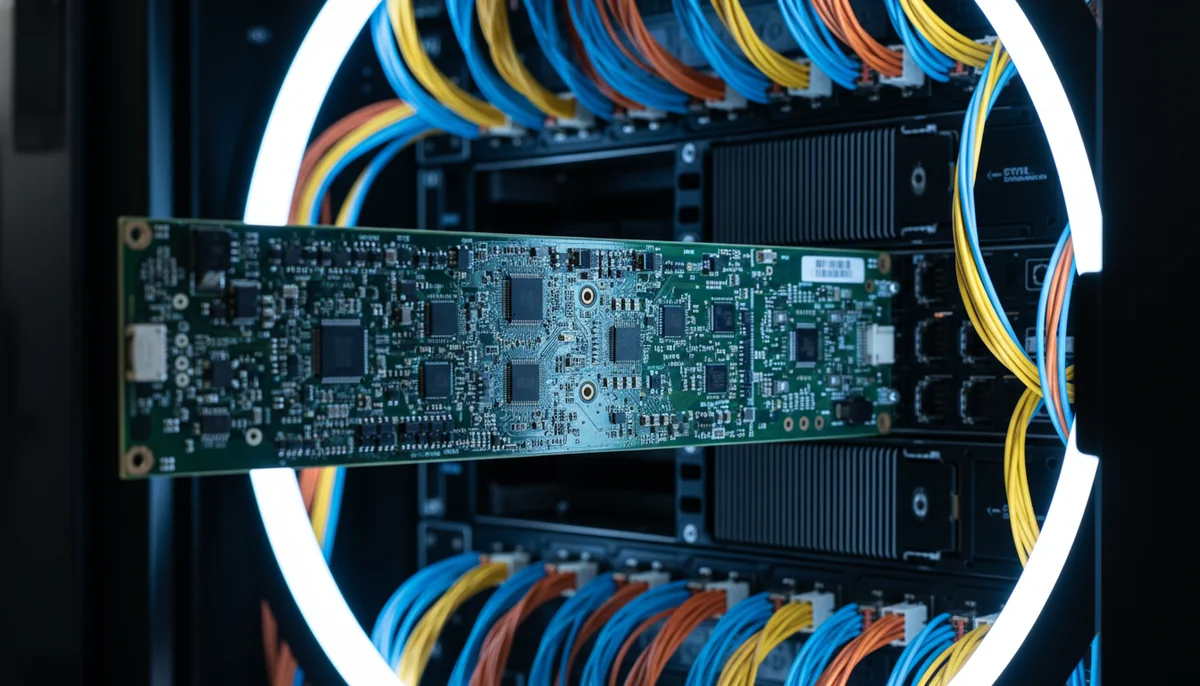
The Cloud-Scale Interop Lab is not a generic testing facility. It is designed to validate the physical and protocol-level interoperability of Astera Labs' connectivity silicon, including retimers, switches, and controllers for CXL, PCIe Gen 6, and Ethernet, across the full ecosystem of AI accelerators, CPUs, and system architectures. Astera Labs is collaborating with AMD, Arm, Intel, and NVIDIA to ensure that its chips work seamlessly across x86, Arm-based, and GPU-centric compute nodes. The lab also partners with Taiwan ODMs such as Quanta Cloud Technology and Wiwynn to validate system-level integration at the rack and pod scale. This is a direct response to the fragmentation of AI interconnect standards. Hyperscalers are deploying UALink for GPU-to-GPU communication, NVLink Fusion for NVIDIA-dominated clusters, and CXL for memory pooling and disaggregation. Each standard requires rigorous testing across multiple vendors' silicon and firmware stacks. By colocating engineering teams from chip designers, ODMs, and platform providers under one roof, Astera Labs compresses the typical 12-to-18-month validation cycle into quarters. The lab also serves as a reference design hub, where ODMs can build and test pre-production systems using Astera Labs' reference schematics and software stacks before committing to mass production. Engineering teams from each ODM partner work alongside Astera Labs' engineers on-site, enabling real-time debugging across firmware, driver, and silicon layers. This co-location model is critical because AI interconnect failures are often invisible in individual component tests and only surface during full-system integration, where timing, thermal, and signal-integrity issues interact across multiple vendors' silicon. The Cloud-Scale Interop Lab is designed to surface and resolve these cross-stack failures before they reach production clusters, where the cost of a qualification failure runs into tens of millions of dollars in delayed deployments.
Driving revenue and margin through faster design wins
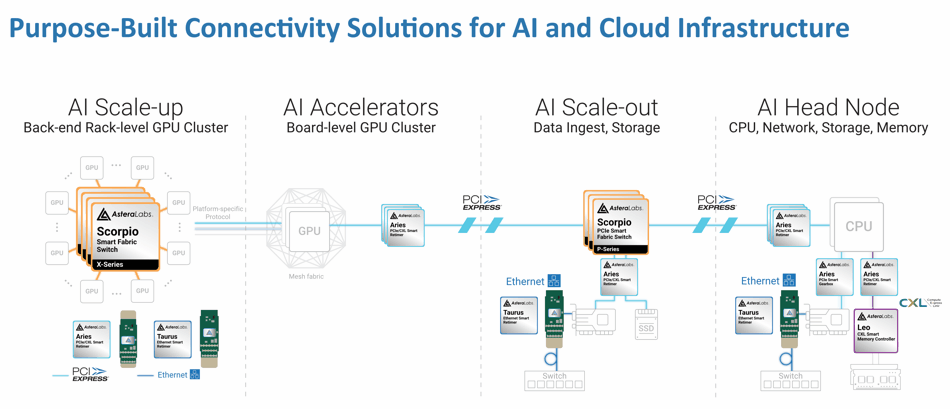
Astera Labs' business model depends on design-win velocity and attach rates. Every hyperscaler or enterprise customer that adopts its connectivity silicon for a new AI server platform generates recurring revenue from chip sales, firmware licenses, and support contracts. The Cloud-Scale Interop Lab accelerates design wins by reducing the time it takes for an ODM like Inventec or Foxconn to qualify a new Astera Labs product in a production-ready system. Faster qualification means faster time-to-revenue for Astera Labs and lower engineering costs for its customers. The lab also enables Astera Labs to capture higher-margin software and services revenue. Its COSMOS software platform, which manages connectivity fabric in AI data centers, requires deep integration with each ODM's baseboard management controller and each hyperscaler's orchestration layer. By testing COSMOS alongside hardware in the same lab, Astera Labs can deliver a validated software stack at system ship, increasing the likelihood that customers pay for the full software suite rather than just the chips. This software attach rate is a critical margin driver. Astera Labs does not disclose segment margins, but industry benchmarks for fabless semiconductor companies show software and services gross margins above 70%, compared to 50–60% for silicon. Every percentage point of software attach lifts overall company margins disproportionately. The Taiwan lab also reduces Astera Labs' own R&D and support costs by centralizing validation in a lower-cost engineering hub, rather than flying teams to customer sites across the US, Europe, and Asia.
Competitive reshuffle: who gains and who loses
The lab deepens Astera Labs' moat against competitors in the connectivity silicon space, including Broadcom, Marvell, and smaller startups like Credo and Alphawave Semi. Broadcom and Marvell have broader product portfolios and larger R&D budgets, but they lack Astera Labs' singular focus on AI data center connectivity and its tight integration with the Taiwan ODM ecosystem. By embedding its engineering teams inside the same facilities where Quanta Cloud Technology and Wiwynn build the world's largest AI clusters, Astera Labs creates switching costs that are difficult for competitors to replicate. ODMs prefer to work with vendors that offer validated, drop-in solutions rather than requiring months of custom integration work. For the hyperscalers, Meta, Alphabet, and Microsoft, the lab accelerates their own AI infrastructure buildouts. Meta's $100 billion AI gamble requires massive clusters of custom accelerators and networking gear. Alphabet's $80 billion capital raise, with Berkshire Hathaway's $10 billion injection, funds Google's own AI data center expansion. Both companies benefit from faster validation of third-party connectivity silicon that reduces their reliance on NVIDIA's proprietary NVLink ecosystem. The lab also pressures NVIDIA indirectly. By making UALink and CXL-based interconnects easier to deploy, Astera Labs gives hyperscalers a credible alternative to NVIDIA's full-stack approach. Microsoft's decision to charge for GitHub Copilot based on usage, rather than flat subscription fees, signals that even the largest AI buyers are scrutinizing every dollar of infrastructure spend. Cheaper, open-standard connectivity from Astera Labs fits that procurement strategy.
Downstream effects on hyperscaler capex and supply chains
The Cloud-Scale Interop Lab has second-order effects on the entire AI supply chain. For Taiwan's ODMs, Foxconn, Inventec, Quanta Cloud Technology, Wiwynn, and GIGABYTE, the lab reduces the engineering burden of qualifying new connectivity silicon. ODMs can now test Astera Labs' products against multiple AI accelerators and CPUs in a single facility, rather than maintaining separate validation labs for each chip vendor. This lowers their R&D costs and shortens their own product development cycles. For the hyperscalers, faster ODM qualification translates directly into faster cluster deployment. Alphabet raised its annual capital spending forecast by $5 billion to $180–$190 billion in April, and Meta's $100 billion commitment requires building dozens of new data centers. Every month of delay in qualifying a new server platform costs these companies hundreds of millions in opportunity cost from delayed AI workloads. The lab also benefits the broader semiconductor supply chain. TSMC, which manufactures Astera Labs' chips on advanced nodes, gains a more predictable demand signal as design wins convert to production orders faster. Memory makers like Samsung and SK Hynix benefit from faster validation of CXL-based memory pooling solutions, which require tight interoperability with Astera Labs' controllers. Even enterprise buyers of AI infrastructure, banks, healthcare companies, and industrial firms, will eventually see faster delivery of AI servers as the validation bottleneck eases. The lab is a small investment for Astera Labs, but it unlocks weeks or months of schedule compression across the entire AI hardware supply chain.
Policy and strategy signal: Taiwan as the AI validation hub
Astera Labs' expansion in Taiwan is a strategic signal about where the center of gravity for AI infrastructure validation is shifting. Taiwan is no longer just the world's semiconductor foundry; it is becoming the primary location for system-level integration and interoperability testing of AI hardware. The Cloud-Scale Interop Lab joins a growing cluster of similar facilities operated by AMD, Intel, NVIDIA, and major ODMs in Taiwan. This concentration creates a network effect: the more companies colocate validation labs in Taiwan, the harder it becomes for competitors to replicate the ecosystem elsewhere. For Astera Labs, the decision to deepen its Taiwan operations also reflects a geopolitical calculation. Taiwan's semiconductor supply chain is exposed to cross-strait tensions, but the company is betting that the concentration of engineering talent and manufacturing scale outweighs the risk. The lab allows Astera Labs to maintain closer relationships with TSMC and its ODM partners, reducing the need for long-distance coordination that slows down product development. This strategy mirrors what other AI infrastructure companies are doing. Alphabet's $80 billion capital raise and Meta's $100 billion commitment both rely on Taiwan's supply chain to deliver the servers, networking gear, and storage systems that make up AI clusters. By embedding itself in Taiwan, Astera Labs positions itself as an indispensable intermediary between chip designers, ODMs, and hyperscalers. The lab also serves as a hedge against potential export controls or supply chain disruptions. If geopolitical tensions escalate, having engineering and validation capabilities already on the ground in Taiwan gives Astera Labs more options to reroute or adapt its supply chain than competitors that rely on remote validation.
The Cloud-Scale Interop Lab is a bet that AI infrastructure deployment will remain a Taiwan-centric activity for the foreseeable future, and that the winners in the connectivity silicon market will be those who integrate most deeply with the island's ecosystem. Astera Labs is not just testing chips in this lab; it is building the operational muscle to capture a larger share of the AI data center buildout as hyperscalers pour hundreds of billions into new clusters. The lab's real value will be measured not in square footage or headcount, but in how many design wins it converts and how much it compresses the time from silicon tape-out to production deployment. As Meta, Alphabet, and Microsoft race to deploy AI infrastructure at unprecedented scale, every quarter of schedule advantage translates into billions of dollars in compute capacity and revenue. Astera Labs is placing its bet that proximity, not just performance, will determine who wins the connectivity layer of the AI stack.
The BossBlog Daily
Essential insights on AI, Finance, and Tech. Delivered every morning at 06:00 Asia/Shanghai. No noise.
Unsubscribe anytime. No spam.