
Federal Reserve Chair Kevin Warsh has injected a new layer of uncertainty into the rate-cut calculus, signaling that simply hitting the 2% inflation target will not be enough to justify lowering borrowing costs. In remarks that sent a chill through rate-sensitive corners of the market, Warsh argued that the central bank must also see a shift in public perception of inflation before it can credibly ease policy. This represents a significant escalation in the Fed's hawkish posture, moving the goalposts beyond the traditional price-index framework that investors have spent two years modeling. The S&P 500 has rallied roughly 18% since the start of 2025, much of that momentum built on expectations that the Fed would begin cutting rates in the second half of 2026. Warsh's comments directly undermine that thesis. If the Fed prioritizes restoring its institutional credibility over supporting asset prices, the stock market rally built on rate-cut hopes faces material downside risk. The 12-person FOMC, which includes all 7 Fed governors and the New York Fed president alongside 4 rotating regional bank presidents, now appears more divided than ever on the path forward. Why this matters now: Warsh's hawkish pivot arrives just as the 2026 FOMC voting lineup rotates, potentially locking in a restrictive policy stance for the remainder of the year and closing off any window markets had penciled in for a September cut.
Where the 2% Target Became a Floor, Not a Ceiling
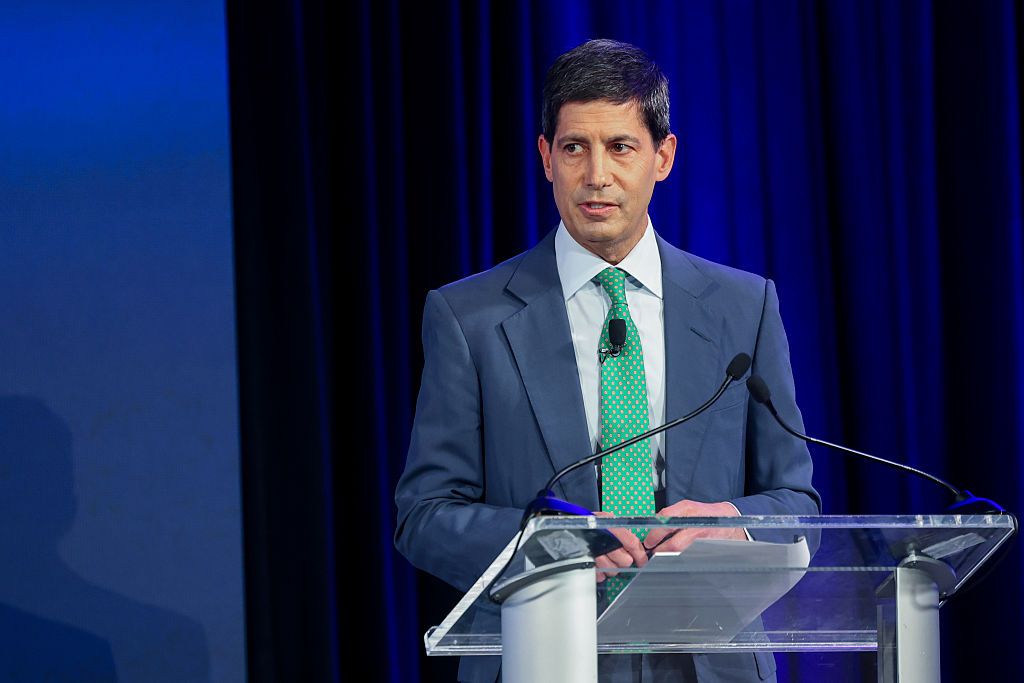
Warsh's core argument hinges on a distinction that markets have largely ignored: the difference between achieving an inflation statistic and restoring the public's faith in the currency's purchasing power. The Fed's 2% target, as measured by the Personal Consumption Expenditures price index, has been the single most important data point for rate expectations since the central bank began its tightening cycle in 2022. Warsh now says that number alone is insufficient. He is demanding that the Fed observe a durable shift in consumer and business inflation expectations before it pulls the trigger on rate cuts. This is a fundamentally different framework from the one former Chair Jerome Powell operated under, which treated the 2% target as both necessary and sufficient for easing. Warsh's approach introduces a subjective, survey-based element into the Fed's reaction function, something that makes rate-path forecasting far more difficult for Wall Street. The 2% target now functions as a floor that must be crossed, but not a ceiling that triggers action. The FOMC's 12 voting members, including the 4 rotating regional bank presidents who change each January, will now have to weigh not just hard inflation data but also soft indicators like the University of Michigan consumer sentiment survey and the New York Fed's Survey of Consumer Expectations. This shift in the Fed's reaction function creates a higher bar for rate cuts than any inflation print alone would suggest.
The Market Rally Built on Rate-Cut Hopes Now Faces a Credibility Gap
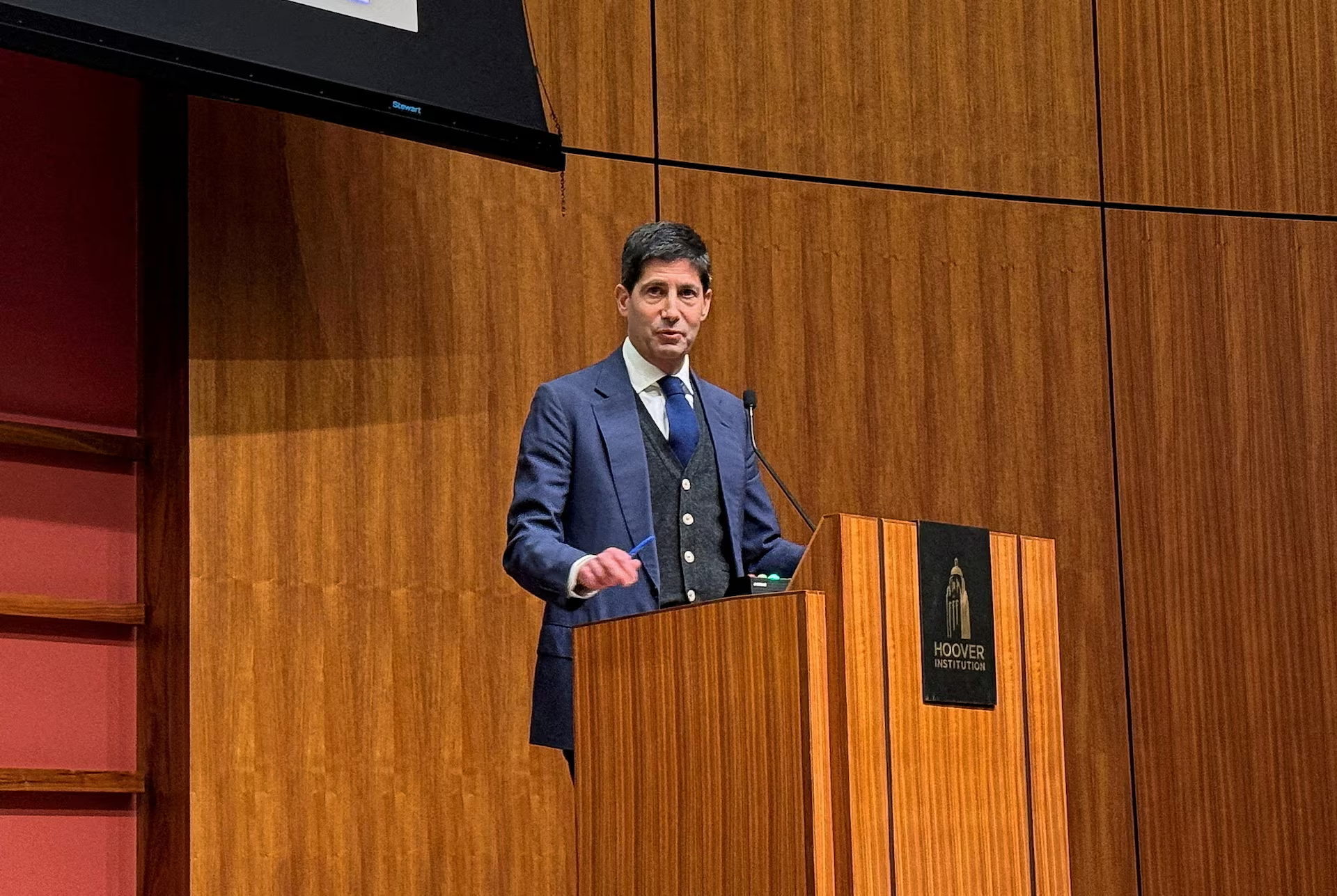
The stock market's valuation structure has become increasingly dependent on the assumption that the Fed will deliver at least two 25-basis-point cuts in 2026. The S&P 500's forward price-to-earnings multiple of 22x, well above its 10-year average of 18x, reflects this embedded expectation. Warsh's comments directly threaten that premium. If the Fed holds rates steady through the end of 2026, the equity risk premium, the extra return investors demand for owning stocks over risk-free assets, will need to expand. That means lower stock prices, particularly for the high-duration, high-growth names that have benefited most from rate-cut optimism. NVIDIA Corporation, which trades at roughly 35x forward earnings, is acutely exposed to a higher-for-longer rate environment because its valuation is heavily back-loaded into future cash flows. Intel Corporation, Ford Motor Company, and SoFi Technologies, Inc. also face headwinds: Intel's capital-intensive turnaround requires cheap debt, Ford's auto financing arm is sensitive to consumer borrowing costs, and SoFi's entire business model depends on a steepening yield curve that rate cuts would accelerate. Ondas Inc., a smaller-cap defense and industrial tech firm, is even more exposed to the discount-rate channel. Warsh's insistence on public perception as a rate-cut prerequisite removes the most powerful catalyst for multiple expansion that investors had been banking on. The rally's foundation is now visibly cracking.
The FOMC's 2026 Voting Lineup Locks in the Hawkish Bias
The composition of the FOMC's voting roster in 2026 amplifies the hawkish signal from Warsh's comments. The 12-person committee includes all 7 Fed governors, the New York Fed president, and 4 of the other 11 regional reserve bank presidents, with those 4 rotating seats changing each January. The 2026 rotation has brought in a cohort of regional bank presidents who have consistently favored tighter policy. This structural tilt means Warsh does not need to persuade a majority of the committee to adopt his public-perception framework; the voting bloc is already predisposed toward restraint. The regional bank presidents who rotated off in January were generally more dovish, having expressed concern about labor market softness. Their replacements come from districts where inflation has been stickier and wage growth more persistent. The net effect is a committee that is institutionally skeptical of rate cuts, even if core PCE falls to 2.0%. Warsh's personal credibility as a former Treasury official and Wall Street veteran gives him additional sway over the board governors, who are his political appointees. The 7 governors, who serve 14-year terms, are unlikely to break publicly with a chair who has made restoring Fed credibility his signature issue. This alignment between the chair, the board, and the rotating regional presidents creates a formidable wall against any dovish push. Markets that were pricing in a 60% probability of a September 2026 cut now face a committee that may not cut at all this year.
Downstream Pain Hits Hyperscalers, Fabs, HBM, and Enterprise Buyers
The second-order effects of Warsh's hawkish stance ripple through the capital-intensive sectors of the economy. Hyperscalers like Microsoft, Amazon, and Google parent Alphabet have been spending aggressively on data center infrastructure, with combined capex expected to exceed $200 billion in 2026. Those projects are financed with corporate bonds whose yields are pinned to the federal funds rate. Higher-for-longer rates directly increase the cost of capital for these build-outs, potentially forcing companies to delay or scale back expansion plans. Intel's foundry business, which requires tens of billions in capex to compete with Taiwan Semiconductor Manufacturing Co., is particularly vulnerable. Intel has already been burning cash as it transitions to a foundry model; higher rates make that cash burn more expensive to finance. The high-bandwidth memory (HBM) supply chain, dominated by SK Hynix and Samsung, also faces headwinds because HBM production requires massive fab investments with long payback periods. Enterprise buyers of IT hardware and software, who have been holding off on upgrades in anticipation of lower rates, will now face continued financing pressure. Small and medium businesses that rely on floating-rate debt for equipment purchases will see no relief. The housing market, already frozen by 7% mortgage rates, will remain in a deep freeze. Warsh's focus on public perception of inflation means the Fed is willing to accept real economic pain in the service of restoring its credibility. The downstream consequences are not theoretical; they are already embedded in the capex guidance that companies will deliver in their Q2 2026 earnings calls.
Warsh's Strategy Signal: The Fed Is Willing to Break the Market to Save Its Credibility
Warsh's public-perception framework is not just a technical adjustment to the Fed's reaction function; it is a deliberate strategic signal. The chair is telling markets that the Federal Reserve under his leadership will not be bullied by asset prices into premature easing. This represents a return to the Volcker-era ethos of central bank independence, where the Fed prioritized inflation fighting over market stability. The 2022–2023 tightening cycle was marked by frequent market selloffs that the Fed eventually backed away from, culminating in the September 2024 cut that many viewed as a political accommodation. Warsh is explicitly rejecting that playbook. By elevating public perception of inflation to a rate-cut prerequisite, he is insulating the Fed from pressure to ease ahead of the 2028 election cycle. The strategy carries obvious risks: a prolonged period of restrictive policy could trigger a recession, spike unemployment, and ultimately destroy the Fed's credibility in the opposite direction. But Warsh is willing to accept that trade-off. The market's job now is to price in a higher probability of no cuts in 2026, which means repricing risk assets downward. The rally that began in late 2024 was built on a fragile consensus that the Fed would eventually capitulate to market pressure. Warsh has just made clear that capitulation is not in his vocabulary.
The market's adjustment to Warsh's framework will unfold over the coming weeks, not months. The June 2026 FOMC meeting, where the committee will release its quarterly Summary of Economic Projections, is the next critical inflection point. If the dot plot shows the median FOMC member projecting zero cuts for the remainder of 2026, the equity selloff will accelerate. The sectors most exposed are financials, which benefit from a steep yield curve but are now facing a flat one; technology, where long-duration cash flows are being discounted at higher rates; and housing, which remains paralyzed. The bond market has already begun to reprice, with the 2-year Treasury yield pushing above 4.75% as traders unwind rate-cut bets. The 10-year yield, which had been declining on recession fears, is now caught between the hawkish Fed signal and the growth scare. Warsh's strategy will ultimately be judged by whether it succeeds in anchoring inflation expectations without triggering a hard landing. The early evidence shows he is willing to take that risk. Investors who built portfolios around the rate-cut narrative need to reassess their assumptions immediately. The Fed's credibility is being rebuilt on the back of tighter financial conditions, and the cost will be borne entirely by equity holders and leveraged borrowers alike.
The BossBlog Daily
Essential insights on AI, Finance, and Tech. Delivered every morning at 06:00 Asia/Shanghai. No noise.
Unsubscribe anytime. No spam.
Tools mentioned
AffiliateSelected partner tools related to this topic.
AI Copilot Suite
Content drafting, summarization, and workflow automation.
Try AI Copilot →
AI Model Monitoring
Track model quality, latency, and drift with alerts.
View Monitoring Tool →
Low-fee Global Broker
Multi-market access with transparent pricing.
Open Broker Account →
Some links above are affiliate links. We earn a commission if you sign up through them, at no extra cost to you. Affiliate revenue does not influence editorial coverage. See methodology.
The BossBlog Daily
Essential insights on AI, Finance, and Tech. Delivered every morning at 06:00 Asia/Shanghai. No noise.
Unsubscribe anytime. No spam.
Tools mentioned
AffiliateSelected partner tools related to this topic.
AI Copilot Suite
Content drafting, summarization, and workflow automation.
Try AI Copilot →
AI Model Monitoring
Track model quality, latency, and drift with alerts.
View Monitoring Tool →
Low-fee Global Broker
Multi-market access with transparent pricing.
Open Broker Account →
Some links above are affiliate links. We earn a commission if you sign up through them, at no extra cost to you. Affiliate revenue does not influence editorial coverage. See methodology.