
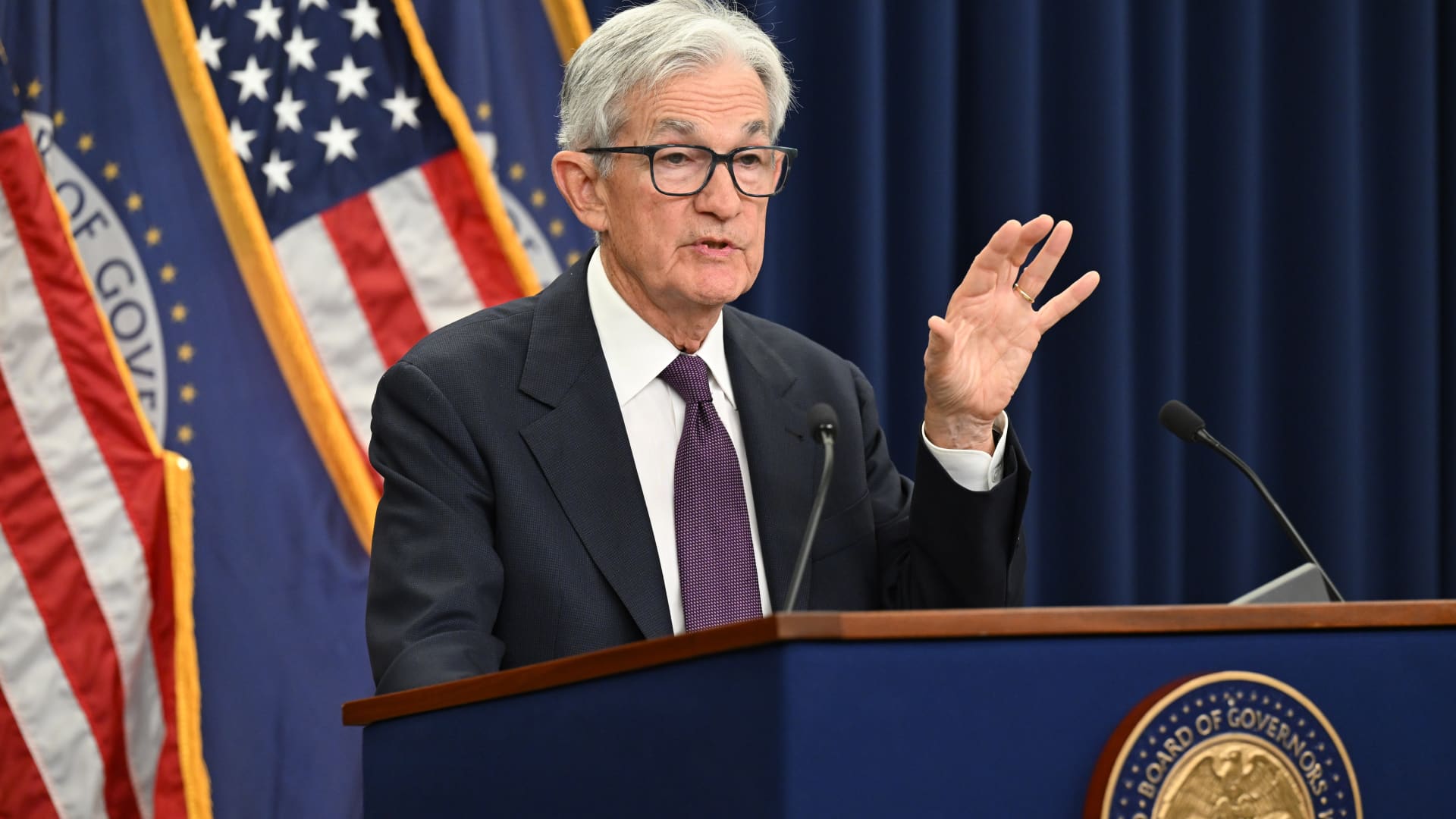
The Federal Reserve held its benchmark interest rate steady at 3.5%–3.75% at the May 2026 Federal Open Market Committee meeting, but the vote exposed the deepest internal division in three decades. Four FOMC members dissented, the most since 1992, with three regional presidents objecting to language that suggested the next move would be a cut. Instead, they wanted to keep the option of a hike on the table. The decision came as the Iran war, which began on February 28, continues to drive oil prices higher and aggravate inflation across the U.S. economy. Consumer prices rose 3.8% year-over-year, while producer prices surged 6% annually in April, up from 4.3% in March. The meeting was Jerome Powell's last as chair; Kevin Warsh will be sworn in on Friday, taking over a central bank that faces a fundamentally different economic landscape than the one Powell managed. Markets have already repriced: Kalshi traders now see a 64% probability of a rate hike by July 2027, and the 30-year Treasury yield has topped 5.19%, its highest since July 2007. The Fed's credibility is on the line and the bond market is already voting.
The four dissenting votes and the hawkish bloc forming against Warsh
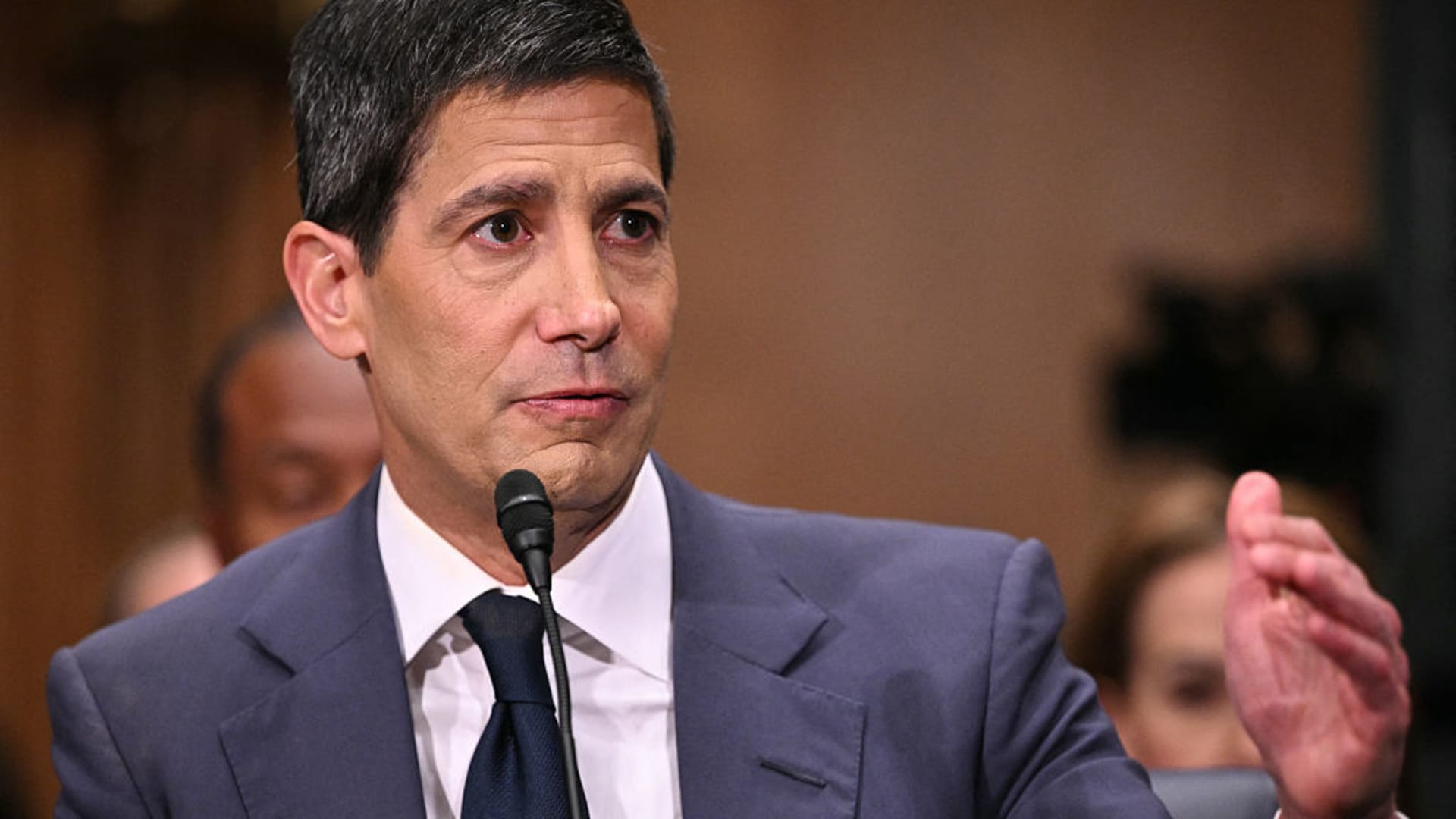
The 12–4 vote at the May FOMC meeting marked the most dissenting votes since 1992, a signal that the consensus Powell maintained through the post-pandemic tightening cycle has shattered. Three regional presidents dissented specifically because they objected to the statement's easing bias, the implication that the next rate move would be a cut. They wanted language that kept the door open for hikes, arguing that the Iran war-driven oil shock had fundamentally altered the inflation outlook. The fourth dissenter, whose identity the minutes did not disclose separately, joined on similar grounds. The majority of FOMC participants acknowledged that inflation would take longer to return to the 2% target, and many wanted to remove the easing bias entirely from the statement. The minutes showed that the vast majority of officials saw increased risk that inflation would remain elevated. This internal fracture matters because it previews the political and economic pressure Kevin Warsh will face from his first day in office. Warsh, confirmed by the Senate as the next Fed chair, previously indicated that rates could be cut. But the dissenting votes show a hawkish bloc is already organizing against that posture, and the bond market is amplifying their argument. The three regional presidents who dissented are all known hawks who have consistently favored tighter policy since the tightening cycle began. Their coordinated objection signals that Warsh will inherit a committee where the hawkish faction is organized and vocal, not a collection of isolated dissenters.
How the Iran war rewired the inflation and rate path
Since the Iran war began on February 28, the economic data has shifted decisively. The producer price index rose 6% year-over-year in April, accelerating from 4.3% in March, while core PPI hit 5.2%, up from 4%. Consumer price inflation reached 3.8% year-over-year, with core CPI at 2.8%. Import and export prices also posted multiyear highs. The Survey of Professional Forecasters now expects Q2 inflation to top out at 6%. Before the war, futures markets had priced in two rate cuts for 2026. Now, the CME FedWatch tool shows a 77% probability that the benchmark rate stays at 3.5%–3.75% through December 2026. Polymarket odds of no rate cut in 2026 jumped to 34% from just 10% before the conflict. Fed Governor Michael Barr said it is too early to judge the war's full impact, but the data is already forcing a repricing. Mortgage rates rose to 6.38% from 5.98% in February, and U.S. gasoline prices have jumped roughly $1 per gallon, approaching $4. The oil price shock is not a transitory blip; it is embedding itself into core inflation readings, and the Fed's 2% target looks increasingly unattainable without a rate hike. The war has also disrupted supply chains for refined petroleum products, adding further upward pressure on transportation costs that feed into both consumer and producer prices. The conflict has shut down approximately 1.5 million barrels per day of Iranian crude production, tightening global supply and keeping upward pressure on energy prices that flow through the entire economy. Airlines, shipping firms, and manufacturers dependent on petroleum-derived inputs have begun passing higher costs to end consumers, broadening the inflationary pressure well beyond gasoline station prices. The Cleveland Fed's Inflation Nowcasting model placed May CPI at 3.89%, and if that projection proves accurate, the narrative of a one-quarter inflation overshoot from war will collapse — replaced by evidence of a structural resetting of the U.S. price level that the Fed will be compelled to address with higher borrowing costs rather than patience.
Bond vigilantes take control of the yield curve
The 30-year Treasury yield hit 5.197% in late May, its highest since July 2007, while the 10-year yield rose to 4.687%, the highest since January 2025. The 2-year yield climbed to 4.12%. The move was driven by inflation fears tied to the Iran war, but the scale reflects a deeper dynamic: bond investors are forcing the Fed's hand. Ed Yardeni of Yardeni Research said bond vigilantes now have more power than Kevin Warsh. Wolfe Research's Chris Senyek argued the bond market will force a resolution to the Iran war by pricing in risk that the Fed cannot control. A Bank of America survey found that 62% of global fund managers expect the 30-year yield to hit 6%. The equity market has absorbed the pain: the S&P 500 closed at 7,353.61, down 0.67%; the Nasdaq fell 0.84% to 25,870.71; and the Dow dropped 0.65% to 49,363.88. The yield surge is not a temporary correction; it reflects a structural repricing of term premium as investors demand compensation for inflation uncertainty and fiscal risk. For the Fed, the message is clear: the bond market will not wait for the FOMC to catch up. The 30-year yield has risen more than 50 basis points since the war began, a move that historically takes months or years to unfold. Pension funds and insurance companies, which hold large allocations to long-duration Treasuries, have absorbed mark-to-market losses that reduce their appetite for further duration risk. The auction calendar for 30-year bonds in June will test whether foreign central banks and institutional buyers absorb supply at current yields or demand a higher premium. The auction result will set the tone for bond markets through the summer and directly constrain the Fed's room to maneuver.
What the rate hike odds mean for stocks, mortgages, and corporate debt
Kalshi traders now price a 64% chance of a rate hike by July 2027, with a 43% probability within 2026. Fed funds futures show a 51% chance of a hike by December 2026, rising to 60% by January 2027 and above 71% by March 2027. Traders have priced in 24 basis points of a quarter-point hike by June 2027. For equities, the repricing is destructive: higher risk-free rates compress equity risk premiums and raise the discount rate on future cash flows, which hits growth and tech stocks hardest. The Nasdaq's 0.84% decline on the day yields broke out is a preview. For mortgage markets, the rise to 6.38% from 5.98% in February has already slowed refinancing activity and will pressure home affordability further. For corporate debt, the 30-year yield above 5% raises borrowing costs for investment-grade issuers and tightens spreads on high-yield bonds. The ripple effect extends to private credit, where floating-rate loans will reprice higher if the Fed actually hikes. Morgan Stanley Wealth Management's Jim Lacamp and BMO's Ian Lyngen both noted that the market is now pricing in a tightening cycle that the Fed has not yet acknowledged, creating a credibility gap that Warsh must close quickly. The 64% probability on Kalshi represents a dramatic shift from January 2026, when traders assigned less than a 10% chance of any hike through 2027.
Kevin Warsh's first test: can he cut rates in a war economy
Kevin Warsh takes over as Fed chair on Friday, inheriting a committee that just recorded its most divided vote in 34 years and a bond market that is already pricing in a rate hike. Warsh previously indicated that rates could be cut, but the data since the Iran war began has erased that possibility. The producer price index surged to 6% year-over-year, consumer inflation hit 3.8%, and the 30-year yield broke above 5.19%. The Survey of Professional Forecasters expects Q2 inflation to peak at 6%. Warsh must decide whether to validate the market's hawkish repricing or fight it. If he signals a willingness to cut, he risks a further bond selloff that pushes yields even higher. If he pivots to a hawkish stance, he breaks his own pre-war guidance and invites political pressure from Donald Trump, who has pushed for lower rates. The four dissenting votes at the May meeting give Warsh cover to move hawkishly, but they also expose a committee that will not follow a dovish chair. The Fed's credibility depends on Warsh choosing a side. The bond market has already chosen for him. Warsh's first press conference as chair will be the most closely watched Fed communication since Powell's pandemic-era emergency meetings, and every word will be parsed for signs of which path he intends to take.
The next six months will determine whether the Fed can regain control of the narrative or whether the bond market will dictate policy from the outside. If inflation readings continue to accelerate and the Survey of Professional Forecasters expects Q2 CPI to top 6%, the probability of a rate hike by March 2027 will move from 71% toward certainty. Kevin Warsh will have to decide whether to validate that expectation or fight it, and the four dissenting votes at the May meeting show the committee will not tolerate a dovish pivot. The Iran war has no clear end, oil prices show no sign of retreat, and the 30-year yield above 5% is already tightening financial conditions more than a quarter-point hike would. The Fed's next move will not be a cut. It will be a choice between hiking and holding, and the bond market is betting on the former.
The BossBlog Daily
Essential insights on AI, Finance, and Tech. Delivered every morning at 06:00 Asia/Shanghai. No noise.
Unsubscribe anytime. No spam.
Tools mentioned
AffiliateSelected partner tools related to this topic.
AI Copilot Suite
Content drafting, summarization, and workflow automation.
Try AI Copilot →
AI Model Monitoring
Track model quality, latency, and drift with alerts.
View Monitoring Tool →
Low-fee Global Broker
Multi-market access with transparent pricing.
Open Broker Account →
Some links above are affiliate links. We earn a commission if you sign up through them, at no extra cost to you. Affiliate revenue does not influence editorial coverage. See methodology.
The BossBlog Daily
Essential insights on AI, Finance, and Tech. Delivered every morning at 06:00 Asia/Shanghai. No noise.
Unsubscribe anytime. No spam.
Tools mentioned
AffiliateSelected partner tools related to this topic.
AI Copilot Suite
Content drafting, summarization, and workflow automation.
Try AI Copilot →
AI Model Monitoring
Track model quality, latency, and drift with alerts.
View Monitoring Tool →
Low-fee Global Broker
Multi-market access with transparent pricing.
Open Broker Account →
Some links above are affiliate links. We earn a commission if you sign up through them, at no extra cost to you. Affiliate revenue does not influence editorial coverage. See methodology.