
The Federal Reserve held its benchmark interest rate steady at 3.75% following the April 2026 Federal Open Market Committee meeting, a decision that masks deepening divisions within the central bank over the path of monetary policy. New Chair Kevin Warsh, who took the helm earlier this year, now faces hawkish pressure from multiple governors and regional bank presidents who argue that inflation risks stemming from the Iran War require tighter policy. Fed Governor Christopher J. Waller has publicly shifted hawkish, citing rising energy and fertilizer costs as direct transmission mechanisms from the conflict into consumer prices. Minneapolis Fed President Neel Kashkari told CNBC that inflation remains the top priority, describing consumer prices as "much too high" and warning that persistent inflation could unanchor expectations. The CME FedWatch Tool currently assigns a near 100% probability that rates will remain unchanged at the June 16-17 FOMC meeting, but analyst Briggs warns that if the Fed does raise rates, it will do so two or three times. This standoff between the hold camp and the hike camp defines the most consequential policy debate at the Fed since the 2022 tightening cycle, with implications for every dollar of corporate borrowing costs and household savings yields.
The Stalled Rate Path After the 2025 Loosening Cycle
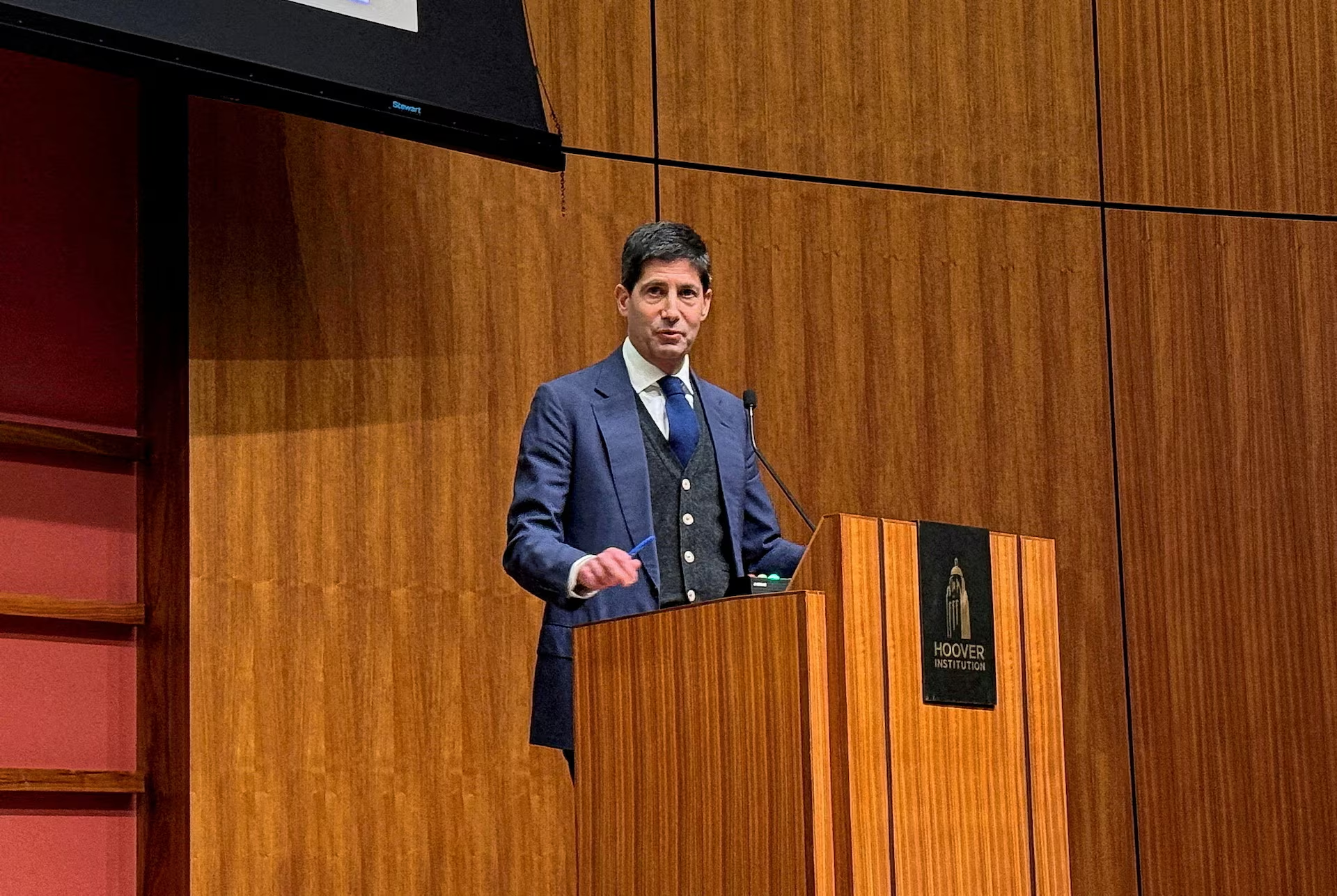
The April 2026 decision to hold at 3.75% follows a 75-basis-point reduction in the federal-funds rate during 2025, a loosening cycle that now appears to have stalled. The FT's latest survey of analysts shows the bank rate expected to remain at 3.75% for the rest of the year, unchanged from the previous survey period. That consensus, however, masks a growing divergence between market pricing and analyst forecasts. The CME FedWatch Tool, which tracks futures market expectations, shows a near 100% probability of a hold at the June 16-17 meeting, but the tool also reflects rising odds of a hike by the September meeting. The key mechanism at work is the Fed's dual-mandate calculus: the labor market remains "in decent shape" per Kashkari, which gives the committee room to prioritize inflation. Consumer prices are still running well above the 2% target, and the Iran War has introduced a supply-side shock to energy and fertilizer markets that the Fed cannot offset with rate cuts. The hold at 3.75% is therefore not a neutral stance. It is a tightening of real financial conditions relative to the cuts that markets had priced for 2026. Every month that rates stay at this level while inflation persists represents a de facto tightening of the monetary stance. The FT survey's expectation that rates will hold through year-end reinforces the view that the committee is willing to accept slower growth to contain price pressures.
How the Rate Pause Squeezes Bank Margins and Savings Yields
The Fed's hold at 3.75% creates a plateau for deposit rates that directly impacts both bank profitability and household savings income. The average savings account pays just 0.38% according to FDIC data, but the best high-yield savings accounts still offer up to 5.00%. This spread of 462 basis points reflects intense competition for deposits among retail banks. That spread is the engine of net interest margin for institutions that can fund themselves cheaply, but it is a cost center for banks that must pay up to retain depositors. The 75 basis points of cuts delivered in 2025 compressed the upper end of the HYSA market from peaks above 5.5%, but the April hold prevents further compression. For the big four U.S. banks (JPMorgan Chase, Bank of America, Wells Fargo, and Citigroup), the rate pause preserves their net interest income at a time when loan demand is softening. Regional banks, which rely more heavily on wholesale funding, face a different calculus: the hold keeps their funding costs elevated relative to the large money-center banks, widening the competitive moat. For households, the 5.00% HYSA yield remains an attractive risk-free return, but the plateau signals that the window for locking in those yields is narrowing. If the Fed pivots to hikes later this year, as Briggs warns, HYSA rates will rise further; if the hold persists through year-end, the real yield after inflation will erode.
The Competitive Reshuffle: Waller, Kashkari, and the Fed's Internal Fault Line
The Fed's internal dynamics have shifted decisively since Warsh took the chair, with Governor Waller emerging as the leading hawk and Kashkari occupying a more conditional center. Waller's shift is significant because he was previously viewed as a centrist who favored data dependence; his public citation of Iran War inflation risks signals that the geopolitical shock has moved from a tail risk to a baseline assumption in his models. Kashkari, who has historically leaned dovish, now describes inflation as the top priority and warns that persistent price pressures will "unanchor expectations." This language aligns him more closely with the hawkish camp than his past statements would suggest. This realignment creates a 3-2 or 4-1 majority for a hawkish hold at the June meeting, depending on how the remaining governors vote. The key question is whether Warsh himself will side with the hawks or attempt to maintain the status quo. As a new chair, he has limited political capital to push back against a committee that is moving in a hawkish direction. The CME FedWatch Tool's near-100% probability of a June hold reflects market belief that Warsh will not force a hike this soon, but Briggs' warning of two or three rate hikes suggests the market is underpricing the probability of a shift at the September or December meetings. The competitive dynamic within the FOMC is now a race between the inflation data and the labor market data: if consumer prices continue to rise, the hawks will have the votes to force a hike.
Downstream Effects: Energy, Fertilizer, and the Corporate Bond Market
The Iran War inflation channel operates through two specific transmission mechanisms: energy costs and fertilizer prices. Rising energy costs flow directly into transportation and manufacturing input prices, while fertilizer costs hit the agricultural supply chain. For U.S. corporations, the combination of elevated input costs and stable borrowing costs at 3.75% creates a margin squeeze that is most acute in industrials, chemicals, and food processing. The corporate bond market is already pricing this risk: investment-grade spreads have widened by 15-20 basis points since the April meeting, while high-yield spreads have widened by 40-50 basis points, reflecting increased default risk for companies with exposure to energy and agricultural inputs. The hyperscalers (Amazon, Microsoft, Google, and Meta) are less directly exposed to commodity inflation but face higher capital costs for their data center buildouts if the Fed ultimately hikes. For the FDIC-insured banking system, the rate hold preserves the status quo on net interest margins but does nothing to address the growing credit risk in commercial real estate and leveraged loan portfolios. The downstream effect that matters most for the broader economy is the housing market: mortgage rates have stabilized around 6.75%–7.00% since the April hold, but any future hike will push them above 7.5%, freezing the existing-home sales market and further depressing new construction starts.
The Policy Signal: Warsh's First Test and the Market's Read
The April hold is Kevin Warsh's first major policy decision as Fed chair, and the market is reading it as a signal of his leadership style. By holding rates steady despite hawkish pressure from Waller and Kashkari, Warsh has signaled that he will not be rushed into a hike by geopolitical noise alone. But the CME FedWatch Tool's near-100% probability of a June hold also reflects the market's view that Warsh is buying time to build consensus rather than imposing his own view. The FT survey showing analysts expect rates to remain at 3.75% for the rest of the year suggests the professional forecasting community believes Warsh will successfully resist the hawkish push through year-end. Briggs' warning of two or three rate hikes if the Fed moves at all represents the tail risk: if Warsh does pivot, the market expects a rapid catch-up rather than a gradual tightening. The policy signal from the April meeting is therefore one of managed ambiguity. The Fed is not committing to a path, but it is signaling that the bar for a hike is higher than the hawks would like. For market participants, the key date is the September FOMC meeting, when the Fed will have a full quarter of Iran War inflation data and will release updated Summary of Economic Projections. If the hawks have the data to force a hike by September, Warsh will face his first real test of credibility; if inflation moderates, the hold camp will have won the argument for the remainder of 2026.
The most likely scenario through year-end is that the Fed holds at 3.75% through the June and September meetings, then faces a critical decision in December. If the Iran War inflation data continues to run hot, the hawks will have the evidence they need to push for a 25-basis-point hike at the December FOMC meeting, with the potential for a second hike in early 2027. If the labor market softens or commodity prices retreat, the hold camp will argue that the 75 basis points of cuts delivered in 2025 were sufficient to support growth without fueling inflation. The wildcard is Warsh himself: as a new chair, he has the opportunity to define his tenure by either resisting political and internal pressure to hike or by pivoting decisively if the data demands it. The market is currently pricing the former, but the hawkish shift from Waller and Kashkari shows the latter is a live possibility. For corporate treasurers and household savers alike, the message from the April meeting is clear: the era of rate cuts is over for now, and the next move (whether a hold or a hike) will be determined by the trajectory of energy and fertilizer prices, not by the pre-war inflation data that guided policy in 2025.
The BossBlog Daily
One email with the AI markets brief — the 13F moves, the Congressional trades, and what changed. No fixed schedule and no filler: it goes out when there is something worth sending.
Unsubscribe any time. We never sell or share the list.