Tesla raised its 2026 capital expenditure guidance to more than $25 billion during its first-quarter earnings call on April 22, an increase of roughly $5 billion over the forecast the company issued just three months earlier, as production of the Cybercab robotaxi had begun at Giga Texas, the Optimus humanoid robot was confirmed for full-scale manufacturing at the Fremont facility by late July, and the company's unsupervised robotaxi service expanded from Austin to Dallas and Houston in the same month. Revenue for the quarter came in at $22.39 billion, up 15.8 percent year-on-year, with an earnings per share beat that briefly lifted the stock 3.6 percent in after-hours trading before investors absorbed the cash-flow guidance. Management guided explicitly for negative free cash flow in every remaining quarter of 2026. That combination of a revenue beat and a spending warning is the clearest signal yet that Tesla has shifted from managing a car business to funding what Elon Musk described on the call as a three-front arms race in autonomous vehicles, humanoid robotics, and AI compute infrastructure, one that he contextualised by noting Amazon has projected $200 billion in capital expenditure for 2026 and Google between $175 billion and $185 billion.
The $25 Billion Allocation
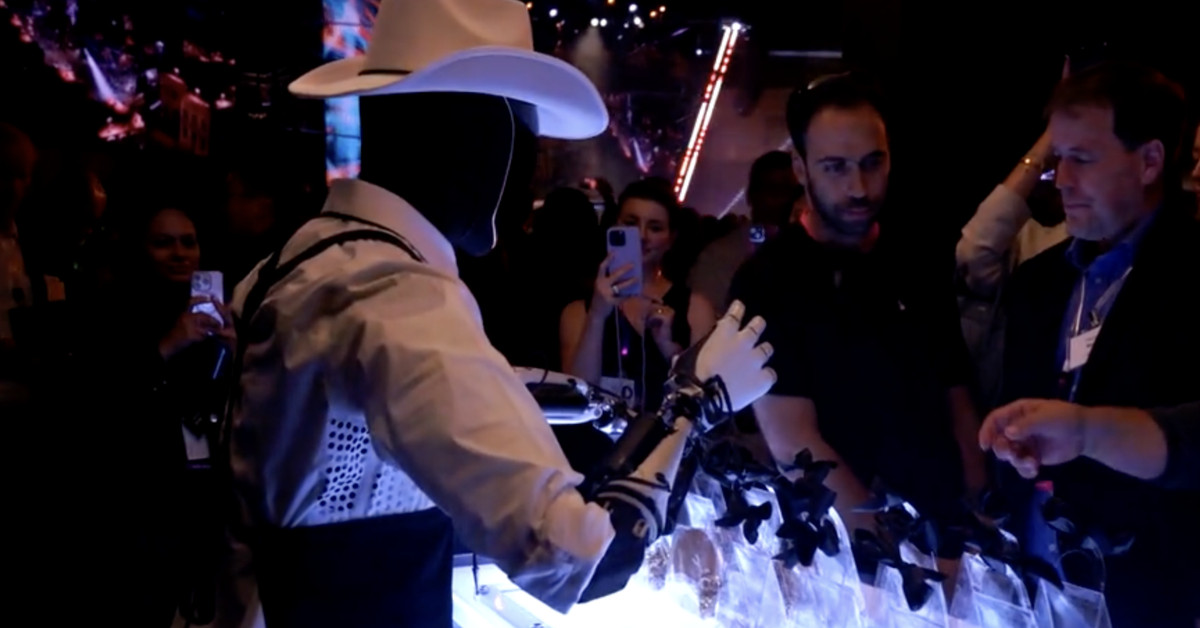
The capex figure breaks into three discrete spending pools. The largest is the Optimus robotics buildout. Tesla is converting the Fremont factory lines that produced the Model S and Model X, with the last units scheduled to roll off in early May, into a pilot robotics facility targeting one million Optimus units per year. Simultaneously, the company is adding more than 5.2 million square feet of new building space to the Giga Texas North Campus at an estimated construction cost of between $5 billion and $10 billion, with a long-term nameplate capacity target of 10 million robots per year. That figure would exceed the annual vehicle production of every major carmaker except Toyota and Volkswagen.
The second pool is AI compute. Tesla ended 2025 with approximately 120,000 NVIDIA H100-equivalent GPUs and plans to reach 280,000 by the end of June 2026, a more than doubling in roughly six months. The compute cluster supports two distinct workloads: training the Full Self-Driving neural network on video data from Tesla's active fleet, and developing the motion-control and manipulation policies that govern Optimus. Both rely on supervised learning from large video datasets, which means training compute scales with the number of cameras in the field and the diversity of scenarios captured, a dynamic that rewards having the largest active fleet.
Third is the Cybercab supply chain. CEO Elon Musk described a typical S-curve ramp for products built with entirely new components and new logistics networks. No specific 2026 production volume was disclosed, but the company confirmed it is manufacturing the vehicle without the 2,500-unit annual cap that the National Highway Traffic Safety Administration had previously imposed on vehicles lacking traditional steering controls. A federal exemption granted earlier this year removes the most significant regulatory ceiling on the programme.
Revenue Beat, Cash Flow Pressure
First-quarter revenue of $22.39 billion came in ahead of consensus, with automotive gross margins recovering from the promotional lows of mid-2025 as the company reduced discounting. The earnings per share beat was meaningful. None of that, however, changes the arithmetic of a capex commitment large enough to push free cash flow negative for the rest of the year.
At the pace implied by over $25 billion annualised, Tesla is spending roughly $6 billion per quarter on capital investment. The company held approximately $28 billion in cash and equivalents at year-end 2025. If Cybercab rides and Optimus unit sales do not begin generating material cash before mid-2027, Tesla will face choices about the pace of the investment programme that are not currently reflected in its public guidance. Management has not provided specific revenue forecasts for either product.
The recurring software business is the most tangible offset. Tesla reported 1.28 million active Full Self-Driving subscribers in Q1, up 51 percent year-on-year, generating approximately $546 million in annualised subscription revenue. That figure grows without proportional hardware costs attached: each additional FSD subscriber adds revenue through a software licence rather than a vehicle sale, and the model improves as more subscribers contribute driving data. FSD activations are structurally tied to the Cybercab fleet as well. Every vehicle operated in the robotaxi network runs on FSD and feeds anonymised data back into the training system, compressing future development costs without requiring a separate subscription relationship per vehicle.
Analysts at Morgan Stanley, in coverage cited by Bloomberg, described the Dallas and Houston launches as a "material evolution" from Austin's initial rollout. The firm's analysts noted that sustained unsupervised operation across two additional major metros, at a combined fleet of 573 vehicles, represents a measurable confidence signal from Tesla's engineering team, even if the fleet size is still far below what full commercial scale requires.
Waymo, BYD, and the Reshuffled Autonomy Field
Tesla's robotaxi expansion arrives in a market Alphabet's Waymo has already partially defined. Waymo operates paid rides without human operators in San Francisco, Los Angeles, Phoenix, and Austin, using a sensor stack that combines LIDAR with cameras. The LIDAR configuration adds per-vehicle hardware cost but provides redundancy in rain, fog, and low-light conditions where optical cameras alone degrade. Waymo has announced an Atlanta expansion for later this year.
Tesla's Cybercab relies entirely on cameras, keeping hardware costs below those of LIDAR-equipped competitors but placing the full perception burden on software. TechCrunch reported that the Dallas and Houston launches, each covering approximately 25 square miles of mixed urban and suburban terrain and deploying 573 vehicles without safety operators, constitute the most geographically aggressive unsupervised autonomous deployment in the company's history. The absence of a human monitor in the passenger seat is the operational threshold that matters most for unit economics: a robotaxi with a safety driver aboard generates revenue but does not reduce labour cost, which is where the profitability case for autonomous ride-hailing ultimately rests.
General Motors closed its Cruise robotaxi unit in late 2024 following a series of safety incidents and regulatory investigations, effectively reducing the US competitive field to Tesla and Waymo for the foreseeable future. That consolidation improves the regulatory attention each remaining operator receives and removes a source of reputational risk that had been affecting the entire sector.
The humanoid robotics competitive landscape is more fragmented. Boston Dynamics, Agility Robotics, Figure AI, and several Chinese manufacturers including Unitree and Fourier Intelligence are all pursuing humanoid production. None has announced a one-million-unit annual production target. Tesla's structural advantage is the vertical integration across factories, supplier relationships, and logistics infrastructure developed for electric vehicle production. A company building humanoid robots from scratch faces the supply chain challenge of sourcing novel components without an existing Tier-1 supplier network; Tesla is adapting an existing network rather than building one.
10,000 New Components and the Factory Ramp
The Optimus manufacturing challenge is qualitatively different from launching a new car model. Tesla's engineering teams have described the Gen 2 Optimus as containing more than 10,000 unique components, none of which has previously been manufactured at automotive volume. Custom actuators convert electrical signals into limb motion with force-torque sensing that must be precise enough for the robot to manipulate objects without crushing them; the tolerances involved exceed those of most automotive drivetrain components. Wrist mechanisms require articulation in multiple planes simultaneously, coordinated by software that must run reliably in real-time at the edge of the robot's onboard compute.
Tesla is addressing the supply chain partly through vertical integration and partly through supplier development, filing dozens of job listings across Fremont and the Texas campus for actuator engineers, precision machining specialists, and robotics production associates. The company has not disclosed which components it plans to manufacture in-house versus source externally, but the hiring profile indicates a preference for internalising the highest-precision elements. According to Electrek's reporting on the Fremont conversion, the Model S/X line shutdown in early May is timed specifically to give the facility a multi-month runway for tooling installation before the Optimus pilot line is expected to reach throughput in late summer.
The factory reuse strategy carries compounding logic. Fremont has tooling infrastructure, experienced workforce, and established logistics routes accumulated over more than a decade. If the pilot line approaches its one-million-unit annual target before the Giga Texas North Campus expansion is complete, it validates reuse over greenfield construction as a replicable blueprint for future robotics sites globally. The Giga Texas expansion, targeting 10 million units per year at full build-out, is the longer bet; the Fremont conversion is the proof of concept.
Cybercab's supply chain is its own separate challenge. As a purpose-built vehicle with no steering wheel, no foot pedals, and a two-seat layout optimised for short-distance shared rides, it shares relatively few components with the Model 3 or Model Y. Interior systems, seating configurations, and safety electronics are all bespoke designs being qualified on an accelerated timeline. Musk confirmed initial production ramp will be slow through mid-year, following the S-curve pattern common to new product lines with novel supply chains.
NHTSA Clearance and the State-by-State Expansion
The regulatory environment for autonomous vehicles has shifted in a direction favourable to Tesla's timeline. The NHTSA exemption removing the 2,500-unit annual production cap for vehicles without traditional controls was the single most consequential ruling, eliminating the regulatory ceiling that would otherwise have constrained Cybercab volumes before they became commercially meaningful. The exemption reflects a broader recalibration at the Transportation Department as autonomous vehicle miles-driven data accumulates in US cities and political pressure to commercialise the technology increases.
State-level regulation remains fragmented and is where Tesla faces its most immediate execution risk. The company currently operates unsupervised robotaxi services only in Texas and California. Its stated goal of running in a dozen states by year-end requires parallel approval processes across multiple motor vehicle agencies with different documentation requirements, incident reporting standards, and geographic operating conditions. Phoenix, Miami, Orlando, Tampa, and Las Vegas are among the named H1 2026 expansion targets; none had launched as of the earnings call, and management offered no specific regulatory timelines for individual cities.
A separate regulatory complication emerged this month. How-To Geek reported that Tesla is advising a subset of FSD licence holders that their existing hardware configurations will require upgrades to access future autonomy capabilities, a reversal from prior product positioning that told buyers their purchases were forward-compatible. The California Department of Motor Vehicles has taken notice, and consumer protection agencies in several states are monitoring the situation. Tesla has not disclosed upgrade pricing publicly, which makes the financial exposure difficult to model, but the development introduces consumer and regulatory risk into the FSD subscription revenue line that analysts had previously treated as clean and growing. FSD purchasers who bought full licences rather than subscriptions have contractual standing that complicates any hardware upgrade mandate.
Federal reporting requirements add a further policy dimension. Transportation Department rulemaking on mandatory incident reporting for autonomous vehicle operators is proceeding in parallel with the NHTSA cap removal. A more demanding reporting framework would affect Tesla's operational posture across every robotaxi city and could slow expansion decisions if incident disclosure requirements conflict with the company's preferred pace of deployment.
The three concurrent bets Tesla is making with $25 billion, that camera-only autonomy scales reliably to city-wide deployment across varied conditions, that humanoid robots can be manufactured at automotive volumes from a 10,000-component supply chain with no prior production history, and that the AI compute to support both can be assembled faster than competitors close the capability gap, are individually high-variance and collectively without precedent for a single company to pursue at once. The free cash flow hit is real and quantified: negative for the remainder of 2026, with the path back to positive territory running through Cybercab ride revenue and Optimus unit sales, neither of which has generated a dollar of reported income yet. The balance sheet is large enough to fund the programme through early 2027 without external capital, but not indefinitely without one of the three bets beginning to pay off.
What is structurally different from earlier Tesla capital cycles is the software revenue layer building beneath the hardware investment. FSD subscriptions at $546 million annualised, growing 51 percent year-on-year, represent a revenue stream whose marginal cost of delivery is close to zero once the model is trained. If Cybercab rides generate a comparable software take rate at commercial scale, the economics of each additional autonomous mile improve across the fleet as volume grows, independent of new vehicle sales. Optimus remains the longest-dated and highest-risk bet; no company has manufactured a humanoid robot at automotive volume, and the 10,000-component supply chain is as much an unsolved engineering problem as a manufacturing one. Wall Street's mixed post-earnings verdict is the intellectually honest one: Tesla is spending at a pace that leaves no margin for significant schedule slippage in either Cybercab or Optimus, and the $25 billion is not a hedge against uncertainty. It is a declaration that autonomous vehicles and humanoid robots have arrived as industries, and that Tesla is building to be the company that scales both of them.
The BossBlog Daily
Essential insights on AI, Finance, and Tech. Delivered every morning. No noise.
Unsubscribe anytime. No spam.
Tools mentioned
AffiliateSelected partner tools related to this topic.
AI Copilot Suite
Content drafting, summarization, and workflow automation.
Try AI Copilot →
AI Model Monitoring
Track model quality, latency, and drift with alerts.
View Monitoring Tool →
Low-fee Global Broker
Multi-market access with transparent pricing.
Open Broker Account →
Some links above are affiliate links. We earn a commission if you sign up through them, at no extra cost to you. Affiliate revenue does not influence editorial coverage. See methodology.