
Microsoft's reported decision to cancel or defer some data-center leases has become one of the clearest reality checks in the AI boom. Reuters and Bloomberg reported in early 2026 that the company was scaling back parts of its infrastructure buildout after TD Cowen analysts had already flagged lease cancellations and project delays. That matters because Microsoft is not a fringe customer: it is OpenAI's closest commercial partner, one of Nvidia's biggest buyers and a company whose capex plans help set the market's tone.
Azure Demand Meets the Capacity Bill
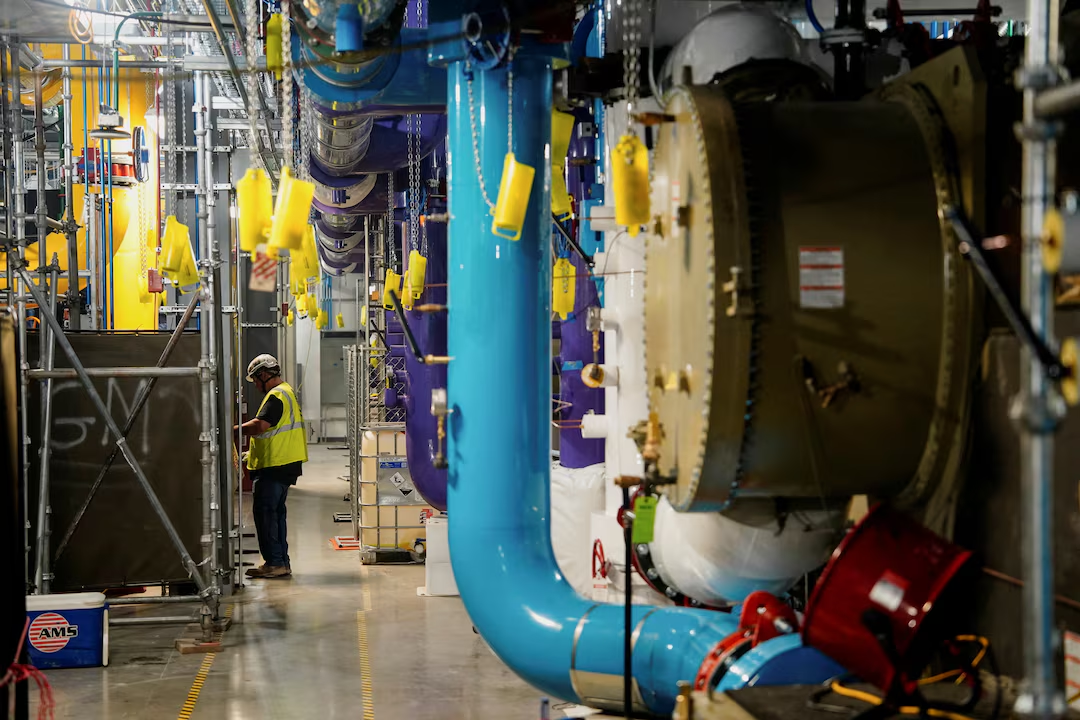
The bearish case is not that AI demand has vanished. Microsoft has still said it expects to spend tens of billions of dollars on infrastructure, but the lease pullback suggests new capacity is not being absorbed as quickly as the market had assumed. If Azure customers are slower to convert pilot projects into large production workloads, then the timing mismatch matters for everyone upstream, from landlords and utilities to chip suppliers counting on a straight-line rise in orders.
GPU Orders, Power Forecasts and Valuations
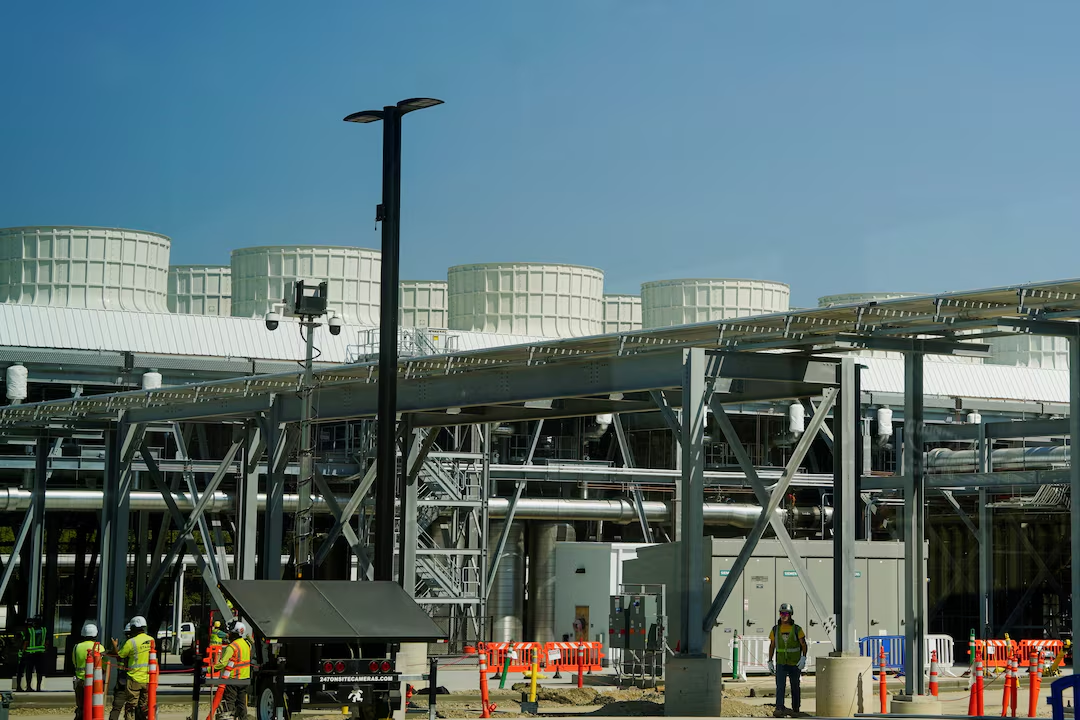
That is why the story reaches far beyond one company's real-estate decisions. Nvidia's sales, power-demand forecasts and startup valuations have all been buoyed by the idea that compute will remain scarce and hyperscaler spending will keep compounding. A more selective Microsoft does not end the AI cycle, but it does force investors to ask whether revenue growth will arrive fast enough to support the industry's infrastructure bill.
The next phase of AI now looks less like a pure technology race than a pricing test for the customers meant to fill all that capacity.
The BossBlog Daily
One email with the AI markets brief — the 13F moves, the Congressional trades, and what changed. No fixed schedule and no filler: it goes out when there is something worth sending.
Unsubscribe any time. We never sell or share the list.