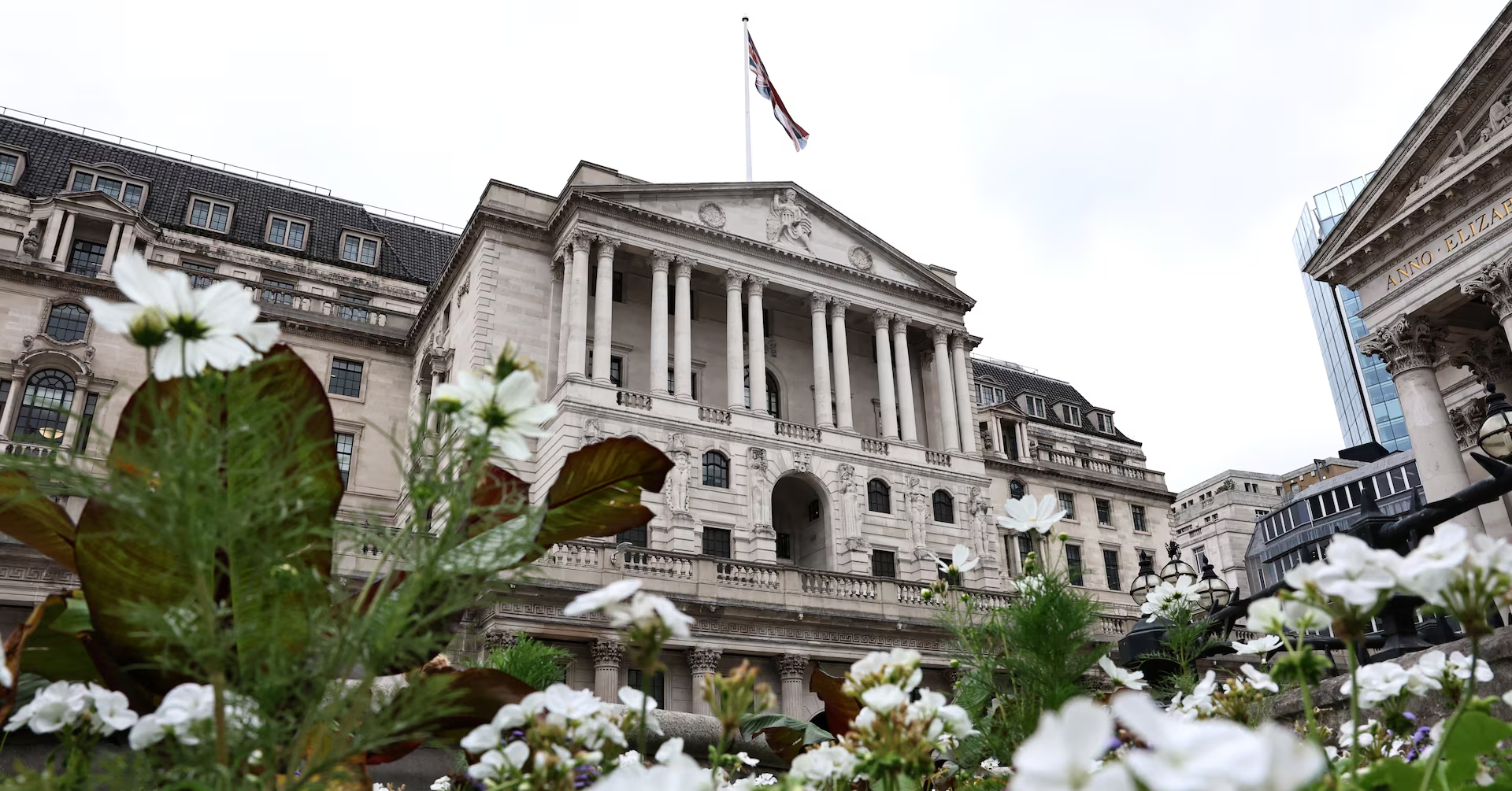
The Bank of England is testing how artificial intelligence could create risks for the financial system, according to a Reuters report published on April 16, 2026. Reuters said the work spans banks, insurers and fintech groups. That shifts AI in finance from a software-efficiency story into a question for supervisors watching operational resilience and market stress. Once a central bank starts treating model failures as a source of systemic risk, adoption becomes harder to separate from regulation.
Vendor concentration becomes a prudential issue
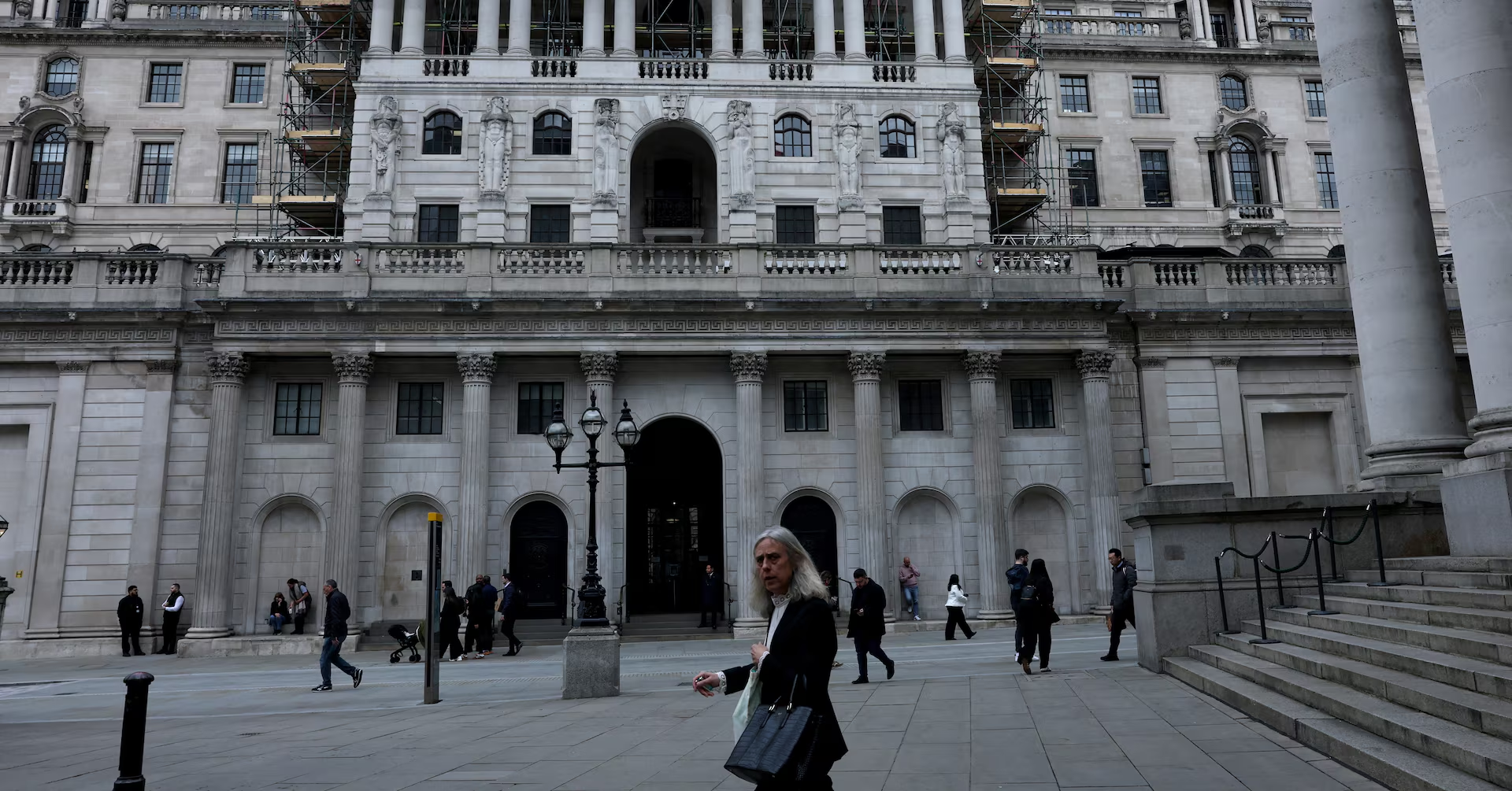
The immediate issue is not whether banks use AI, but how many rely on the same models, cloud providers and decision tools at the same time. If a common vendor fails, produces flawed outputs or amplifies the same trading or credit signal across firms, the Bank of England could end up treating that as correlated risk rather than an isolated IT problem. Reuters' framing points to tougher scrutiny of model governance, audit trails and fallback plans for banks, insurers and fintech groups.
Selling AI into finance now means clearing regulators
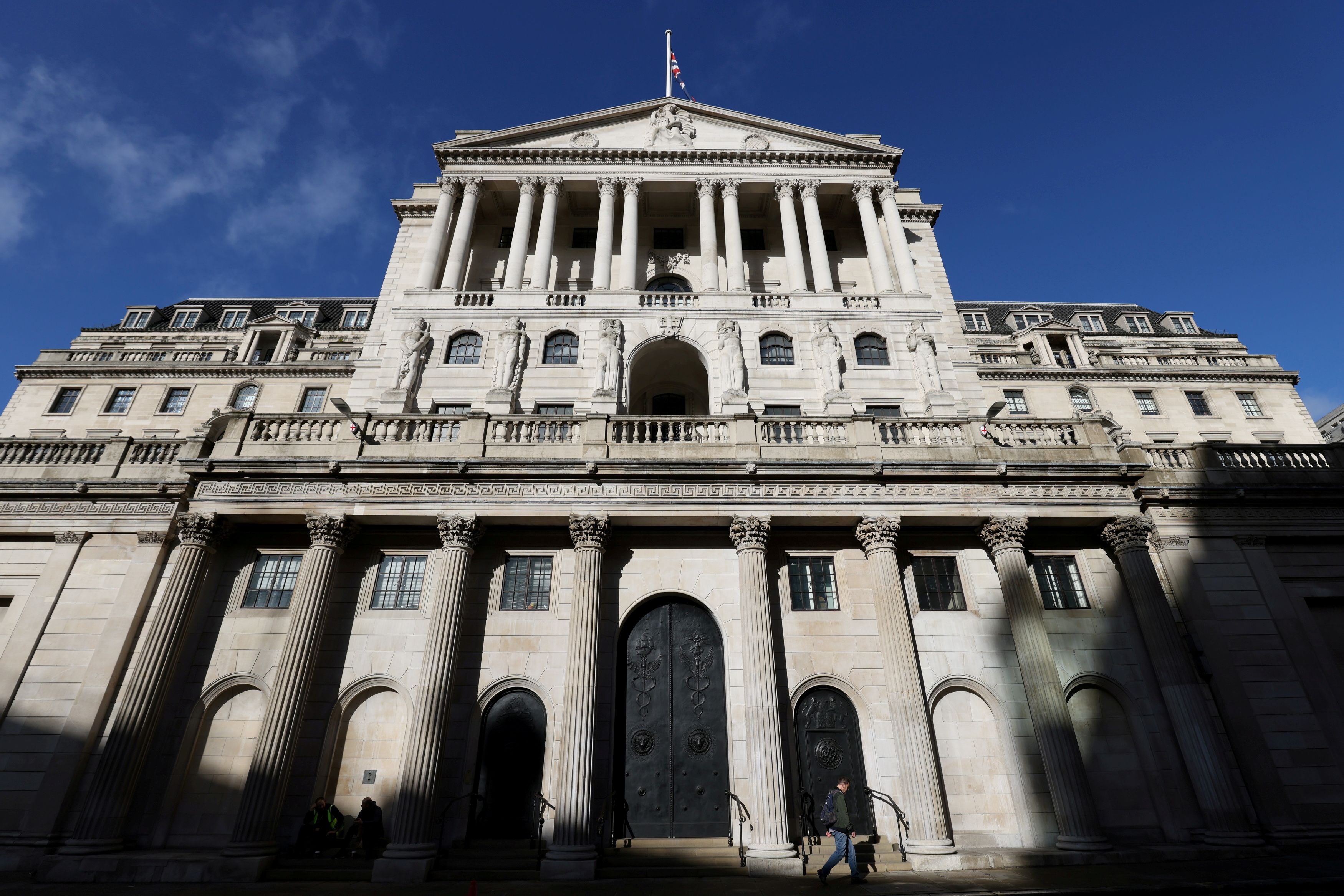
That has commercial consequences for AI suppliers. Efficiency claims still matter, but so do evidence packs that show stability, explainability and controls that can survive central-bank review. For listed financial groups and their investors, 2026 is starting to look like the year AI spending in capital markets gets judged not only on productivity gains, but on whether the tools increase regulatory and balance-sheet risk.
The next moat in financial AI looks less like raw model capability and more like provable resilience.
The BossBlog Daily
Essential insights on AI, Finance, and Tech. Delivered every morning. No noise.
Unsubscribe anytime. No spam.
Tools mentioned
AffiliateSelected partner tools related to this topic.
AI Copilot Suite
Content drafting, summarization, and workflow automation.
Try AI Copilot →
AI Model Monitoring
Track model quality, latency, and drift with alerts.
View Monitoring Tool →
Some links above are affiliate links. We earn a commission if you sign up through them, at no extra cost to you. Affiliate revenue does not influence editorial coverage. See methodology.