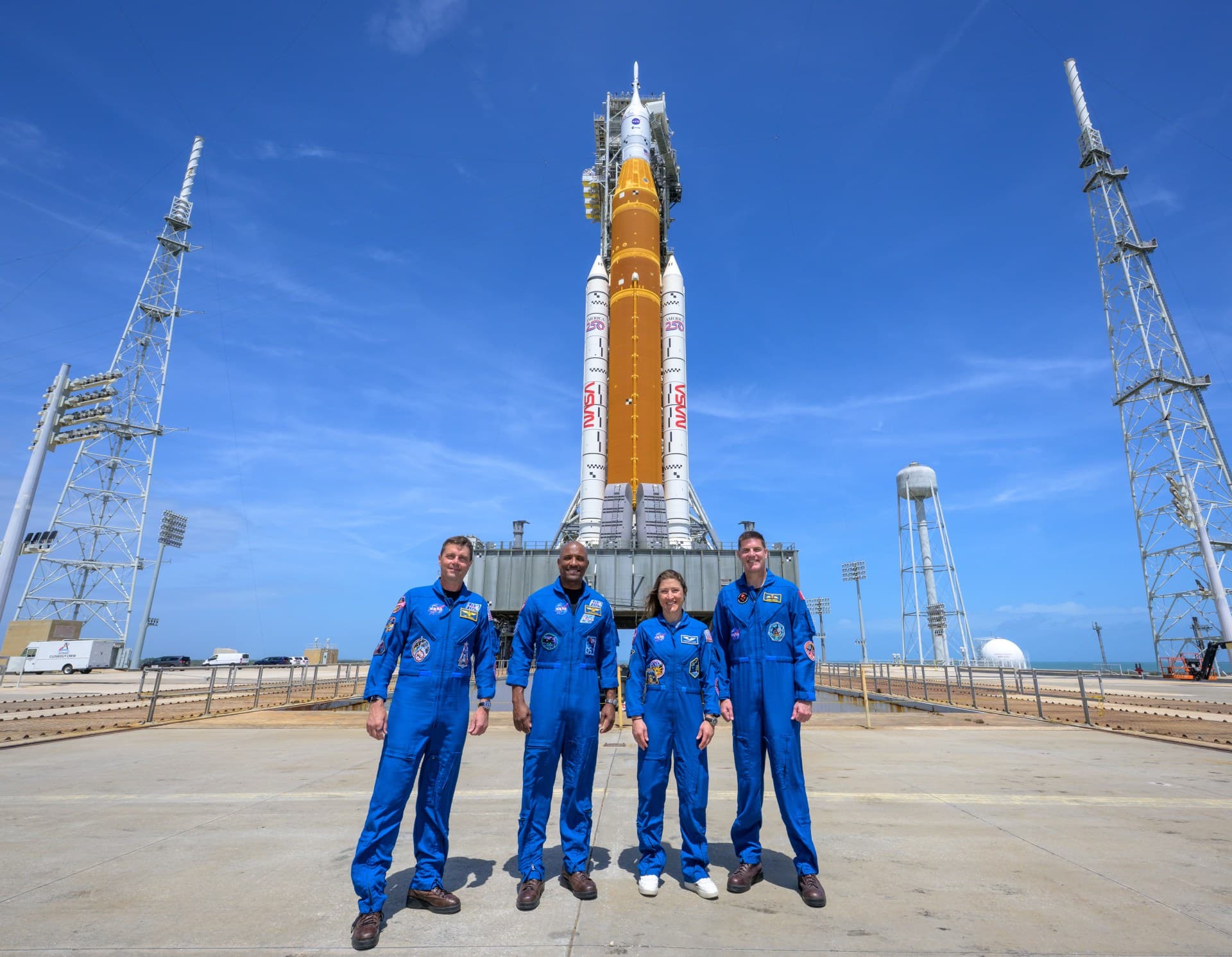
NASA has begun the final countdown for Artemis II, the first crewed mission to the Moon in over 53 years. The spacecraft is scheduled to launch April 1, 2026, from Kennedy Space Center in Florida, marking a pivotal milestone in America's return to lunar exploration.
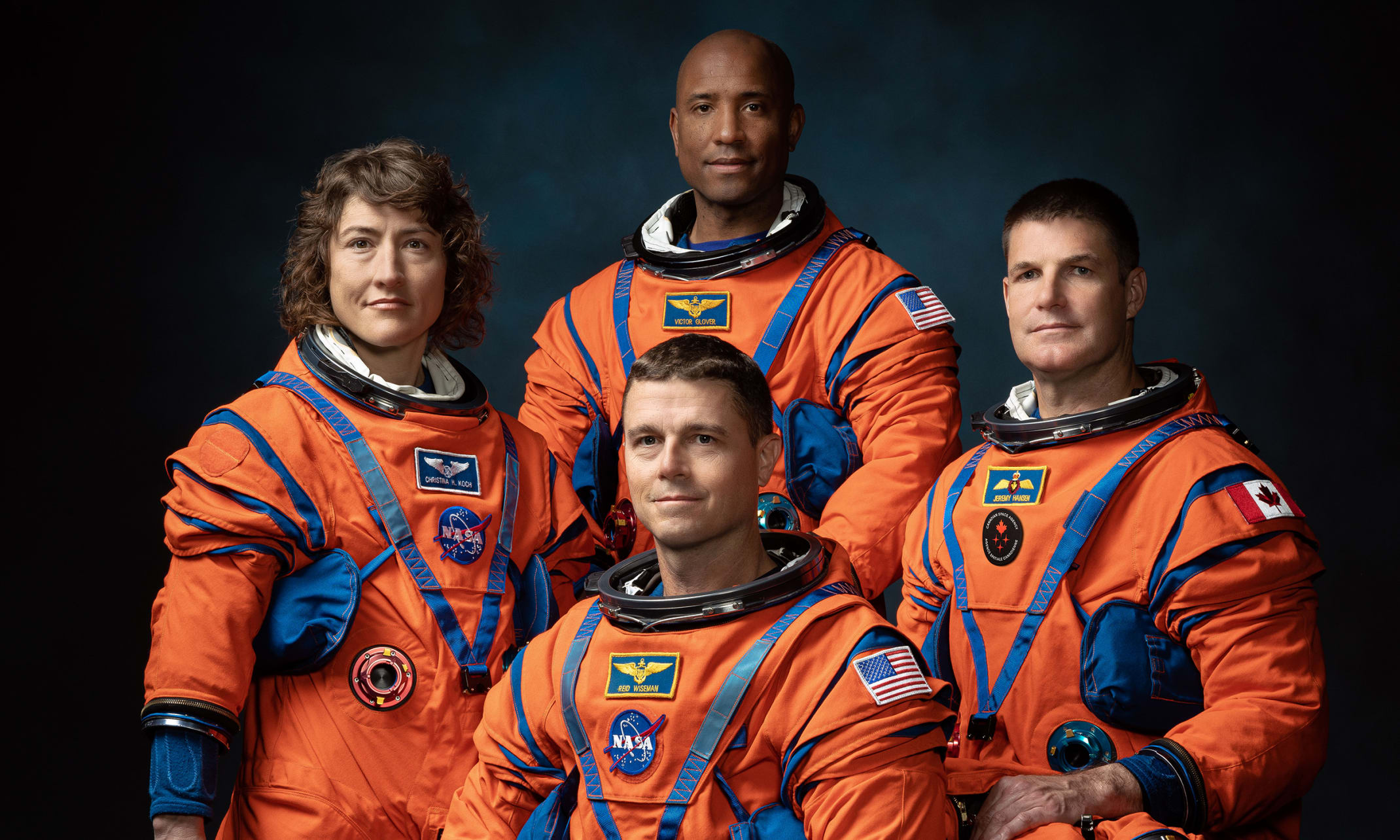
The four-person crew ??commander Reid Wiseman, pilot Victor Glover, mission specialists Christina Koch and Jeremy Hansen ??represents the most diverse group of astronauts ever assigned to a lunar mission. Their eight-day journey around the Moon will test critical life-support systems aboard the Orion spacecraft with humans for the first time.
Artemis II builds directly on the uncrewed Artemis I mission that successfully demonstrated the Space Launch System rocket and Orion spacecraft in 2022. That mission orbited the Moon and returned to Earth without any crew members aboard.
The countdown marks the culmination of years of preparation that included extensive astronaut training, spacecraft testing, and system integration. Mission managers report all systems are proceeding toward launch on schedule.
Mission Objectives
Artemis II's primary objective is validating the Orion spacecraft's life-support systems with a full crew complement. The mission will demonstrate that the Environmental Control and Life Support System can maintain habitable conditions for four astronauts during an extended deep space mission.
The crew will orbit the Moon at a distance of approximately 6,400 miles above the lunar surface before returning to Earth. This trajectory tests the spacecraft's navigation, communication, and thermal protection systems under actual flight conditions.
Flight controllers will monitor the crew's health and performance throughout the mission, gathering data on human adaptation to deep space environments. This information will inform design decisions for future long-duration missions including eventual Mars expeditions.
The mission profile includes multiple orbits around the Moon, providing opportunities to test various spacecraft systems under different lighting and gravitational conditions. Each orbit offers unique data collection opportunities for engineering teams.
Crew Profiles
Commander Reid Wiseman brings extensive experience from his time aboard the International Space Station, where he served as flight engineer and later commander during a 165-day expedition. His leadership will guide the crew through all mission phases.
Victor Glover serves as pilot, becoming one of the few astronauts with extensive commercial aviation experience to fly aboard Orion. His expertise in aircraft systems provides valuable perspective for spacecraft operations.
Christina Koch, a former station commander with the longest single spaceflight by a woman, contributes deep expertise in scientific operations and extended duration spaceflight. Her experience with long-duration missions makes her particularly valuable for the Artemis II journey.
Jeremy Hansen represents the Canadian Space Agency, marking one of the first non-American astronauts to venture beyond low Earth orbit since the Apollo program. His participation signals the increasingly international nature of space exploration.
Technical Heritage
The Space Launch System rocket combines proven hardware from the Space Shuttle program with new upper stage technology developed specifically for deep space missions. This heritage approach reduced development risk while enabling unprecedented payload capacity.
Orion's heat shield, the largest ever constructed for human spaceflight, must protect the crew from temperatures exceeding 5,000 degrees Fahrenheit during atmospheric reentry. Ground testing validated the ablative material's performance under simulated entry conditions.
The spacecraft's service module, provided by the European Space Agency, supplies propulsion, power, and thermal control for the mission. This international partnership demonstrates the collaborative model that will characterize future space exploration efforts.
Communication systems enable continuous contact with mission control throughout the lunar journey, though the approximately 1.3-second light delay to the Moon requires crews to operate more autonomously than in low Earth orbit missions.
Scientific Significance
Artemis II carries scientific instruments to study the lunar environment and test new technologies for future exploration. Data gathered during the mission will inform site selection for eventual Artemis lunar landings.
The mission tests suit systems designed specifically for deep space operations, evaluating their performance in the radiation environment beyond Earth's protective magnetosphere. Suit mobility and life support duration limits will be documented for future mission planning.
Crew observations of the lunar surface from orbit provide scientific context for understanding geological features and identifying potential landing sites. Photography and visual observations supplement remote sensing data collected by lunar orbiters.
Medical research conducted during the mission contributes to understanding human health in deep space, with implications for eventual Mars missions where communication delays and radiation exposure present greater challenges.
Public Interest
The launch has generated substantial public interest, with hundreds of thousands expected to gather along the Florida coast to witness the ascent. Local authorities are preparing for significant traffic and crowd management challenges.
Educational programs connected to Artemis II will reach millions of students worldwide, with live broadcasts planned for classrooms and museums. The mission offers tangible connection to STEM topics for young people considering space-related careers.
The Artemis program aims to establish sustainable lunar presence by the end of the decade, with the eventual goal of using the Moon as a stepping stone to Mars. This long-term vision provides inspiration while delivering near-term scientific and economic benefits.
Public engagement surveys show renewed interest in space exploration following the Artemis II announcement. The diverse crew composition has particularly resonated with young audiences who see themselves represented in the astronaut corps.
Launch Preparations
Final launch preparations are proceeding at Kennedy Space Center's historic Launch Complex 39B, where the mobile launcher has been positioned atop the launch pad. The four-segment booster has been stacked with the upper stages and Orion spacecraft.
Loading of liquid hydrogen and liquid oxygen propellants will begin approximately two days before the scheduled launch time. The fueling process takes several hours and involves numerous safety precautions due to the cryogenic nature of the propellants.
Weather constraints require favorable conditions at both the launch site and the downrange abort locations scattered across the Atlantic Ocean. Backup launch windows remain available throughout April if delays prove necessary.
Mission managers have identified multiple opportunities to proceed to launch within the current window, with the flexibility to address any technical issues that arise during the countdown sequence.
Apollo Legacy
Artemis II will pass near the same lunar orbit used by Apollo missions in the late 1960s and early 1970s, creating connections between current exploration and the historic achievements of the Apollo program. The crew has studied those missions as part of their preparation.
The Apollo 17 mission in December 1972 marked the last time humans traveled beyond low Earth orbit. That 53-year gap represents the longest period without crewed deep space travel since the beginning of the space age.
Artemis program managers frequently invoke the Apollo legacy while emphasizing the differences between the two efforts. Where Apollo was a geopolitical race, Artemis represents sustained international partnership leading toward permanent presence beyond Earth.
The lunar south pole, where Artemis missions will eventually land, offers access to water ice deposits that could support future human habitation and serve as a resource for producing rocket propellant. No Apollo mission visited this region.
The BossBlog Daily
One email with the AI markets brief — the 13F moves, the Congressional trades, and what changed. No fixed schedule and no filler: it goes out when there is something worth sending.
Unsubscribe any time. We never sell or share the list.