
Eli Lilly and Insilico Medicine announced a strategic partnership worth up to $2.75 billion for AI-powered drug discovery, marking a significant milestone in the pharmaceutical industry's adoption of artificial intelligence for therapeutic development. The deal includes an upfront payment of $115 million with additional milestone payments tied to research and development success across multiple programs.

Under the agreement, Insilico Medicine will leverage its Pharma.AI platform to discover novel therapies against targets that have not been publicly disclosed. The partnership represents one of the largest financial commitments to AI-driven drug discovery by a major pharmaceutical company.
The collaboration highlights the growing acceptance of AI capabilities in pharmaceutical research after years of skepticism about the technology's practical utility. Insilico Medicine has emerged as a leader in applying deep learning to drug discovery, with multiple programs advancing through its pipeline.
Partnership Structure
The deal combines Eli Lilly's extensive pharmaceutical research infrastructure with Insilico Medicine's AI platforms for target identification, molecule design, and clinical prediction. This integration spans from early discovery through potential clinical advancement.
Insilico Medicine will receive the $115 million upfront payment with eligibility for additional payments as programs meet research and development milestones. The total potential value of $2.75 billion reflects the significant uncertainty inherent in drug development and the long timeline required to advance discoveries to market.
Multiple research programs will be established under the agreement, with specific therapeutic areas remaining confidential at the request of both parties. The undisclosed nature of targets suggests competitive sensitivity about the partnership's focus.
Both companies will contribute scientific expertise to the collaboration. Insilico Medicine brings machine learning capabilities and a track record of AI-discovered candidates reaching clinical stages.
Pharma.AI Platform Capabilities
Insilico Medicine's Pharma.AI platform encompasses multiple computational tools designed to accelerate different stages of drug discovery. The system includes target identification engines, molecule generation algorithms, and clinical prediction models.
The platform has been trained on vast datasets of molecular structures, biological pathways, and clinical outcomes. This training enables the system to propose novel therapeutic candidates that human researchers might not identify through conventional approaches.
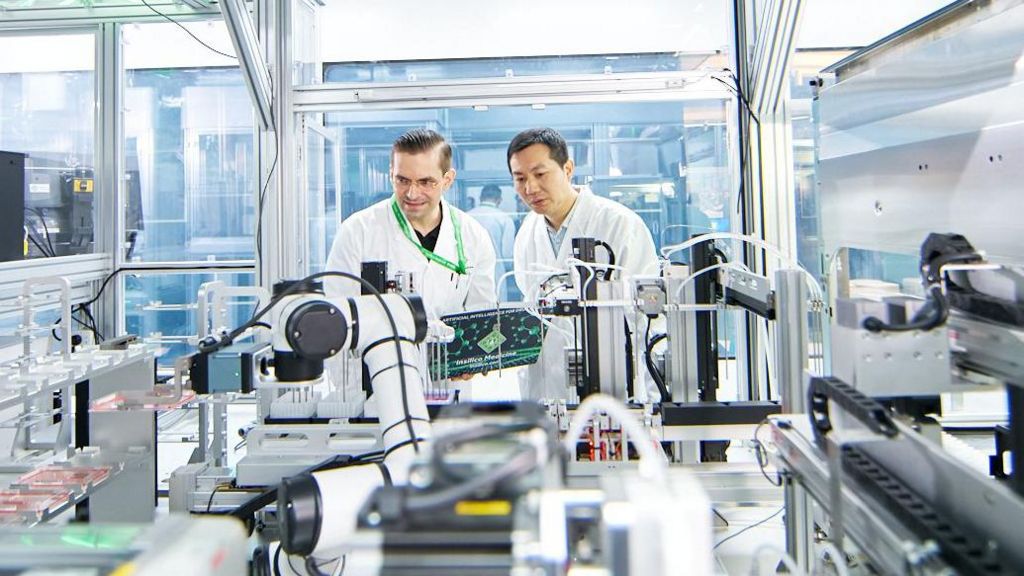
Insilico Medicine has published research demonstrating the platform's ability to generate molecules with desired properties and predict clinical outcomes. These capabilities have attracted pharmaceutical partners seeking to accelerate their own discovery efforts.
The company has advanced its own pipeline programs into preclinical and clinical stages, validating the platform's commercial utility. Partnership with Eli Lilly provides additional validation from one of the industry's most respected research organizations.
Pharmaceutical AI Landscape
The Eli Lilly-Insilico partnership represents the latest in a series of major pharmaceutical companies embracing AI for drug discovery. Merck, Novartis, and Pfizer have all established AI research collaborations with technology companies and specialized startups.
The rush to establish AI partnerships reflects competitive pressure to accelerate research timelines while managing costs. Drug discovery remains an expensive and time-consuming process with high failure rates that AI promises to improve.
Traditional pharmaceutical companies bring clinical development expertise, regulatory knowledge, and manufacturing capabilities that AI startups lack. Partnerships allow both types of organizations to leverage complementary strengths.
The volume of AI-pharma partnerships has grown substantially over the past five years, with deal values and upfront payments increasing as the technology demonstrates practical utility. The Eli Lilly-Insilico agreement represents an upper tier of such arrangements.
Drug Discovery Challenges
Despite AI enthusiasm, drug discovery remains extraordinarily difficult with high failure rates across all stages of development. Most candidates that show promise in preclinical testing fail during clinical trials due to safety concerns or lack of efficacy.

AI can improve odds at multiple stages by better predicting which candidates will succeed before substantial investment in clinical development. However, biological complexity limits the precision of computational predictions.
The translation from computational models to clinical reality has proven challenging for many AI-discovered candidates. Critics argue that AI platforms trained on historical data may not generalize well to novel targets and mechanisms.
Successful AI-pharma partnerships require integration of computational predictions with deep biological understanding. Technology alone cannot overcome fundamental gaps in scientific knowledge about disease mechanisms.
Industry Implications
The substantial deal value signals that major pharmaceutical companies view AI drug discovery as strategically important rather than merely experimental. The commitment of $115 million upfront demonstrates confidence in Insilico Medicine's approach.
If successful, the partnership could accelerate approval timelines for new therapeutics while reducing development costs. These improvements would benefit patients, payers, and pharmaceutical company shareholders alike.
The agreement may encourage other AI drug discovery companies to pursue similar partnerships with major pharmaceutical companies. Validation from a blue-chip partner like Eli Lilly carries significant weight in the industry.
Insilico Medicine gains not only financial resources but also access to Eli Lilly's research infrastructure and development expertise. These capabilities complement Insilico's computational strengths.
Market Context
Insilico Medicine operates in a competitive landscape of AI drug discovery companies including Relay Therapeutics, Exscientia, and BenevolentAI. Each has established pharmaceutical partnerships demonstrating industry acceptance of computational approaches.
Investment in AI drug discovery has flowed from both pharmaceutical companies seeking internal capabilities and technology companies developing specialized platforms. The ecosystem of partners, providers, and platforms has grown increasingly sophisticated.
Pharmaceutical company valuations have increasingly incorporated assessments of AI capability and partnership portfolios. Investors view AI partnerships as leading indicators of future pipeline strength.
The deal structure with substantial upfront payment followed by milestone-based additional compensation reflects appropriate risk allocation between the partners. Both parties have incentives aligned with research success.
Insilico Medicine has developed at least 28 drugs using generative AI tools, with roughly half already at a clinical stage, according to CEO Alex Zhavoronkov. The company went public in Hong Kong in December and its shares are up more than 50% year-to-date.
The BossBlog Daily
One email with the AI markets brief — the 13F moves, the Congressional trades, and what changed. No fixed schedule and no filler: it goes out when there is something worth sending.
Unsubscribe any time. We never sell or share the list.