
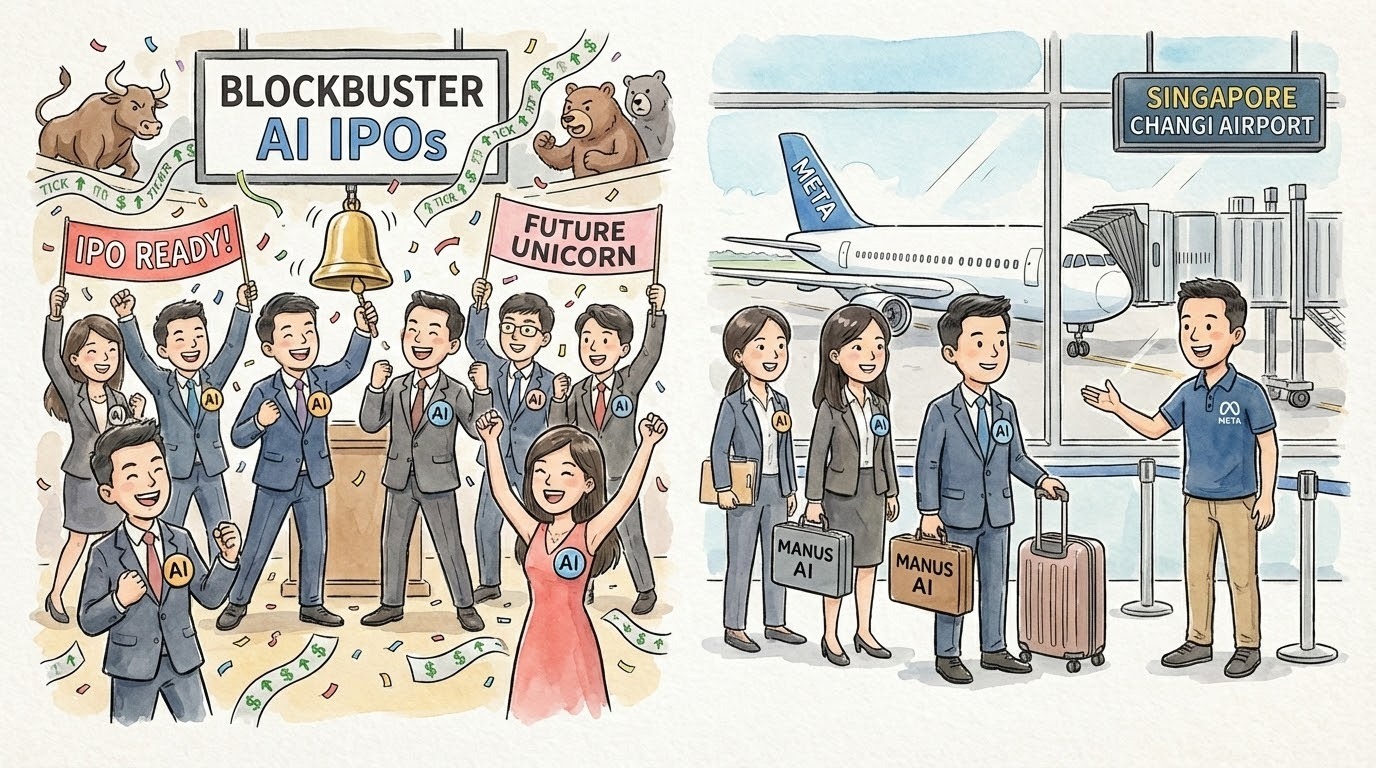
Meta Platforms has acquired Chinese AI startup Manus for approximately two billion dollars, marking one of the largest acquisitions in the artificial intelligence sector. The acquisition represents Meta's continued strategy of securing advanced AI capabilities through acquisitions rather than developing them entirely in-house.
The startup, which had gained recognition for its AI agent platform, has quietly relocated its headquarters to Singapore following the acquisition. The relocation has drawn attention from observers monitoring technology sector talent flows between China and the United States.
The acquisition highlights the ongoing competition for AI talent and technology among major technology companies. Manus had developed specialized capabilities in AI agents that complement Meta's existing research efforts.
Acquisition Details
The two billion dollar price tag reflects the value of Manus's technology and talent base. AI acquisitions have commanded premium valuations as companies compete to secure scarce expertise in machine learning and AI development.
Manus had been developing AI agent technology that enables automation of complex tasks. The platform reportedly attracted attention from multiple potential acquirers before Meta secured the deal.
The Singapore relocation raises questions about the future of Manus's operations in China. The move may reflect concerns about regulatory scrutiny or preferences for operating in a more neutral jurisdiction.
Meta's acquisition strategy has focused on securing talent and technology that can be integrated into its existing platforms. The company has made multiple AI-related acquisitions over the past several years.
Talent Migration Context
The acquisition adds to concerns in Beijing about the migration of Chinese AI talent to American companies. Chinese AI researchers have increasingly sought opportunities with US technology companies that can offer competitive compensation and research environments.
The trend has accelerated as tensions between the US and China have affected collaboration in sensitive technology areas. American companies have generally welcomed Chinese AI researchers who have received US education and training.
Visa policies and immigration rules have created some obstacles for Chinese talent seeking US employment. Singapore's position as a neutral hub has made it an attractive location for companies seeking to operate across multiple markets.
The Manus acquisition may face regulatory scrutiny in both the US and China. Technology acquisitions involving Chinese companies have attracted increasing concern from national security reviewers.
Meta's AI Strategy
Meta has been investing heavily in AI capabilities across its product portfolio. The company has introduced AI features into Facebook, Instagram, and WhatsApp while developing more advanced AI systems internally.
CEO Mark Zuckerberg has emphasized AI as a core strategic priority for the company. The Manus acquisition aligns with this direction by adding specialized capabilities in AI agent technology.
Meta has also invested in open-source AI development through its Llama language model releases. The strategy positions Meta as an alternative to closed AI providers like OpenAI and Google.
The competitive landscape for AI talent has intensified as all major technology companies compete for similar skills. Acquisitions provide one path to securing expertise more quickly than internal hiring and development.
Industry Implications
The acquisition signals continued consolidation in the AI sector as larger companies seek to acquire capabilities and talent. The two billion dollar valuation sets a benchmark for future AI startup acquisitions.
The trend toward AI agents represents a significant direction in artificial intelligence development. Systems that can autonomously complete complex tasks have potential applications across consumer and enterprise markets.
Manus's relocation to Singapore highlights the increasing importance of location decisions in the technology sector. Companies are carefully considering regulatory environments and talent availability when positioning operations.
The acquisition may prompt other technology companies to pursue similar strategies. Competitive pressure to secure AI capabilities could drive additional consolidation in the AI startup sector.
The two billion dollar acquisition price reflects the competitive market for AI acquisitions. Similar valuations have been observed in recent deals involving companies with comparable capabilities in AI agent technology.
Manus had developed a platform for creating AI agents capable of autonomous task completion. The technology has applications across enterprise automation and consumer products.
The startup gained attention for its Generalist Agent architecture that could be applied to various tasks. This flexibility made Manus attractive to multiple potential acquirers seeking to expand their AI capabilities.
Strategic Rationale
Meta's interest in Manus likely stems from the potential to integrate AI agent technology across its product ecosystem. Facebook, Instagram, and WhatsApp could benefit from more sophisticated AI-powered automation features.
The acquisition also provides Meta with access to Manus's technical team. Engineering talent in AI agents remains scarce, and acquisitions often serve as talent acquisition vehicles.
Meta's broader AI strategy includes developing AI assistants and agents for consumer and enterprise use. The Manus technology could accelerate these development efforts.
The Singapore headquarters location may facilitate Meta's operations across Asian markets. The city-state provides access to talent and serves as a hub for technology operations in the region.
Geopolitical Dimensions
The relocation from China to Singapore has geopolitical implications. Chinese technology companies face increasing scrutiny from regulators in both the US and China regarding cross-border acquisitions.
US-China tensions in technology sectors have affected investment flows and acquisition activity. Companies have increasingly structured deals to navigate regulatory requirements in both jurisdictions.
The acquisition may attract attention from US national security reviewers. CFIUS, the committee that reviews foreign acquisitions for security concerns, has become more active in examining AI-related deals.
Chinese officials have expressed concern about the departure of AI talent to foreign companies. The trend represents a brain drain that could affect China's competitive position in AI development.
AI Agent Market
The acquisition reflects broader interest in AI agent technology across the industry. AI agents that can autonomously complete tasks represent a significant evolution beyond current chatbot capabilities.
Multiple companies are developing AI agent platforms with varying approaches. The competitive landscape includes both established technology companies and well-funded startups.
Enterprise applications for AI agents include process automation, customer service, and data analysis. Consumer applications range from personal assistants to automated content creation.
The Manus acquisition positions Meta to compete more directly with other companies pursuing AI agent strategies. Google, Microsoft, and Amazon are all investing in similar capabilities.
Future Integration
How Meta integrates Manus technology will determine the acquisition's ultimate value. Successful integrations can create significant shareholder value while failed integrations result in wasted investment.
Meta has a mixed track record with acquisitions. Some acquisitions have been successfully integrated while others have been shut down or sold.
The Manus team will likely continue developing the technology while integrating with Meta's existing research efforts. This approach preserves the acquired talent while leveraging Meta's resources.
Investors will watch for signs of successful integration through product announcements and feature releases. The market for AI agents remains nascent with significant growth potential.

The BossBlog Daily
One email with the AI markets brief — the 13F moves, the Congressional trades, and what changed. No fixed schedule and no filler: it goes out when there is something worth sending.
Unsubscribe any time. We never sell or share the list.